Ceramic coating helps Yardley drivers clean their vehicles more easily by creating a slick, hydrophobic surface that reduces how strongly road grime, dirt, and certain environmental contaminants adhere to the paint. While it cannot prevent a vehicle from getting dirty, professional ceramic coating application can make washing more efficient and help maintain a cleaner finish through Pennsylvania’s changing weather conditions.
Why Does Road Grime Become Such a Persistent Problem for Yardley Drivers?
Road grime builds up on vehicles because moisture, traffic residue, dust, and fine road particles continuously collect on painted surfaces. In Yardley, changing weather conditions can turn an otherwise clean vehicle into one covered with dirty streaks and deposits after only a few trips.
A rainy morning along River Road or a commute toward I-295 can leave more than water behind. Tires lift contaminated moisture from the pavement, sending a mixture of dirt and road residue onto lower doors, bumpers, and rocker panels. Once that moisture evaporates, much of the contamination remains.
The problem changes with the seasons. Spring brings pollen and frequent rainfall, summer introduces insects and road dust, and colder months can leave vehicles coated with winter road-treatment residue.
What makes this frustrating isn’t necessarily the amount of dirt. It’s how firmly some contamination can cling to the finish, requiring additional washing effort to remove.
At XP Automotive Restyling, we see ceramic coating as a practical way to make that recurring maintenance less demanding. Rather than promising a permanently clean vehicle, we focus on improving how the paint responds when owners need to remove everyday contamination.
For drivers who use their vehicles throughout the week, that difference can be more valuable than simply achieving a glossy appearance.
How Does Ceramic Coating Make Road Grime Easier to Remove?
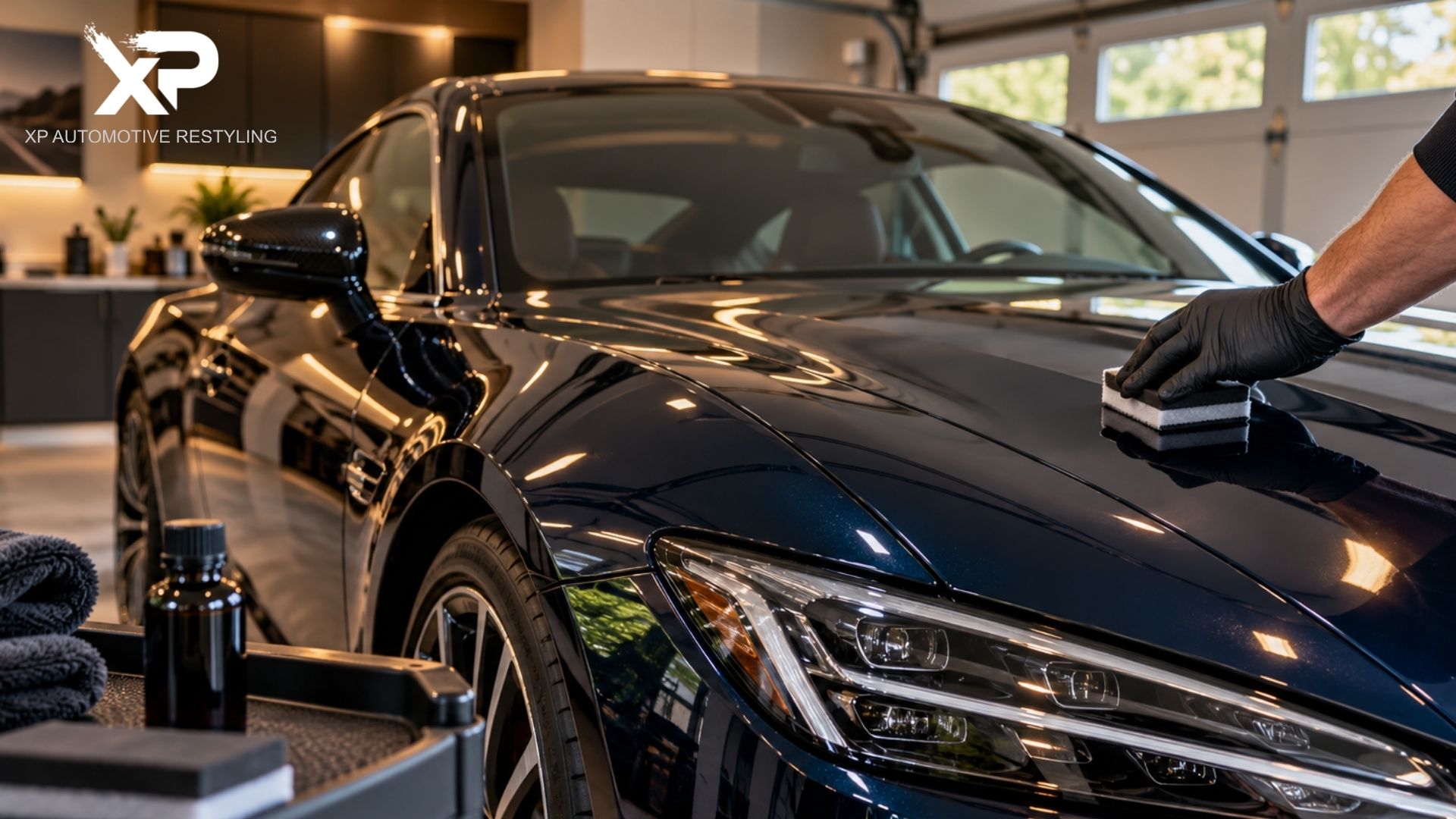
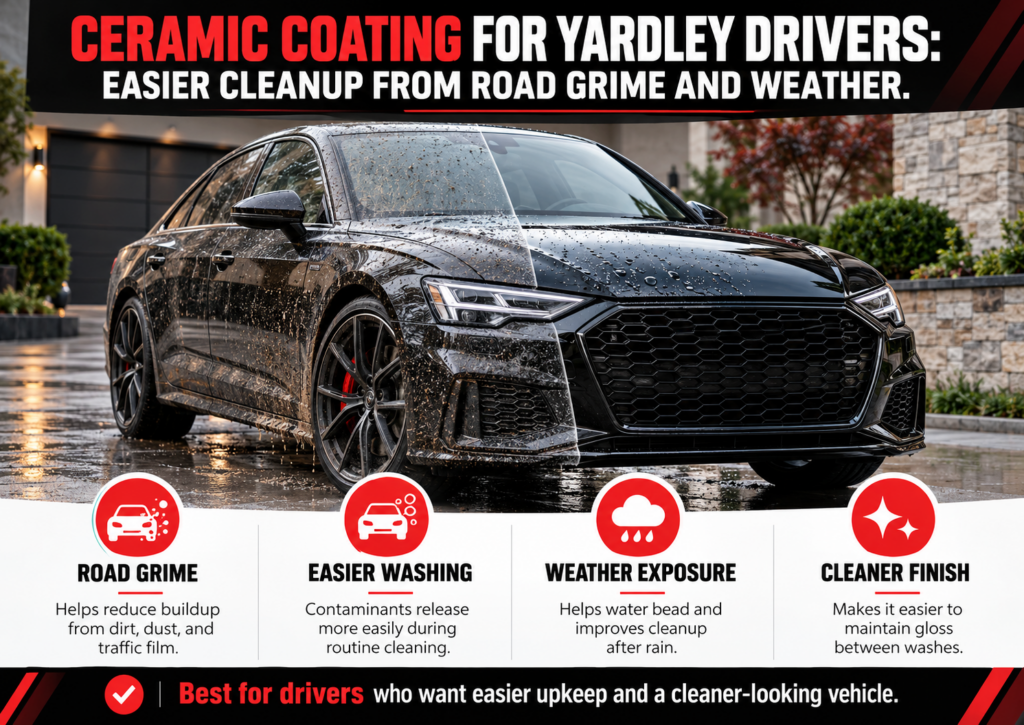
Ceramic coating makes road grime easier to remove by creating a smooth, chemically resistant surface with hydrophobic properties that reduce the adhesion of many common contaminants. Dirt can still accumulate, but it often releases more readily during a proper wash.
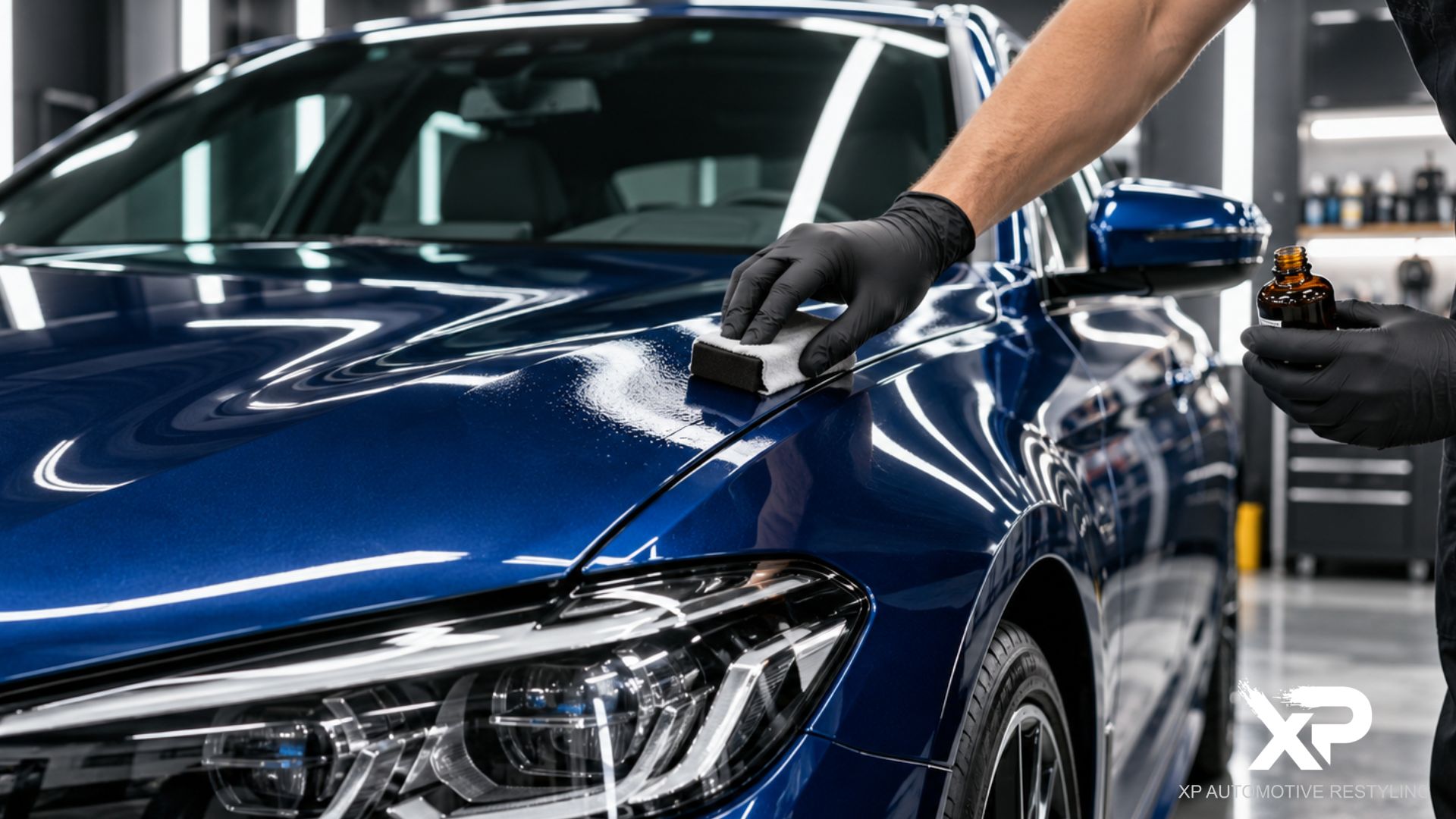
The coating forms a bonded protective layer over the prepared paint. Unlike a conventional wax that sits on the surface and generally requires more frequent reapplication, a professionally applied coating is designed to provide longer-lasting surface protection.
Its practical advantages become noticeable during routine cleaning.
Less Stubborn Contamination
Traffic film, dust, and light grime may be easier to loosen with appropriate automotive shampoo and gentle washing. This is particularly useful around lower body panels where road spray tends to accumulate.
More Manageable Washing
When dirt releases with less effort, owners may spend less time repeatedly working over the same areas. That can make regular maintenance more convenient, especially for vehicles that accumulate substantial weekly mileage.
Reduced Need for Aggressive Cleaning
Stubborn contamination sometimes encourages drivers to scrub harder than they should. A properly maintained ceramic coating can make gentler cleaning methods more effective, helping reduce unnecessary friction against the finish.
However, the coating doesn’t eliminate the need for washing. Oily road film, heavy contamination, and winter residue still require suitable cleaning products and careful removal.
The benefit is having a surface that works with your maintenance routine instead of making every wash feel like a major detailing project.
What Happens to Rainwater and Dirty Road Spray on Ceramic-Coated Paint?
Rainwater and dirty road spray generally bead and move across ceramic-coated paint more readily because the coating changes the surface’s interaction with water. This hydrophobic behavior can reduce how much moisture remains on certain areas, although it does not prevent all dirt or water spots.
Think about what happens after driving through wet pavement. Water carrying fine particles collects behind the wheels, across lower doors, and along the rear bumper. As it dries, those particles can leave visible deposits.
A hydrophobic ceramic coating helps water form beads rather than spread evenly across the surface. Some of that water can roll away, carrying loose particles with it.
However, water beading isn’t the same as self-cleaning. Dirty water can still leave residue, particularly when it dries on horizontal panels or around body contours.
There is also an important distinction between rainwater and mineral-rich water. When droplets evaporate, dissolved minerals may remain on the finish and create water spots. Ceramic coating can make certain deposits easier to address, but it cannot guarantee that spotting will never occur.
For Yardley drivers who frequently encounter wet roads and changing weather, the real advantage is easier post-rain cleanup. A properly maintained coating can help prevent routine washing from becoming unnecessarily difficult after every stretch of bad weather.
Which Parts of Your Vehicle Benefit Most From Ceramic Coating During Daily Driving?

Every coated painted panel can benefit from easier cleaning, but lower doors, rocker panels, rear bumpers, and other contamination-prone areas often reveal the most practical difference. These surfaces regularly collect grime that doesn’t always rinse away with water alone.
The front and rear of a vehicle experience different kinds of contamination. The front bumper encounters insects, dust, and particles from surrounding traffic, while the rear can collect dirty moisture and fine road residue circulating behind the vehicle.
Lower bodywork faces another challenge. Water thrown from the tires carries grime directly onto painted surfaces, creating deposits that can build up quickly during rainy or winter driving.
For everyday vehicle maintenance, we recommend paying particular attention to:
- Lower doors and rocker panels: Frequently exposed to road spray, grit, and winter residue.
- Rear bumpers and liftgates: Common collection points for dirty moisture and traffic film.
- Front bumpers: Vulnerable to insect residue and road contamination.
- Hoods and roofs: Exposed to rainfall, pollen, dust, and environmental fallout.
- Painted areas around wheel openings: Often affected by grime thrown from rotating tires.
At XP Automotive Restyling, we consider these exposure patterns when discussing professional ceramic coating with Yardley vehicle owners. The goal is to protect the finish as a whole while recognizing which areas are likely to require the most attention between washes.
A coating can make those difficult areas easier to maintain, but owners should still clean them regularly rather than allowing contamination to accumulate indefinitely.
Can Ceramic Coating Help During Pennsylvania's Changing Seasons?
Ceramic coating can make vehicle maintenance more manageable throughout Pennsylvania’s changing seasons by helping painted surfaces resist contamination and making routine washing easier. Its usefulness extends beyond summer shine or rainy-day water beading.
In spring, pollen and wet weather can leave a noticeable film across the vehicle. Summer brings insects, dust, and periods of strong sunlight. Autumn introduces fallen leaves and organic debris, while winter exposes lower panels to road salt and other treatment materials.
These conditions create different cleaning challenges, but they share one characteristic: contamination needs to be removed before prolonged exposure causes avoidable problems.
Ceramic coating provides a durable surface that can simplify this process, particularly when owners maintain a consistent washing routine.
It is important to understand that ceramic coating does not make paint immune to road salt, chemical staining, or environmental damage. Winter residue still needs to be washed away, and bird droppings, insect remains, and other potentially aggressive contaminants should be removed promptly.
For vehicles driven year-round around Yardley and Bucks County, coating is best understood as a maintenance advantage that remains useful across multiple seasons rather than a product intended for one specific weather condition.
Does Ceramic Coating Reduce How Often You Need to Wash Your Car?
Ceramic coating can make washing less demanding, but it doesn’t establish a longer cleaning schedule for every vehicle. How often a car needs attention still depends on mileage, parking conditions, weather, and the amount of contamination it encounters.
For example, a vehicle that spends most of its time in a garage may remain relatively clean between occasional drives. A daily commuter traveling through Yardley and surrounding Bucks County roads will generally collect grime more quickly, regardless of whether the paint is coated.
The biggest advantage is what happens when it’s time to wash. Dirt and light contamination can be easier to remove, allowing owners to spend less time addressing stubborn deposits.
That doesn’t mean waiting until the vehicle looks excessively dirty. Road salt, bird droppings, insect residue, and other contaminants should still be removed promptly.
With ceramic coating maintenance, consistency matters more than trying to extend every wash interval. Regular, gentle cleaning helps preserve both the finish and the coating’s performance.
What Is the Best Way to Wash a Ceramic-Coated Car After Bad Weather?

The best way to clean a ceramic-coated vehicle after rain or road-grime exposure is to remove loose contamination first, use compatible automotive shampoo, and dry the surface carefully. The coating makes cleaning easier, but proper washing technique remains essential.
After a particularly dirty commute, the lower panels may need more attention than the hood or roof. Working methodically helps prevent abrasive particles from being dragged across cleaner surfaces.
A practical washing routine includes:
- Rinse thoroughly. Remove loose dirt and grit before making physical contact with the paint.
- Use an appropriate car shampoo. Choose a coating-compatible product that cleans effectively without unnecessarily harsh chemicals.
- Wash with clean microfiber media. Use gentle pressure and avoid repeatedly dragging contaminated material across the finish.
- Pay attention to lower panels. Rocker panels, bumpers, and areas behind the wheels often contain heavier deposits.
- Rinse away cleaning products completely. Avoid allowing shampoo residue to dry on the surface.
- Dry carefully. Use clean, soft drying towels or an appropriate automotive air blower to minimize remaining water.
For winter cleaning, removing road-treatment residue is especially important. Even when a vehicle has professional ceramic coating, accumulated salt and grime should not be left on the exterior indefinitely.
A good washing routine protects the investment in the coating while helping the vehicle maintain a clean, well-cared-for appearance.
Why Does Professional Ceramic Coating Application Affect Performance?
Professional ceramic coating application matters because surface preparation, paint condition, product handling, and curing directly influence the finished coating’s appearance and performance. Applying a premium product over poorly prepared paint can compromise the result.
Before coating, the vehicle needs to be thoroughly cleaned and inspected. Depending on its condition, preparation may include removing bonded contamination and correcting visible paint imperfections.
This stage is especially important because ceramic coating is transparent. It doesn’t conceal swirl marks, scratches, or other existing defects. Applying it over those imperfections can leave them visible beneath the finished surface.
Proper application also requires attention to product-specific instructions. Coatings have different working times, leveling requirements, environmental conditions, and curing recommendations.
At XP Automotive Restyling, we approach ceramic coating application as a complete surface-preparation and protection process rather than simply spreading a product over the paint.
We also consider the owner’s expectations. A newer vehicle with well-maintained paint may need different preparation than an older daily driver with visible wear.
The objective is to establish a suitable foundation for the coating so its hydrophobic properties, appearance, and protective characteristics can perform as intended.
Conclusion: Make Everyday Vehicle Cleanup Less Demanding
Ceramic coating helps Yardley drivers spend less effort removing road grime and weather-related contamination by creating a durable, hydrophobic surface that’s easier to maintain. It won’t keep a vehicle permanently clean, but it can make the cleaning process more manageable throughout the year.
From rainy commutes along River Road to winter road residue and spring pollen, Pennsylvania driving exposes vehicles to a wide range of contaminants. Choosing appropriate surface protection can help make those conditions less frustrating to manage.
The best results come from combining quality coating products, careful surface preparation, professional application, and consistent maintenance.
At XP Automotive Restyling, we help Yardley vehicle owners choose ceramic coating solutions that fit their driving habits, paint condition, and maintenance expectations.
Contact our team today to schedule a ceramic coating consultation and find out how professional application can make caring for your vehicle easier throughout the changing seasons in Yardley, PA.
XP Automotive Restyling - PPF, Window Tinting, Ceramic Coatings