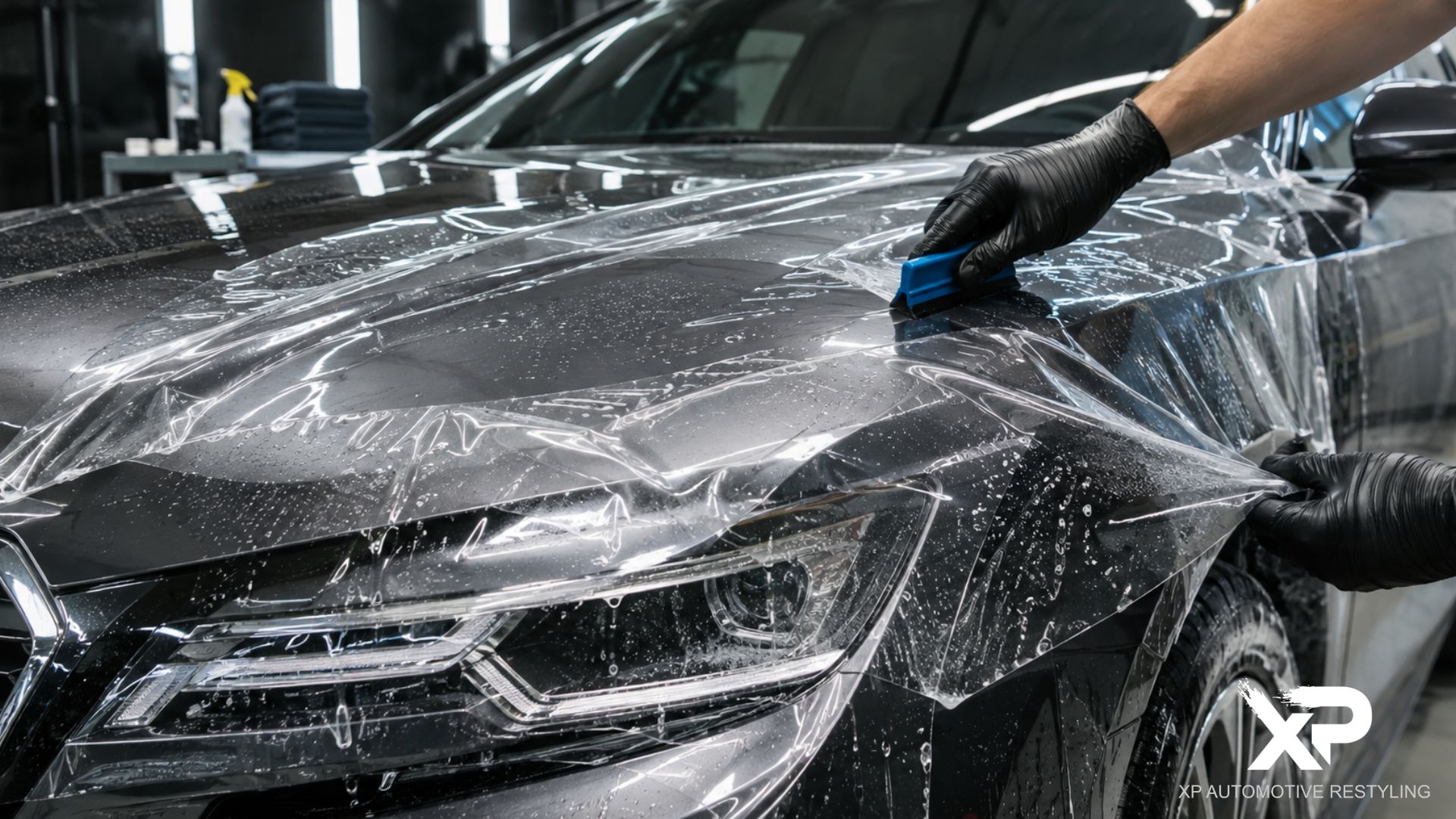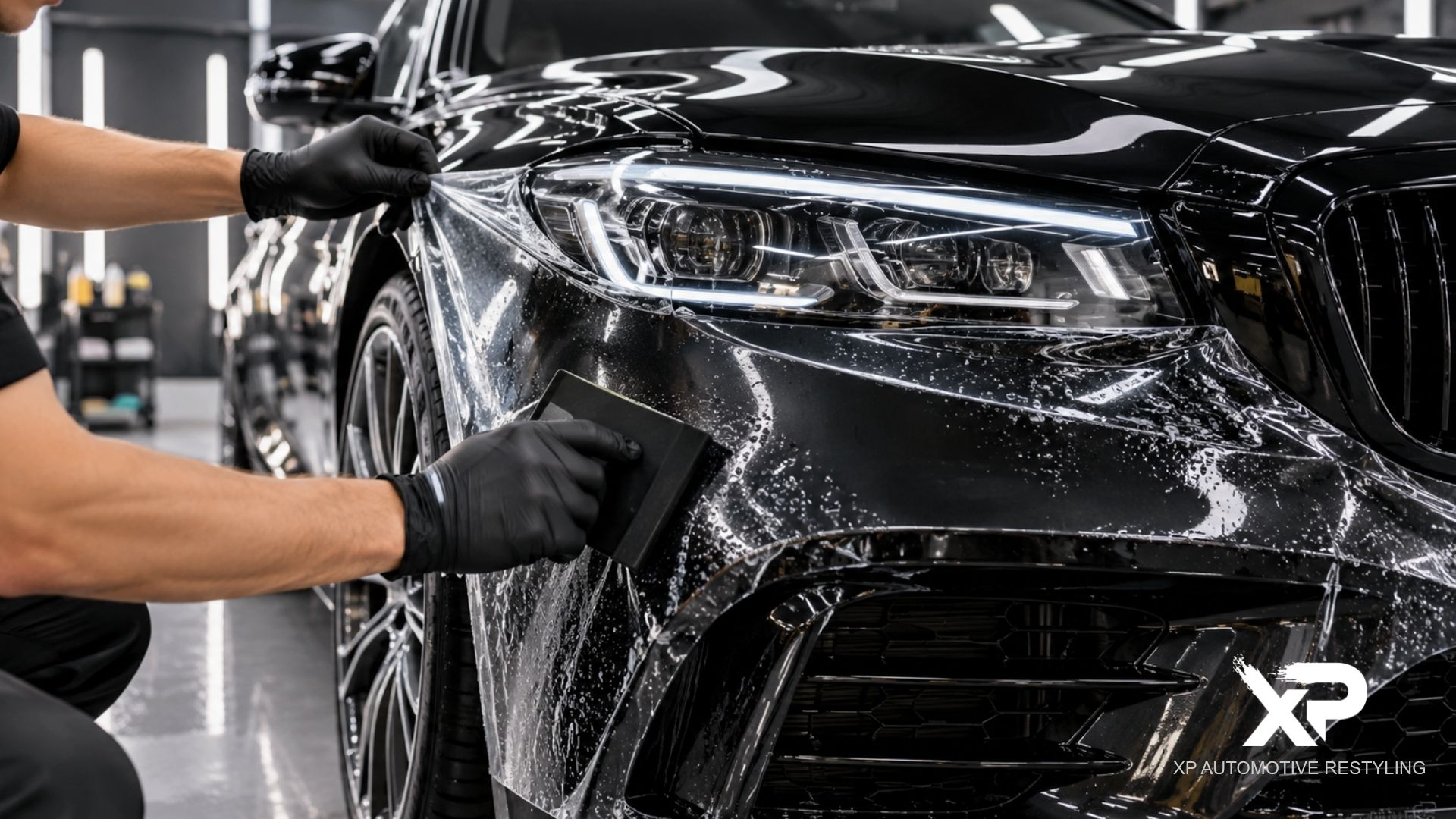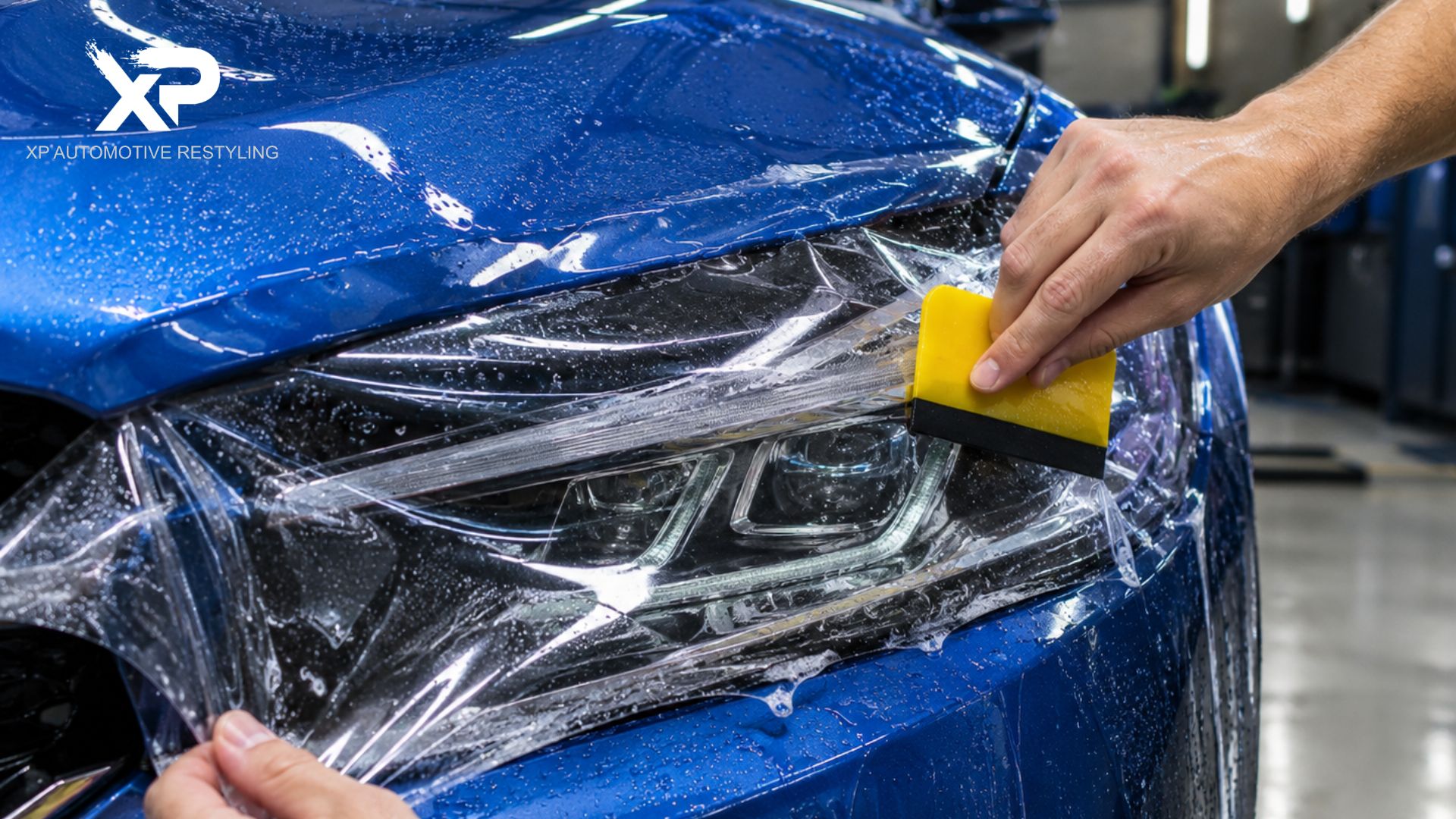
Paint protection film (PPF) can be applied to many vehicle headlights and taillights using transparent film designed for automotive lighting surfaces. It creates a protective barrier against minor road debris impacts, surface scratches, and everyday wear. However, film compatibility, optical clarity, and Pennsylvania lighting regulations must be considered before installation.
Can Paint Protection Film Be Installed on Headlights and Taillights?
Paint protection film can be installed on compatible headlights and taillights to help protect their outer lenses from physical damage. Unlike traditional PPF applications on painted panels, lighting protection requires particular attention to the lens material, film transparency, and the way the light assembly functions.
Most modern vehicles use polycarbonate headlight lenses rather than glass. Although polycarbonate offers good impact resistance, its outer surface can still develop scratches, chips, and other marks from everyday driving.
Taillights face similar concerns, although their exposure patterns are different. Rear lighting assemblies are less likely to receive direct impacts from vehicles ahead, but they can still experience scratches during washing, cargo handling, or incidental contact.
At XP Automotive Restyling, we consider the condition and design of each lighting assembly before discussing PPF installation. Not every lens or film combination is equally suitable, and the objective should always be to preserve the original lighting appearance and function.
For Bucks County drivers, clear protection may be particularly appealing when maintaining expensive or distinctive lighting assemblies is a priority.
What Does PPF Actually Protect on Headlight Lenses?
Headlight PPF helps reduce damage from small stones, gravel, road particles, and minor surface abrasion by placing a transparent protective layer over the outer lens. The film receives much of the everyday contact that would otherwise reach the headlight surface directly.
Headlights are positioned at the front of the vehicle, making them vulnerable to the same road conditions that affect front bumpers and hoods. However, the consequences of lens damage are different from those of a chipped painted panel.
A scratch or chip on a headlight may affect its appearance, while more significant damage can compromise the lens itself. Modern lighting assemblies can also be expensive to replace, particularly on vehicles equipped with sophisticated LED or adaptive lighting systems.
Clear paint protection film can provide several practical benefits:
- Minor impact resistance: Helps protect against small stones and loose particles thrown by surrounding traffic.
- Scratch protection: Provides a sacrificial surface against light abrasion from normal use.
- Surface preservation: Helps reduce direct wear on the original outer lens.
- Self-healing properties: Some compatible premium films can recover from light surface marks under appropriate conditions.
- Discreet appearance: Clear film can preserve the original look of the lighting assembly when properly installed.
Protection still has limits. A sufficiently forceful impact can puncture the film, crack the lens, or damage the underlying assembly.
PPF should therefore be viewed as an additional protective barrier rather than a guarantee against headlight damage.
Is Taillight PPF Worth Considering for Everyday Driving?
Taillight PPF can be worthwhile for drivers who want to reduce scratches and preserve the appearance of rear lighting assemblies, particularly on vehicles with exposed or expensive lens designs. Its primary value usually comes from surface protection rather than preventing the same level of road debris impact experienced by headlights.
The rear of a vehicle encounters different forms of wear. Frequent washing, dust accumulation, contact with cleaning tools, and everyday handling around the trunk or liftgate can gradually mark exposed taillight surfaces.
Some modern vehicles also feature wide taillight assemblies that stretch across the rear bodywork. These designs can look distinctive, but their larger exposed surfaces may create more opportunities for incidental contact.
Does Clear Taillight PPF Make Sense for Your Car?
Select the conditions that apply to your vehicle. Your protection guidance will update automatically.
Optional Protection to Consider
Clear taillight PPF can provide additional surface protection, but it is not automatically necessary for every vehicle. Select the conditions above to evaluate its relevance to your situation.
Why this matters: The value of taillight PPF depends on lens exposure, cleaning habits, vehicle design, and your protection priorities.
Educational guidance only. This is not an inspection of lens condition, film compatibility, or compliance with applicable lighting requirements.
A transparent protective film can help limit minor scratches without substantially changing the appearance of the lenses.
Lighting performance comes first. However, taillight protection should never compromise visibility, color, or signaling performance. The purpose of clear PPF is to preserve the assembly, not to darken brake lights, turn signals, or other required lighting.
For many Bucks County vehicle owners, clear taillight film makes the most sense as part of a broader protection package rather than as an automatic necessity for every vehicle.
How Does Bucks County Driving Affect Headlight and Taillight Wear?
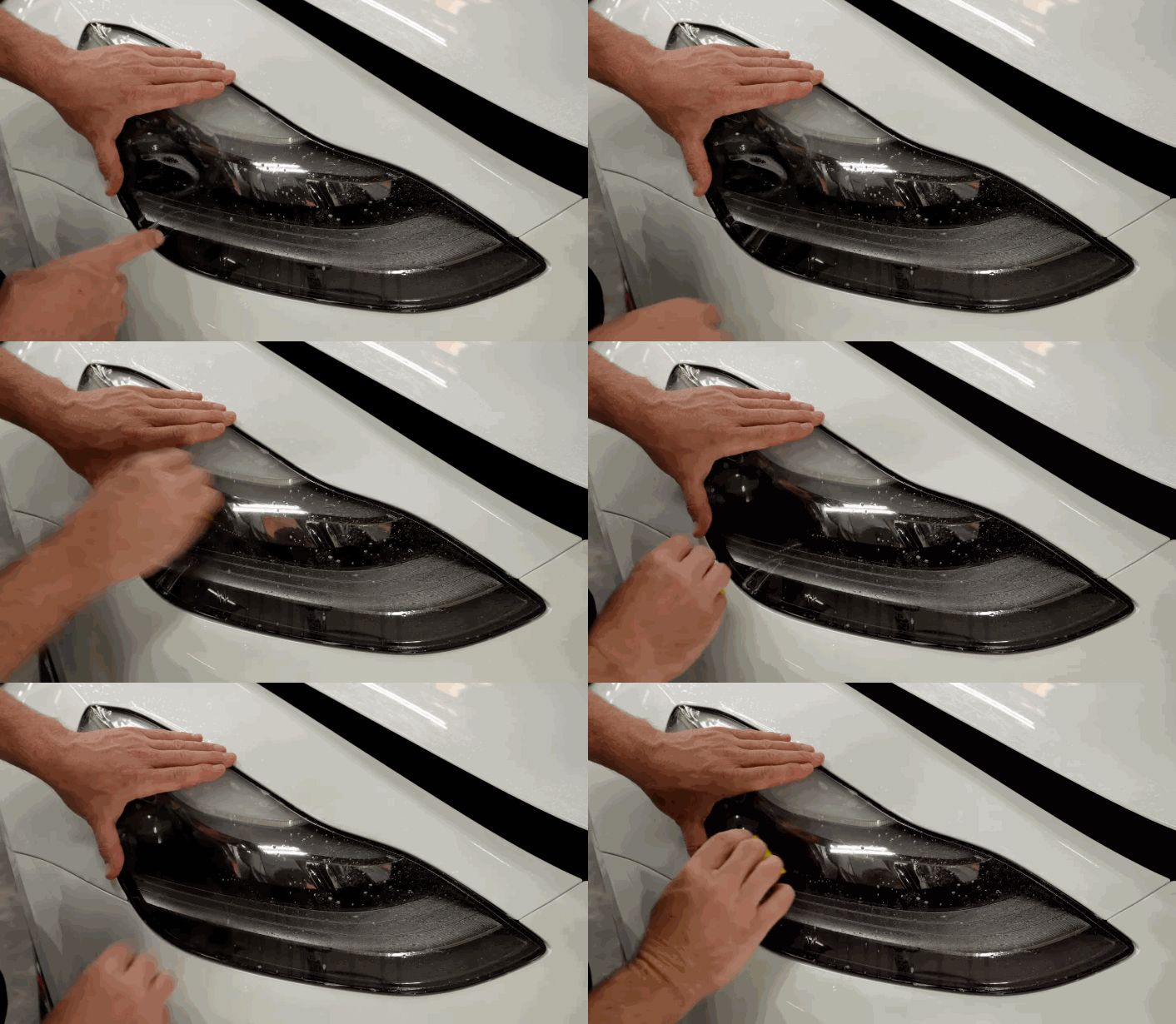
Regular driving throughout Bucks County exposes vehicle lighting assemblies to road debris, seasonal contamination, and repeated cleaning that can contribute to surface wear. Headlights generally receive the greatest direct exposure, while taillights experience more incidental contact and maintenance-related abrasion.
The conditions vary depending on where and how the vehicle is driven.
A commuter regularly traveling I-295 or Route 1 may encounter loose stones and particles thrown by surrounding traffic. Drivers using Route 202 or local roads around Newtown, Yardley, and Doylestown may also pass through construction areas or stretches of pavement with loose aggregate.
Pennsylvania’s seasonal changes add another consideration. Winter road treatments leave residue on vehicle surfaces, while spring brings pollen and accumulated road dust. During warmer months, insects and other contamination can collect across the front end.
These conditions don’t automatically damage a lighting assembly, but they increase the frequency with which lenses are exposed to debris or require cleaning.
At XP Automotive Restyling, we consider those driving patterns when helping owners identify useful protection areas. A vehicle that spends substantial time on highways may benefit more from headlight protection film than one used occasionally for short local trips.
The decision should reflect actual exposure, lens condition, and the owner’s priorities rather than assuming every lighting assembly faces identical risks.
Can PPF Prevent Headlight Yellowing and Oxidation?
Compatible headlight PPF may help slow certain forms of surface deterioration by adding a protective layer over the lens, but it cannot guarantee that headlights will never yellow, haze, or oxidize. The results depend on film quality, UV resistance, existing lens condition, and environmental exposure.
Polycarbonate headlights typically have a factory-applied protective coating designed to resist ultraviolet degradation. Over time, that coating can deteriorate, allowing the lens surface to become cloudy or discolored.
A quality transparent film may provide additional UV screening and help shield the surface from abrasion. However, the film itself must be suitable for prolonged exterior use and compatible with the lighting assembly.
Headlight Aging & Protection Timeline
Select the condition closest to your headlights to explore how protection and restoration priorities change.
Simplified illustration showing general appearance changes, not a diagnostic image.
Consider Preventive Protection
Clear headlights are generally the strongest candidates for preventive PPF. A compatible transparent film may help limit abrasion and provide additional UV screening, depending on the product's specifications.
Have the lens and factory surface coating inspected before selecting an optically appropriate, headlight-compatible film.
It is also important to distinguish prevention from restoration.
For newer vehicles with clear lenses, headlight PPF may help preserve their condition by limiting direct environmental and physical exposure.
Applying PPF over an already yellowed or heavily oxidized lens will not automatically restore its original clarity. Some assemblies may require professional restoration or replacement before protection is appropriate.
Existing lens condition determines the appropriate next step. For older vehicles, the best approach depends on how much deterioration has already occurred and whether the existing lens remains suitable for film installation.
Is Headlight and Taillight PPF Legal in Pennsylvania?
Pennsylvania drivers should confirm that any film applied to headlights or taillights complies with state lighting requirements and does not interfere with the vehicle’s required illumination. Clear PPF is different from decorative smoked or tinted film, but transparency alone does not automatically establish legal compliance.
Vehicle lighting must maintain the required color, visibility, and performance. A film that changes the appearance of a headlight or reduces the visibility of brake lights and turn signals can create compliance concerns.
There are several important distinctions:
- Clear protective film: Intended to preserve the original lens appearance while providing physical protection.
- Smoked or tinted film: Changes the appearance of the lighting assembly and may reduce light output or visibility.
- Colored film: Can alter the apparent color of a lamp and potentially conflict with lighting requirements.
- Film compatibility: Even transparent material should be evaluated for its effect on light distribution, optical clarity, and the specific lamp assembly.
For vehicles equipped with adaptive headlights, complex LED systems, or manufacturer-specific lens coatings, compatibility deserves additional attention.
Pennsylvania lighting regulations should be checked before installation, and owners should not assume that a product is legal simply because it is marketed as automotive protection film.
The safest approach is to prioritize clear, compatible protection that preserves the lighting system’s intended operation.
Does Professional PPF Installation Matter on Vehicle Lights?
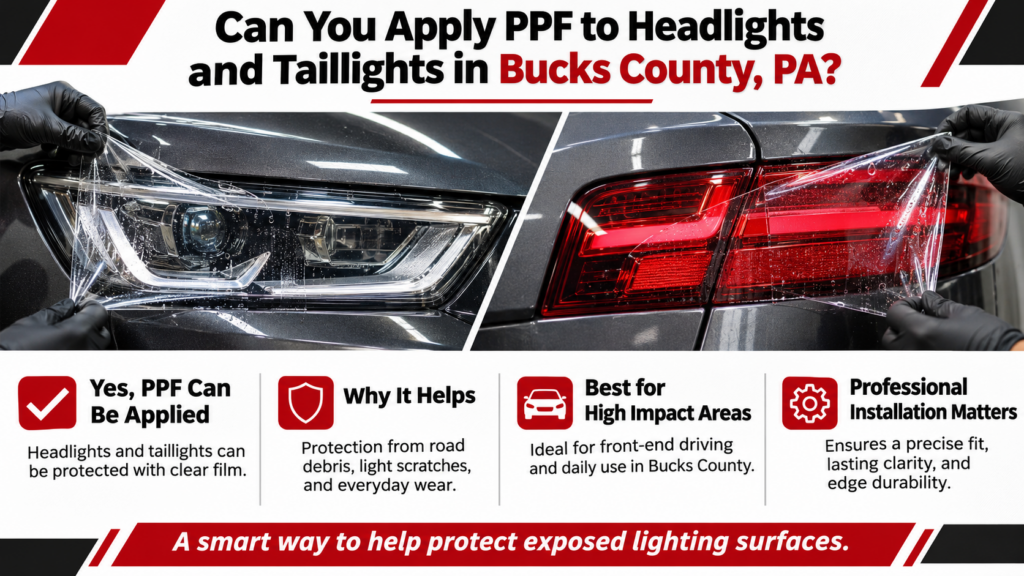
Professional PPF installation is important for headlights and taillights because curved lenses, tight edges, and complex lighting designs require accurate film positioning and careful material handling. Poor fitment can create visible imperfections or compromise adhesion.
Lighting assemblies often have more intricate shapes than they initially appear to have. Sharp transitions, recessed sections, raised contours, and narrow edges can make film installation challenging.
A proper installation begins with inspecting the lens for existing damage, deterioration, and compatibility concerns. The surface must then be cleaned thoroughly so dirt and residue are not trapped beneath the transparent material.
Film selection is equally important. Not every paint protection film is approved for use on lighting assemblies, and certain products may have restrictions related to lens materials, heat exposure, or optical performance.
At XP Automotive Restyling, our approach to protective film emphasizes preparation, precise fitment, and a clean finished appearance. For lighting applications, those considerations must be accompanied by appropriate product compatibility and compliance checks.
A well-executed installation should look discreet, follow the lens contours, and avoid unnecessary visible edges or trapped contamination.
How Should You Maintain Headlights and Taillights With PPF?
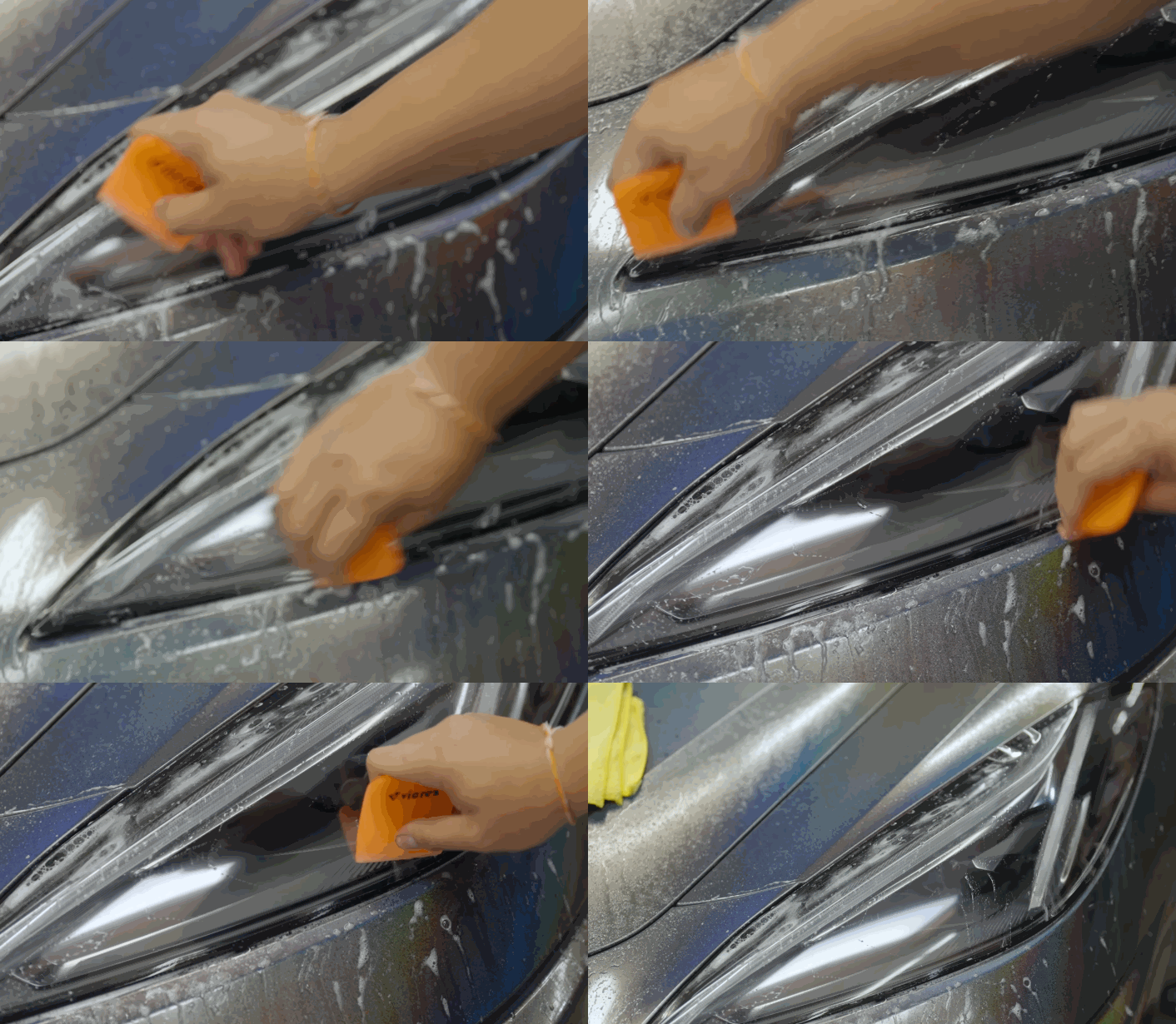
Headlights and taillights protected with compatible PPF should be cleaned gently using suitable automotive products and maintained according to the film manufacturer’s instructions. Regular care helps preserve transparency and prevents contamination from accumulating unnecessarily.
A few practical habits can help:
- Rinse before washing. Remove loose dirt and abrasive particles before touching the lens.
- Use compatible cleaning products. Avoid aggressive solvents or chemicals that could damage the film or lens.
- Wash with clean microfiber media. Gentle cleaning reduces unnecessary surface friction.
- Avoid aggressive pressure washing. Concentrated water pressure directed at film edges may contribute to lifting.
- Inspect the film periodically. Look for peeling, discoloration, trapped contamination, or other visible deterioration.
Some premium protective films feature self-healing topcoats that can reduce the appearance of minor surface marks. However, these properties do not repair punctures, deep scratches, or damage to the lighting assembly itself.
Drivers should also monitor lighting performance. Any noticeable change in illumination, signaling visibility, or lens clarity should be evaluated rather than ignored.
For Bucks County vehicles exposed to frequent road grime and seasonal contamination, gentle but consistent maintenance helps keep protected lighting assemblies looking their best.
Conclusion: Protect Your Vehicle's Lights Without Compromising Their Function
Clear paint protection film can help preserve compatible headlights and taillights by reducing minor scratches, surface abrasion, and damage from everyday road debris. However, film selection and installation must account for lens compatibility, optical clarity, and Pennsylvania lighting requirements.
For Bucks County drivers, headlights are particularly exposed during highway travel, while taillights can benefit from protection against incidental contact and repeated cleaning.
The most important consideration is choosing protection that preserves the original lighting system rather than changing how it operates. Clear film should protect compatible lenses without compromising their visibility or signaling function.
At XP Automotive Restyling, we help vehicle owners evaluate practical PPF coverage based on driving habits, vehicle design, and long-term protection goals.
Ready to Protect Your Headlights and Taillights?
Contact XP Automotive Restyling to schedule a consultation and discuss whether compatible headlight or taillight PPF is appropriate for your vehicle in Bucks County, PA.
Contact XP Automotive Restyling →XP Automotive Restyling - PPF, Window Tinting, Ceramic Coatings