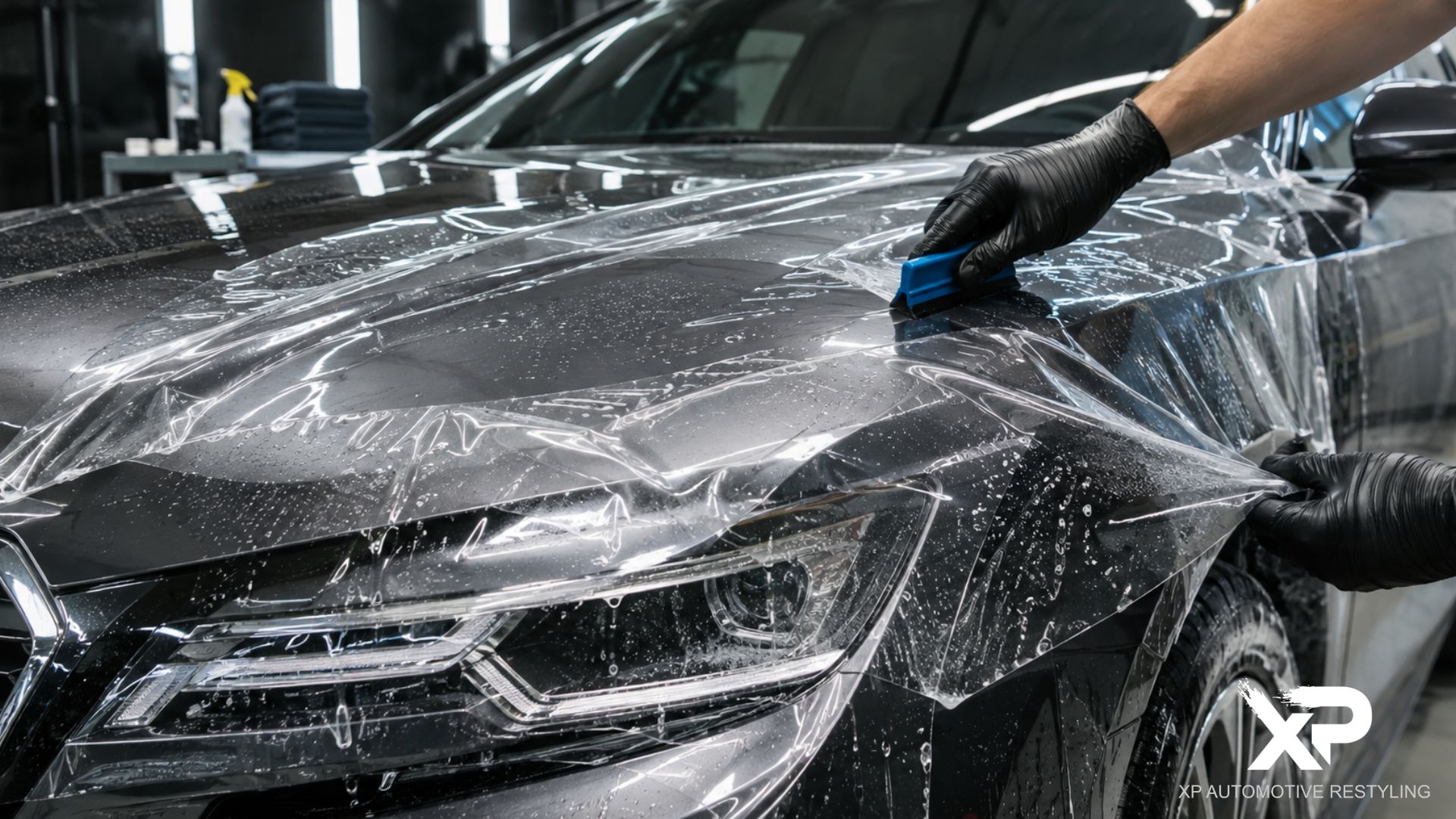
Paint protection film (PPF) helps protect vehicles during frequent highway driving by creating a transparent, impact-resistant barrier against rock chips, gravel, road debris, and minor surface abrasions. For Yardley drivers who regularly travel on I-295 and other major routes, professional PPF installation can reduce damage to exposed painted surfaces and help preserve the vehicle’s original finish.
Why Does Frequent Highway Driving Increase the Risk of Paint Damage?
Highway driving increases the risk of paint damage because vehicles encounter debris thrown by surrounding traffic at higher relative speeds. Even small stones can strike painted surfaces with enough force to create chips, particularly when a vehicle accumulates substantial highway mileage.
For Yardley commuters, I-295 is a common connection to employment centers and surrounding communities. Regular trips toward Philadelphia, New Jersey, or other parts of Bucks County can mean spending considerable time behind trucks, SUVs, and other vehicles that may kick up loose material.
Unlike occasional local driving, frequent highway travel creates repeated opportunities for paint damage. One small chip might seem insignificant, but multiple impacts over months or years can gradually change the appearance of the front end.
The most common sources of highway-related paint damage include:
- Loose stones and gravel thrown backward by vehicle tires.
- Small debris from construction or road maintenance areas.
- Particles dislodged from deteriorating pavement.
- Abrasive material that strikes lower body panels.
- Minor surface contact from airborne road contaminants.
At XP Automotive Restyling, we consider highway mileage an important factor when discussing paint protection film. A vehicle covering hundreds of highway miles each week experiences different exposure than one used primarily for short neighborhood trips.
That difference matters when deciding which areas deserve protection and how much coverage is appropriate.
How Does Paint Protection Film Reduce Damage From Highway Debris?
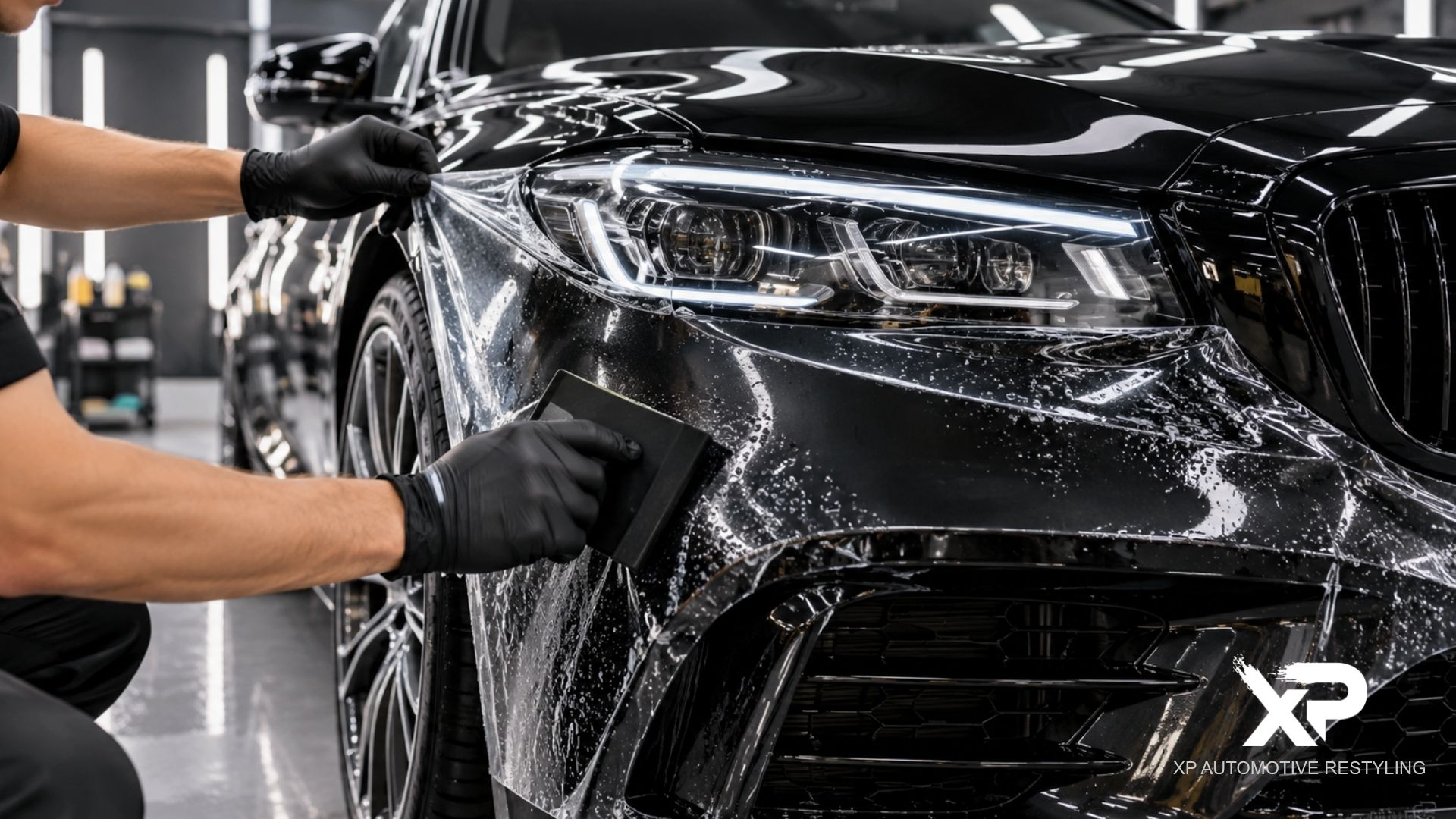
Paint protection film reduces highway-related paint damage by absorbing and distributing the force of minor debris impacts before they reach the painted surface. Its flexible polyurethane construction provides a physical layer that helps prevent many of the rock chips and surface marks associated with regular highway travel.
When a small stone strikes an unprotected bumper or hood, the impact can damage the clear coat and underlying paint. With PPF installed, the film receives the initial contact and helps protect the finish underneath.
Modern PPF also offers characteristics that make it suitable for vehicles exposed to demanding driving conditions.
Impact Resistance for Exposed Panels
The film acts as a sacrificial barrier over vulnerable surfaces. Minor impacts that might otherwise chip the paint can be absorbed by the protective material.
Self-Healing Surface Technology
Many premium films feature self-healing topcoats that can recover from certain light surface marks when exposed to appropriate warmth. This helps maintain the film’s appearance between regular washes.
Transparent Protection
Quality automotive paint protection film is designed to preserve the underlying color and gloss. Drivers can protect the vehicle without significantly changing its original appearance.
However, PPF is not indestructible. Larger stones, sharp objects, or sufficiently forceful impacts can still damage the film or paint underneath.
Its primary advantage is reducing the cumulative damage caused by smaller, more frequent hazards encountered during everyday highway driving.
Which Vehicle Areas Need the Most PPF for Highway Driving?
The front bumper, hood, front fenders, and mirror caps are the most common priorities for highway PPF because they face incoming road debris directly. Depending on the vehicle's design, rocker panels and lower body sections may also benefit from additional protection.
A vehicle's shape influences how debris reaches different surfaces. Low sports cars, sedans, SUVs, and trucks do not experience identical impact patterns.
Explore the six key protection areas
✓ Front Bumper ⌄
✓ Hood ⌄
✓ Front Fenders ⌄
✓ Mirror Caps ⌄
✓ Rocker Panels ⌄
✓ Lower Doors ⌄
This is where PPF coverage becomes a practical decision rather than simply an aesthetic upgrade.
For a Yardley driver who frequently uses I-295, protecting the front end may provide the greatest immediate benefit. Someone driving a vehicle with wide tires or exposed lower panels may also want protection along the sides.
Choosing coverage according to actual exposure helps direct the investment toward surfaces most likely to experience damage.
Is Full-Front PPF the Best Choice for Frequent Highway Drivers?
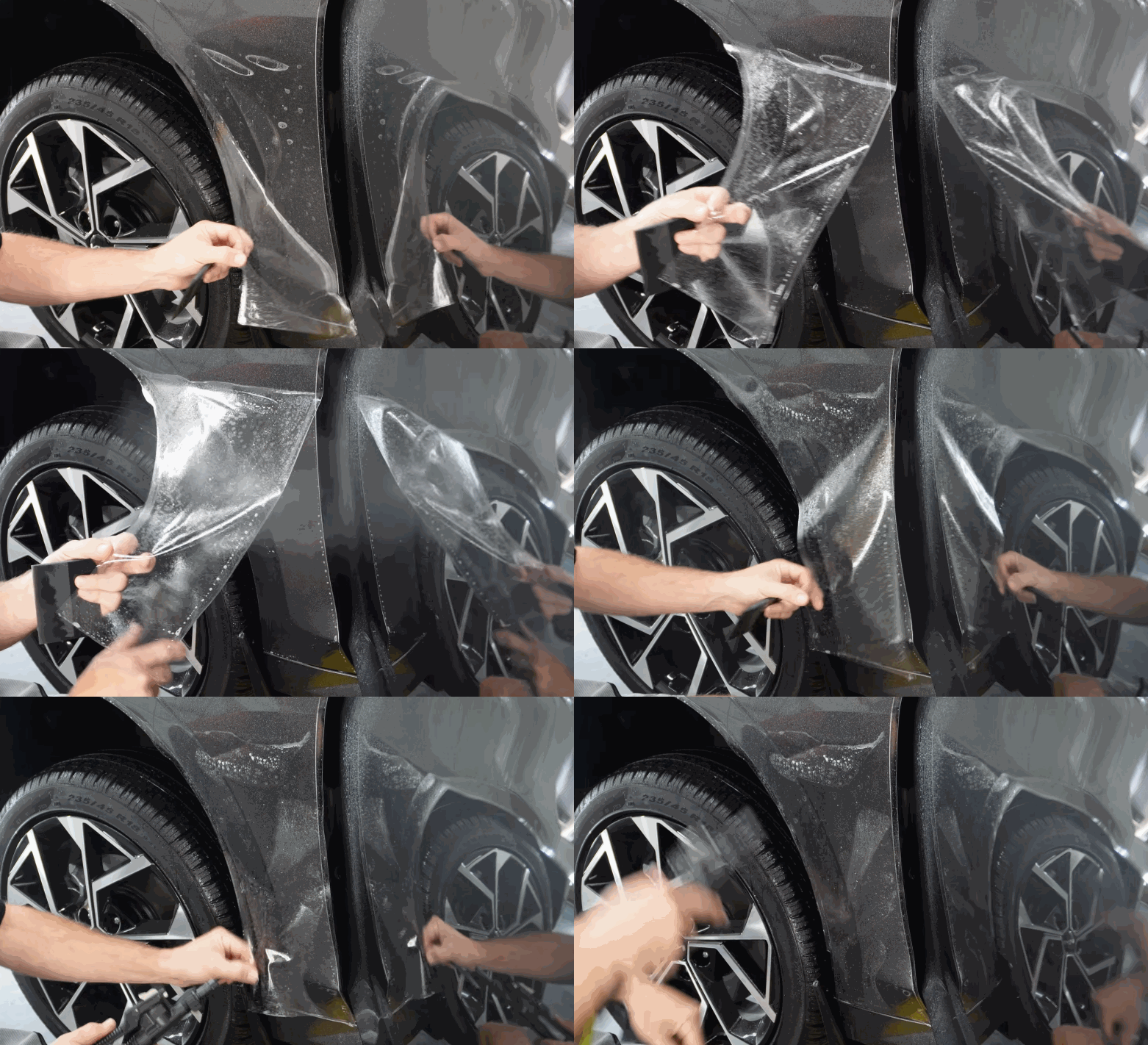
Full-front PPF is often a practical choice for frequent highway drivers because it protects the complete front bumper, hood, fenders, and mirror caps from repeated debris exposure. It offers broader protection than partial-front packages without requiring film across the entire vehicle.
Partial-front coverage can still be useful for drivers seeking targeted protection at a lower investment. However, the film typically stops partway across certain panels, leaving portions of the hood or fenders exposed.
For vehicles accumulating substantial highway mileage, those unprotected sections may still encounter debris impacts.
Full-front coverage addresses this by protecting complete forward-facing panels. It can also create a more uniform appearance because there are fewer partial-panel transition lines.
At XP Automotive Restyling, we evaluate driving frequency, vehicle design, and ownership priorities before recommending a PPF installation package.
A commuter traveling I-295 several days per week may benefit from full-front protection, while a vehicle used primarily for local errands may justify a more limited approach.
Expanded coverage can also make sense when the vehicle has vulnerable rocker panels or lower bodywork. Full-body PPF remains an option for owners seeking broader protection, but it isn’t automatically necessary for every highway commuter.
The goal is to select enough protection to address meaningful risks without assuming that the largest package is always the best value.
How Should Highway Commuters Maintain Paint Protection Film?
Highway commuters should maintain PPF through regular washing, prompt contaminant removal, and periodic inspection of the film's surface and edges. Consistent care helps preserve its appearance and protective properties despite frequent exposure to road debris.
Vehicles traveling long distances often collect substantial contamination across the front bumper, hood, and lower panels. Allowing insects, road grime, and other deposits to remain for extended periods can make cleaning more difficult.
Your 5-Step PPF Care Checklist
0 of 5 completedTap a step to expand its details. Mark the step complete when you're finished reviewing it.
01 Wash Regularly ⌄
Use suitable automotive shampoo and clean microfiber wash media to remove accumulated road contamination.
02 Address Insect Residue Promptly ⌄
Avoid allowing deposits to remain on the film unnecessarily.
03 Use Gentle Cleaning Methods ⌄
Aggressive scrubbing and abrasive products can damage the film's topcoat.
04 Protect Film Edges ⌄
Avoid directing concentrated high-pressure water at exposed edges.
05 Inspect for Damage ⌄
Check for lifting, tears, punctures, or other visible deterioration after significant road exposure.
All five steps reviewed! You're familiar with the essential PPF maintenance practices.
What About Self-Healing PPF?
Many modern films feature self-healing properties that can reduce the appearance of minor surface marks. However, those properties do not repair deep damage or eliminate the need for proper care.
For Yardley drivers who frequently travel highways, regular maintenance is a practical way to help maximize the useful life of their paint protection film.
Can PPF Help Preserve Your Vehicle's Paint Over Years of Highway Driving?
Paint protection film can help preserve a vehicle’s original finish over years of highway driving by reducing the accumulation of rock chips, scratches, and minor impact damage. Its greatest value often becomes apparent over time, as repeated road exposure can gradually affect unprotected paint.
Consider two vehicles that travel similar distances along I-295 every week. One has exposed factory paint, while the other has PPF covering its most vulnerable panels. Both encounter the same road conditions, but the protected vehicle has an additional barrier between its paint and incoming debris.
This doesn’t mean the film will remain flawless forever. It can develop wear, sustain damage, or eventually require replacement. However, the protective layer can absorb many minor impacts that would otherwise affect the original finish.
For owners planning to keep their vehicles for several years, preserving factory paint may also reduce the need for certain cosmetic repairs. Although PPF cannot guarantee a particular resale value, maintaining a cleaner exterior can contribute to the vehicle’s overall condition.
The benefit is especially relevant for drivers who accumulate considerable mileage but still want their vehicles to look well maintained.
Does Paint Protection Film Protect Against More Than Rock Chips?
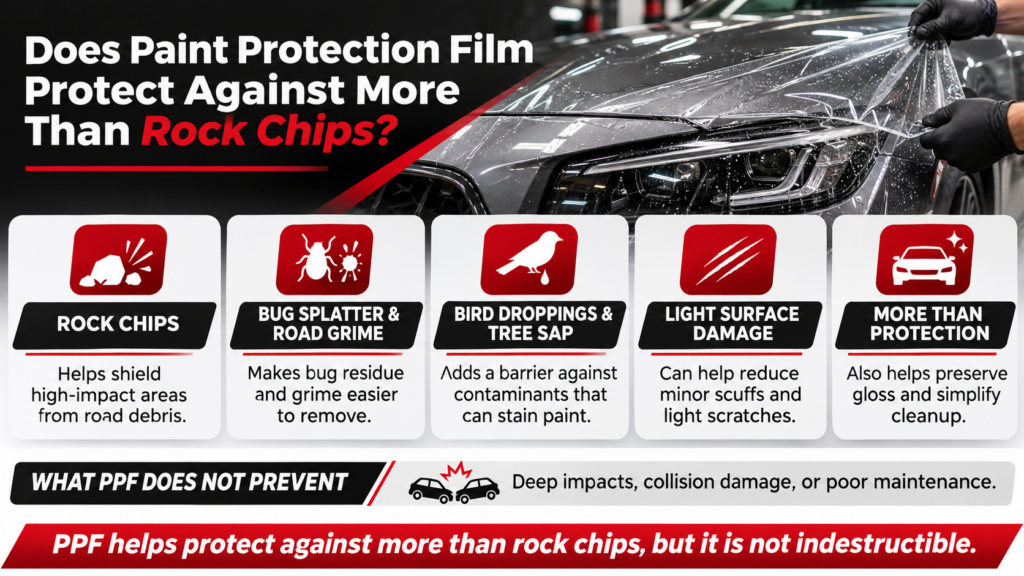
PPF protects against more than rock chips by providing resistance to minor scratches, surface scuffs, and certain forms of everyday abrasion. However, its primary purpose remains physical protection rather than preventing every type of environmental or mechanical damage.
Highway travel exposes vehicles to more than loose stones. Insects, airborne particles, and road grime regularly accumulate on forward-facing panels. While these contaminants still require cleaning, a quality film provides an additional surface between them and the underlying paint.
The distinction between protection and maintenance is important.
PPF can help reduce damage from minor physical contact, but it does not eliminate the need to remove insect residue, bird droppings, or other potentially harmful contaminants. Similarly, self-healing film may recover from light surface marks, but deep scratches and punctures generally will not disappear.
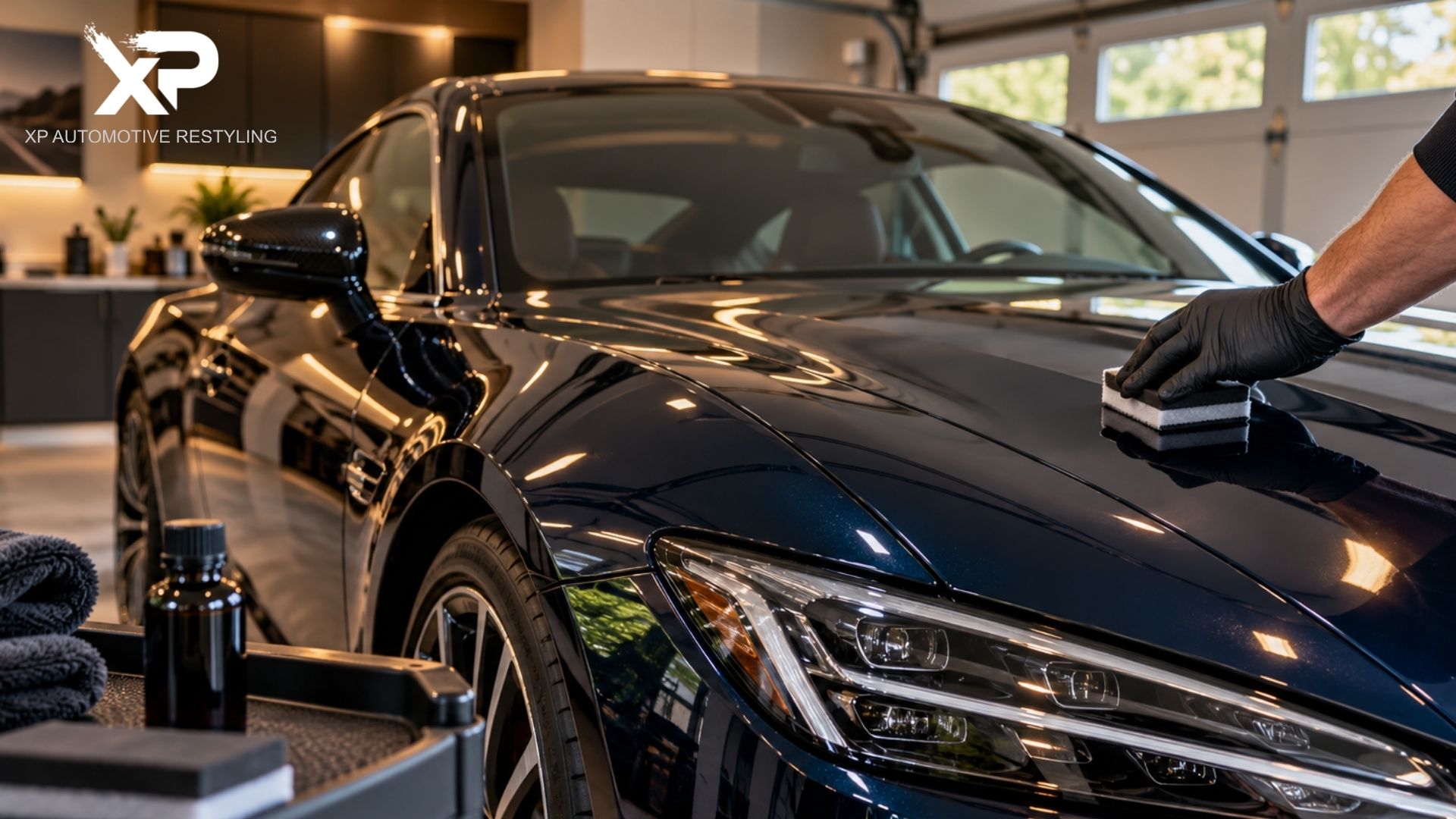
For drivers concerned about easier cleaning and hydrophobic behavior, ceramic coating can complement PPF when the products are compatible. Ceramic coating helps manage surface contamination, while paint protection film provides the thicker barrier needed for impact resistance.
Combining both services may be worthwhile for some highway commuters, but it should be based on the owner’s priorities rather than treated as a requirement.
Why Is Professional PPF Installation Important for Highway Vehicles?
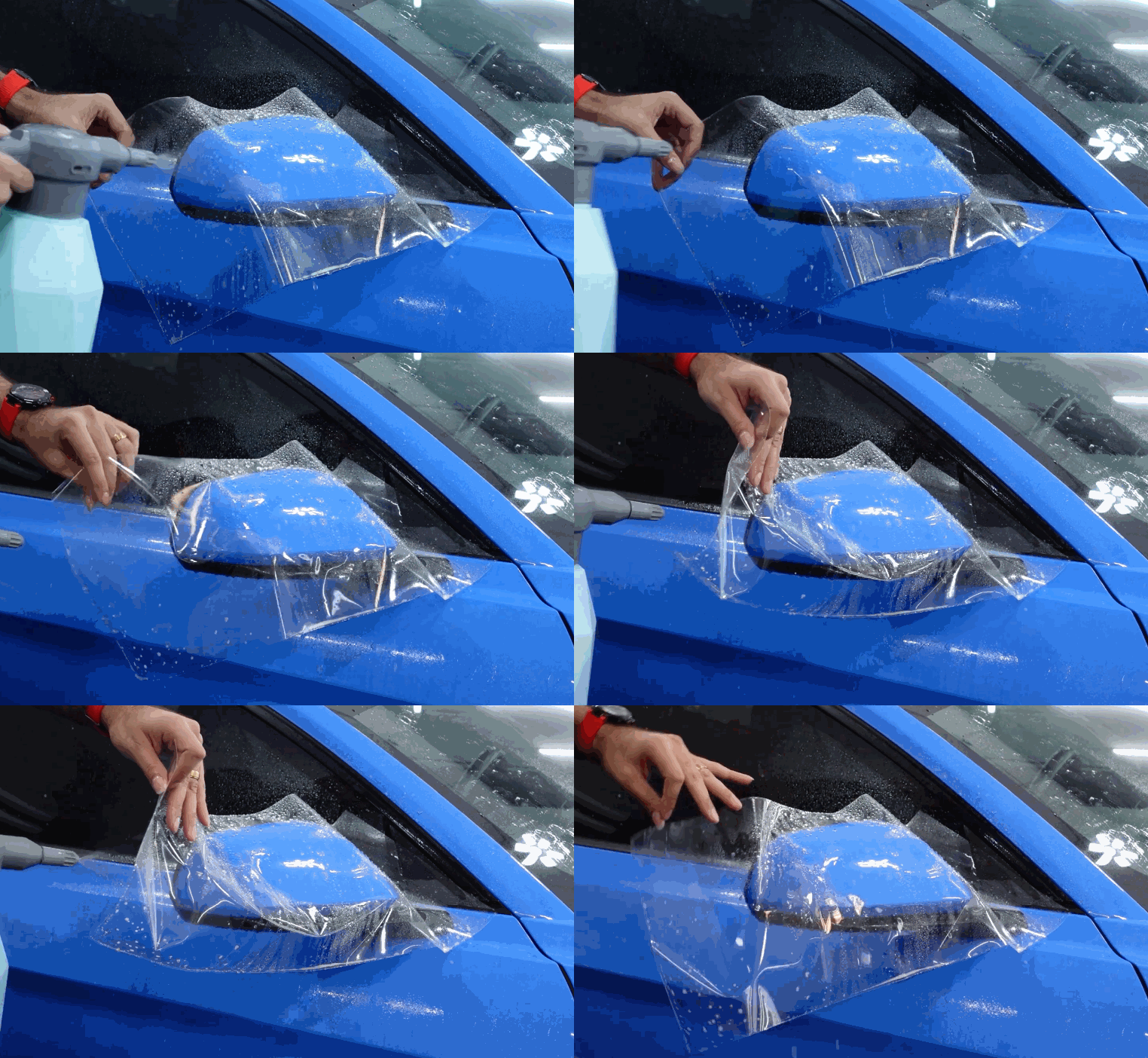
Professional PPF installation is important because accurate coverage, careful surface preparation, and secure film edges influence how effectively the material protects exposed panels during regular driving. Highway vehicles need film that fits their bodywork properly and remains securely adhered under normal operating conditions.
Before installation, the paint should be inspected for existing damage and thoroughly cleaned. Trapped contamination can affect the finished appearance, while existing scratches or chips may remain visible beneath transparent film.
Accurate fitment is equally important. Bumpers, hoods, fenders, and mirrors have different contours, and the film must be positioned carefully to follow those shapes.
At XP Automotive Restyling, we focus on several installation details:
- Surface preparation: Removing contamination before applying the film.
- Pattern fitment: Selecting coverage that follows the vehicle’s specific body panels.
- Film positioning: Managing curves and complex surfaces without unnecessary tension.
- Edge finishing: Creating clean transitions while supporting proper adhesion.
- Final inspection: Checking the installation for visible imperfections and fitment concerns.
We use a hybrid pattern approach to achieve precise coverage suited to each vehicle’s design. This helps maintain a discreet appearance while protecting the areas exposed to everyday road hazards.
Professional PPF installation also includes explaining appropriate curing and maintenance practices. Following those recommendations helps protect the film during its initial adhesion period and throughout regular use.
Conclusion: Protect Your Paint Before Highway Miles Add Up
Paint protection film helps protect vehicles from the repeated rock chips, road debris impacts, and minor surface damage associated with frequent highway driving. For Yardley commuters, it provides a practical way to reduce wear on vulnerable painted surfaces while preserving the vehicle’s original appearance.
Regular travel along I-295 and surrounding Bucks County routes creates ongoing exposure to loose stones, construction debris, and particles thrown by traffic. Over time, those small impacts can accumulate into visible paint damage.
Choosing the right coverage is therefore just as important as selecting quality film. Full-front PPF may provide the protection many commuters need, while expanded coverage can address additional high-impact areas on certain vehicles.
At XP Automotive Restyling, we provide professional PPF installation tailored to your vehicle’s design, highway mileage, and long-term ownership goals.
XP Automotive Restyling - PPF, Window Tinting, Ceramic Coatings