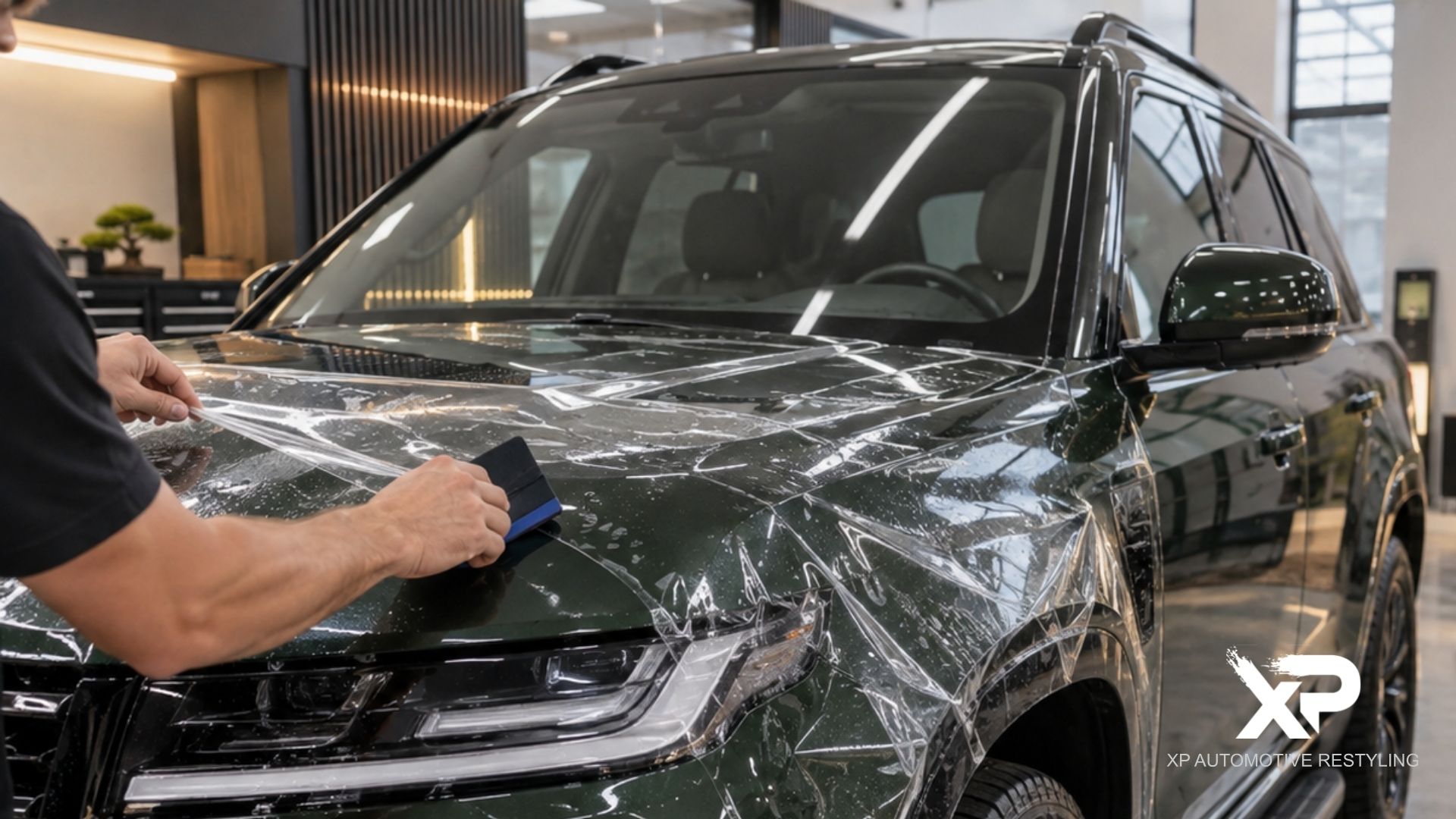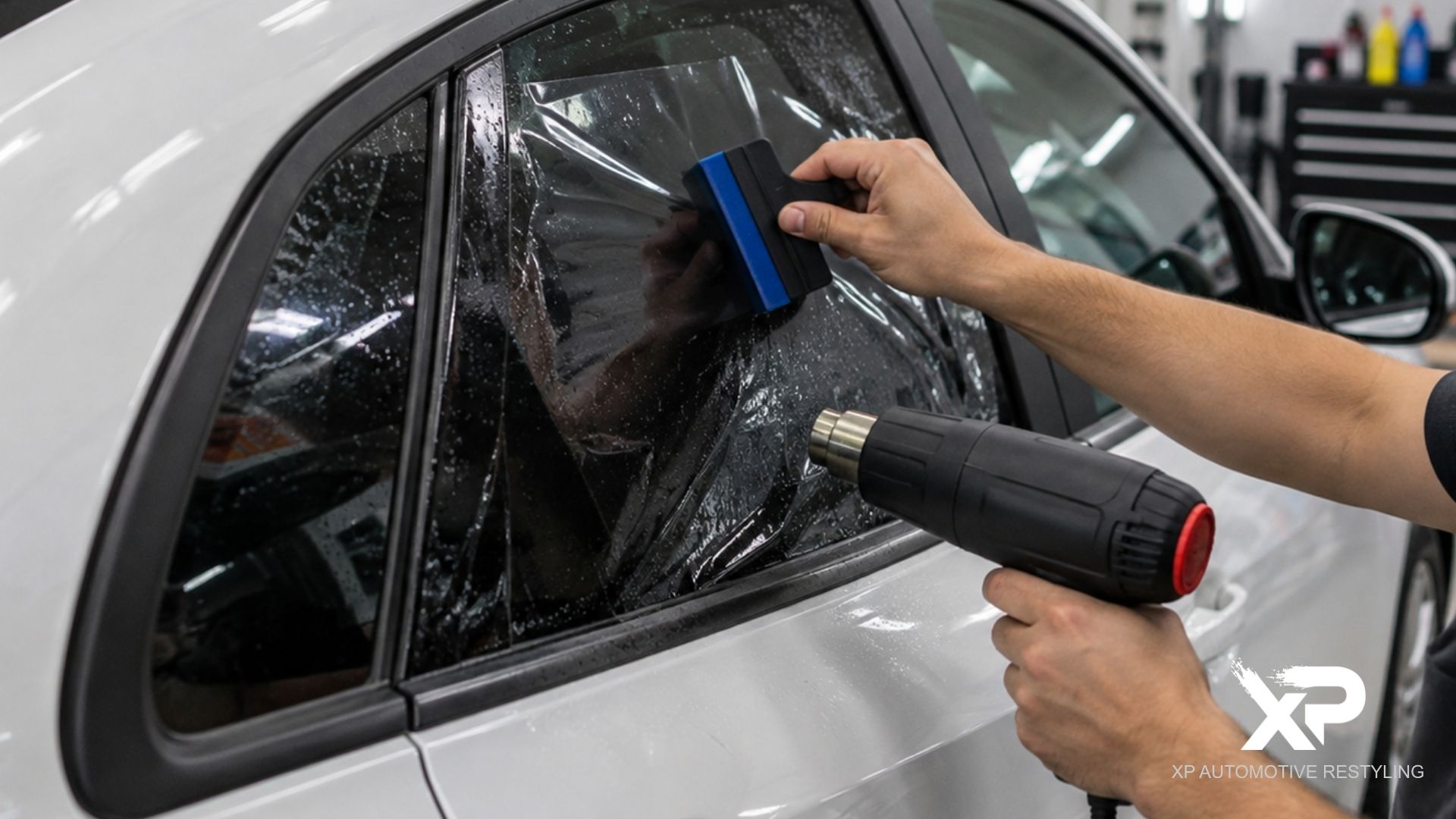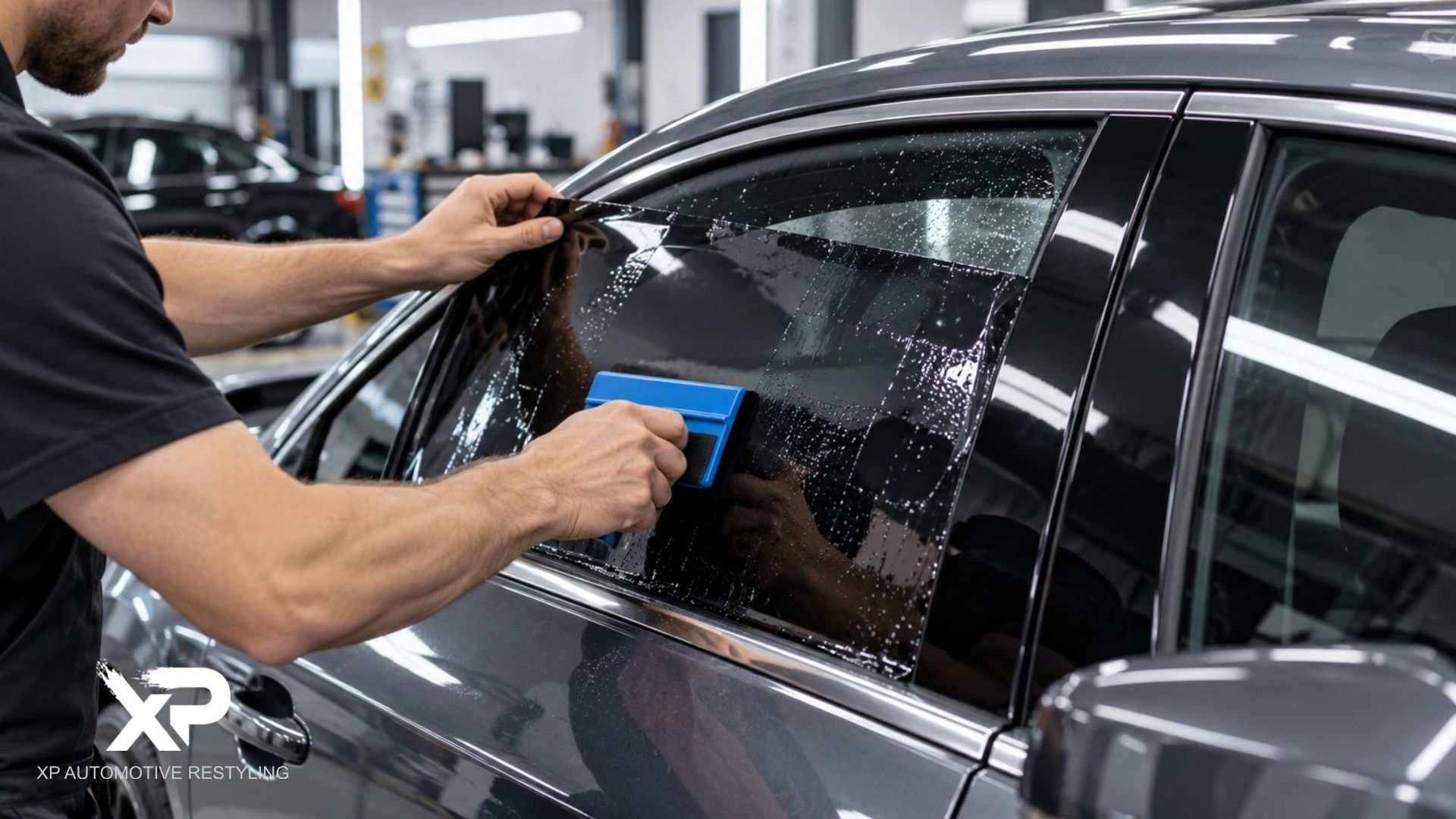
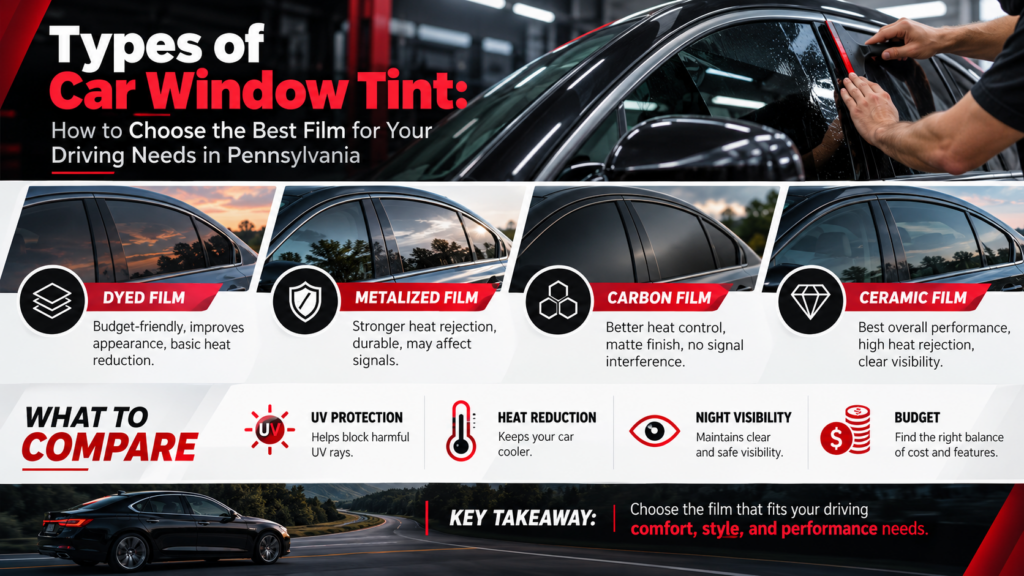
The main types of car window tint include dyed, metalized, carbon, and ceramic films, each offering different levels of heat rejection, UV protection, glare reduction, appearance, and durability. The best window tint depends on your driving habits, comfort expectations, budget, and Pennsylvania’s legal requirements. Understanding how these films perform makes it easier to choose the right option without paying for features you may not need.
Why Does the Type of Window Tint Matter More Than Its Darkness?
Window tint technology often matters more than darkness because two films with similar appearances can deliver significantly different heat rejection, UV protection, and overall comfort. Choosing a film based entirely on its shade can mean overlooking the characteristics that actually improve your driving experience.
For example, a dark dyed film may reduce visible brightness without rejecting as much solar heat as a lighter ceramic film. Both change how the windows look, but their performance can be very different.
This distinction is particularly relevant in Pennsylvania, where drivers experience hot summer afternoons, changing seasonal sunlight, and shorter winter days. A film that looks attractive during daylight should also provide comfortable visibility when driving after sunset.
At XP Automotive Restyling, we encourage drivers to think about what they want their windows to accomplish before discussing specific shades. Some customers want to reduce cabin heat during long commutes, while others prioritize UV protection, glare control, or a more refined exterior appearance.
The right automotive window film should address those needs without creating unnecessary compromises in visibility or legal compliance.
What Are the Main Types of Car Window Tint?
The four commonly discussed types of car window tint are dyed, metalized, carbon, and ceramic films. Their differences come primarily from the materials and technologies used to control visible light and solar energy.
Each has its own advantages and limitations.
Dyed Window Tint
Dyed film is generally one of the more affordable options. It uses dye to absorb portions of incoming light, creating a darker appearance and reducing some glare.
It can be suitable for drivers primarily interested in appearance and basic privacy. However, its heat rejection and long-term color stability can be more limited than those of higher-performance films, depending on product quality.
Metalized Window Tint
Metalized films incorporate metallic particles or layers that help reflect solar energy. They can provide useful heat rejection and durability, but some constructions may interfere with radio-frequency signals used by electronic devices.
That potential interference is worth discussing before installation, especially in vehicles with integrated communication systems.
Carbon Window Tint
Carbon window tint offers a balance of appearance, heat-management performance, and durability. Quality carbon films can provide better solar control than basic dyed alternatives while maintaining a consistent finish.
Their performance varies by manufacturer and product line, so the carbon label alone shouldn’t determine the purchase.
Ceramic Window Tint
Ceramic window tint uses nonmetallic ceramic technology to manage solar energy while maintaining optical clarity. High-performance ceramic films can deliver substantial heat rejection without requiring extremely dark glass.
They generally represent a higher investment, but the additional performance can be worthwhile for drivers who spend considerable time on the road or regularly park outdoors.
These categories are useful starting points, although individual film specifications matter more than the name of the technology alone.
Is Ceramic Window Tint Always the Best Choice?
Ceramic window tint is often an excellent choice for drivers prioritizing heat rejection, UV protection, and optical clarity, but it isn’t automatically necessary for every vehicle. Its advantages are most valuable when they address conditions the driver regularly experiences.
Consider a vehicle that spends several hours parked outdoors during Pennsylvania’s warmer months. A high-performance ceramic film can help reduce solar heat entering through the windows, making cabin conditions more manageable when the driver returns.
A second vehicle might be used primarily for short local trips and spend most of its time in a garage. Its owner may be satisfied with a less expensive film that provides the desired appearance and suitable performance.
When comparing ceramic film options, pay attention to:
- Solar heat rejection: How effectively the film manages incoming solar energy.
- UV protection: The film’s ability to block ultraviolet radiation.
- Visible light transmission: How much visible light passes through the finished glass.
- Optical clarity: How comfortably and clearly you can see through the film.
- Warranty coverage: What protection the manufacturer provides against qualifying product defects.
One common mistake is assuming every ceramic film performs identically. Different product lines can have substantially different specifications, even when they use similar technology.
For Pennsylvania drivers, the most sensible approach is to compare measurable performance against actual driving needs rather than selecting ceramic film solely because it is considered premium.
How Do Carbon and Ceramic Window Tint Compare?
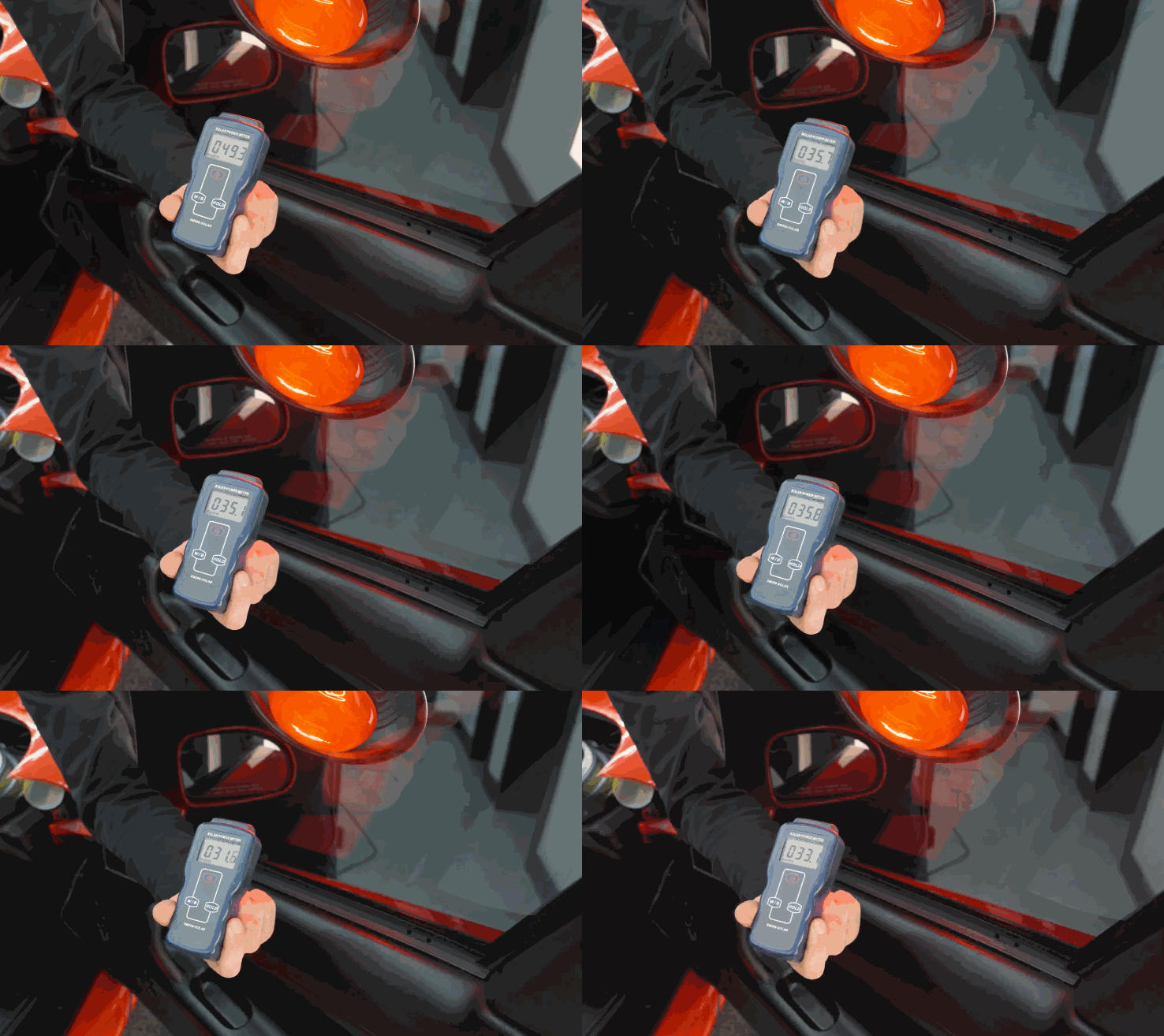
Carbon and ceramic window tint can both provide attractive appearance and useful solar protection, but ceramic films often offer stronger heat-rejection performance in comparable premium product lines. Carbon films may provide a practical middle ground for drivers who want more than basic tint without necessarily choosing the highest-performance option.
The differences become easier to understand when comparing everyday priorities.
Feature | Carbon Window Tint | Ceramic Window Tint |
Heat rejection | Moderate to strong, depending on product | Often higher in premium films |
UV protection | Can be excellent | Can be excellent |
Appearance | Consistent, often neutral or dark finish | Multiple shades and appearances |
Optical clarity | Good with quality films | Often excellent with quality films |
Electronic interference | Generally minimal with nonmetallic construction | Generally minimal |
Relative cost | Usually midrange | Usually higher |
Neither category guarantees a particular performance level without checking the film’s specifications. A well-engineered carbon product may outperform a lower-quality ceramic option in certain measurements.
At XP Automotive Restyling, we focus on helping customers compare the characteristics that matter to them rather than relying on broad product labels. A driver who wants a balanced upgrade may be satisfied with carbon film, while someone seeking stronger heat control may find ceramic worth the additional investment.
Ultimately, the better option is the one that provides the performance you will appreciate during everyday driving, not simply the one with the more expensive technology.
How Does Pennsylvania's Climate Affect Your Window Tint Choice?
Pennsylvania drivers should choose window tint that balances summer heat rejection, year-round UV protection, glare control, and comfortable visibility during shorter winter days. The state’s changing weather makes versatility more useful than selecting film exclusively for one season.
During summer, vehicles parked outdoors can accumulate considerable heat, particularly when exposed to direct sunlight for extended periods. High-performance window tint can reduce the solar energy entering through the glass, helping improve cabin comfort.
Winter introduces different considerations. Although temperatures are lower, UV exposure remains relevant, and sunlight reflecting from wet pavement or snow can create uncomfortable glare. Shorter daylight hours also mean more commuting takes place after sunset.
For drivers traveling through Bucks County, Southampton, Newtown, and surrounding Pennsylvania communities, these seasonal changes make film selection especially important.
A quality automotive window tint should provide useful performance throughout the year without unnecessarily compromising visibility when natural lighting conditions change.
What Window Tint Percentage Is Best for Your Driving Needs?
The best window tint percentage depends on how much visible light you want to maintain, your privacy preferences, nighttime driving habits, and Pennsylvania’s legal requirements. Darker film isn’t necessarily better at rejecting heat, and choosing an excessively dark shade can make certain driving conditions more challenging.
Window tint percentages describe visible light transmission, commonly called VLT. A lower VLT means less visible light passes through the glass, creating a darker appearance.
Here is how different preferences influence the decision:
- Drivers prioritizing visibility: Lighter films generally preserve more natural outward visibility, particularly in low-light conditions.
- Drivers seeking heat rejection: High-performance ceramic films can provide substantial solar control without requiring very dark glass.
- Drivers interested in privacy: Darker films can reduce visibility into a vehicle, but legal restrictions and nighttime visibility must be considered.
- Drivers with factory-tinted glass: Existing glass darkness affects the final VLT, so the combined result must be evaluated before installation.
Pennsylvania’s window tint laws also influence which shades can legally be installed on different windows and vehicle types. For many passenger vehicles, the state’s requirements are considerably more restrictive than the dark shades commonly advertised in tint comparisons.
At XP Automotive Restyling, we consider the existing glass and intended film together rather than evaluating a percentage in isolation. This helps drivers make a more informed decision about appearance, performance, and legal compliance.
The goal is to select a film that feels comfortable in everyday use, not simply one that looks appealing from outside.
Why Does Professional Window Tint Installation Matter?
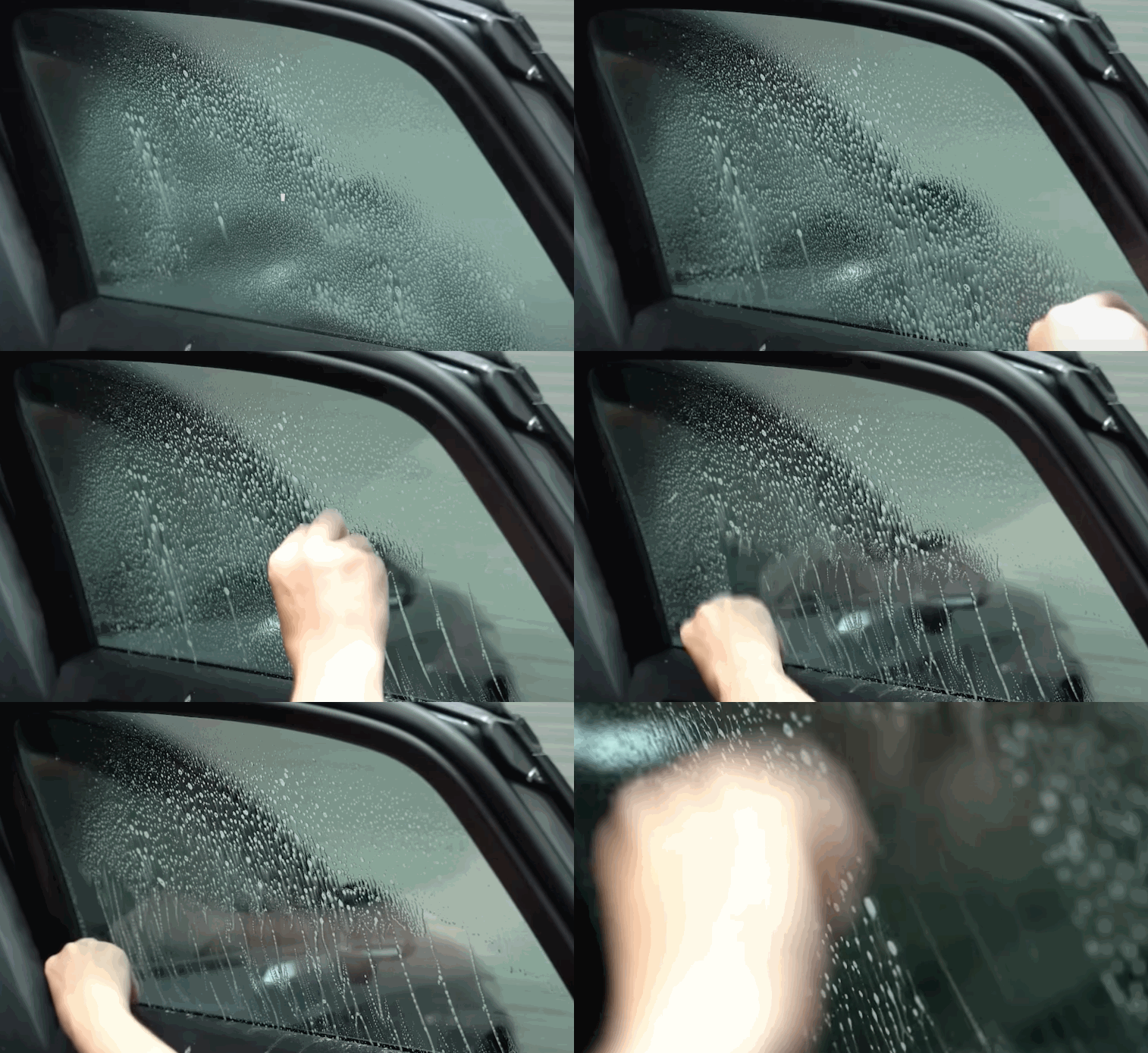
Professional window tint installation helps ensure accurate fitment, clean edges, optical clarity, and reliable adhesion. Even a high-quality film can perform poorly or look unappealing when installation conditions and techniques are inadequate.
A successful installation begins with careful glass preparation. Dust, oils, residue, and other contamination must be removed before the film is positioned. Otherwise, small particles can become trapped beneath the material and remain visible.
Accurate cutting and positioning are equally important. Automotive windows often have curved surfaces, tight seals, and complex shapes that require careful film handling.
Experienced installers also understand how to manage installation moisture, finish edges, and explain the curing process. Temporary haze or small moisture pockets can be normal during curing, while persistent contamination, creases, or lifting edges may indicate installation problems.
When comparing window tinting services, ask about the films offered, installation practices, warranty terms, and recommended aftercare. A professional installer should explain the differences between available products rather than recommending a film based solely on price or darkness.
How Can You Choose the Right Window Tint Without Overspending?
Choosing the right window tint without overspending means identifying which performance features matter most and selecting a film that meets those needs at a reasonable cost. The most expensive product isn’t automatically the most practical choice for every driver.
Start by considering how your vehicle is used. A daily commuter parked outside for much of the day may benefit from stronger heat rejection. A garage-kept vehicle used occasionally may not require the same level of thermal performance.
Film quality and warranty coverage should also influence your decision. A lower initial price may be less attractive when it comes with weaker performance, limited durability, or inadequate installation quality.
Before selecting window tinting services, ask the installer to explain the differences between available films using actual product specifications. Compare heat rejection, UV protection, optical clarity, and warranty terms rather than relying exclusively on marketing descriptions.
At XP Automotive Restyling, we believe the right recommendation should reflect the vehicle and its owner. Some drivers benefit from premium ceramic technology, while others can achieve their goals with a more economical film.
Spending wisely means paying for performance you will actually use while ensuring the installation meets appropriate quality standards.
Conclusion: Choose Window Tint That Works for Your Everyday Driving
The best type of car window tint is the one that matches your comfort expectations, driving habits, budget, and Pennsylvania’s legal requirements. Dyed, metalized, carbon, and ceramic films offer different advantages, but no single technology is necessary for every vehicle.
Rather than focusing exclusively on darkness, compare heat rejection, UV protection, optical clarity, durability, and overall film quality. Pennsylvania’s seasonal weather and changing daylight conditions also make visibility an important part of the decision.
Professional installation completes the process by ensuring the selected film is properly fitted and finished.
At XP Automotive Restyling, we help Pennsylvania drivers choose window tint based on how they actually use their vehicles. Whether you’re interested in improved heat rejection, UV protection, or a more refined appearance, our team can explain the available options and recommend an appropriate solution.
XP Automotive Restyling - PPF, Window Tinting, Ceramic Coatings