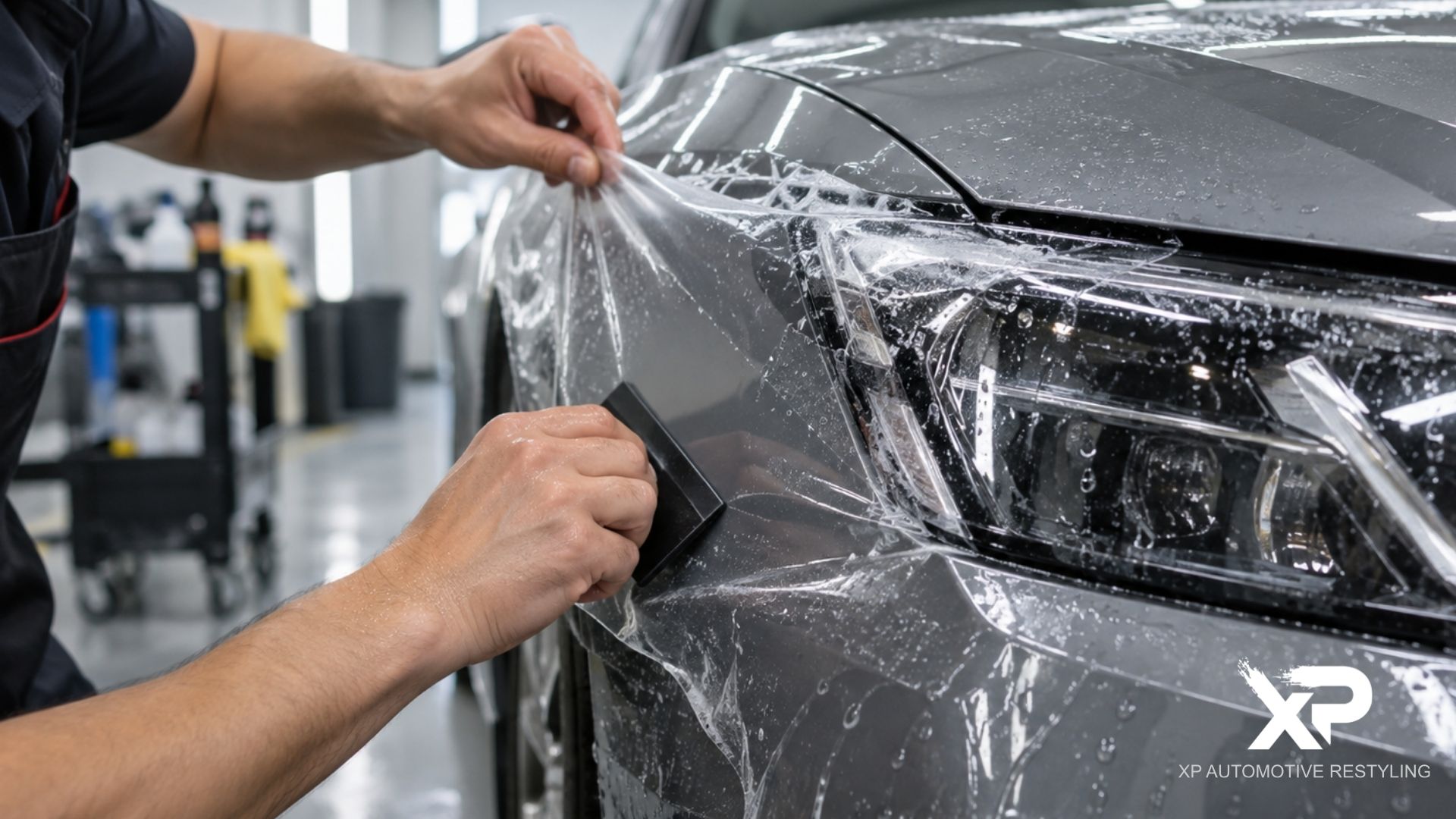
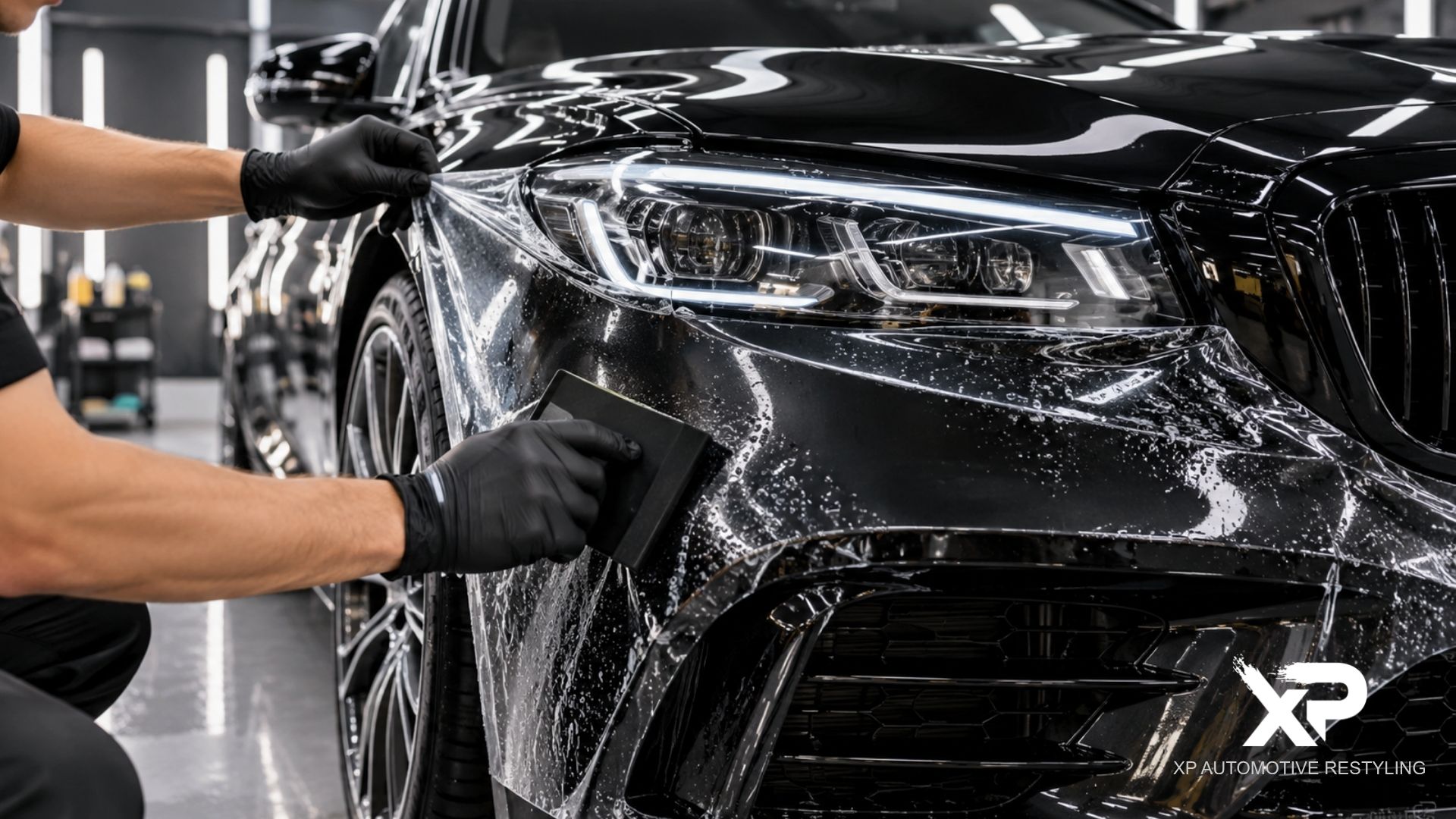
Paint protection film (PPF) protects luxury cars from road debris by creating a transparent, impact-resistant barrier over vulnerable painted surfaces. It helps absorb damage from small stones, gravel, and particles thrown by surrounding traffic, reducing the risk of rock chips and surface scratches. For New Hope drivers, professional PPF installation can help preserve factory paint without changing the vehicle’s original appearance.
Why Is Road Debris a Concern for Luxury Cars in New Hope, PA?
Road debris is a concern for luxury cars because even small particles can damage exposed paint when they strike at driving speeds. Low front bumpers, sculpted body panels, and wide fenders can make certain luxury vehicles particularly vulnerable to repeated impacts.
New Hope offers plenty of opportunities to enjoy a well-maintained vehicle, but local driving still involves everyday hazards. Traveling along Route 32 near the Delaware River, connecting to Route 202, or heading farther into Bucks County can expose a car to loose stones, construction debris, and particles thrown by other vehicles.
Pennsylvania’s seasonal road conditions add another consideration. Winter maintenance materials, loose aggregate, and deteriorating pavement can leave debris behind even after the colder months have passed.
For luxury-car owners, the concern often extends beyond the immediate appearance of a rock chip. Repairing a damaged panel may involve refinishing original paint, and matching certain factory finishes can be complicated.
At XP Automotive Restyling, we approach paint protection film as a way to reduce that avoidable damage before it happens. The objective is to preserve the original finish while allowing owners to enjoy their vehicles on the roads they actually drive.
How Does Paint Protection Film Stop Rock Chips and Road Debris Damage?
Paint protection film helps prevent rock chips by absorbing and distributing the energy of minor impacts before debris reaches the painted surface. Its flexible construction provides a physical barrier that ordinary waxes and ceramic coatings cannot replicate.
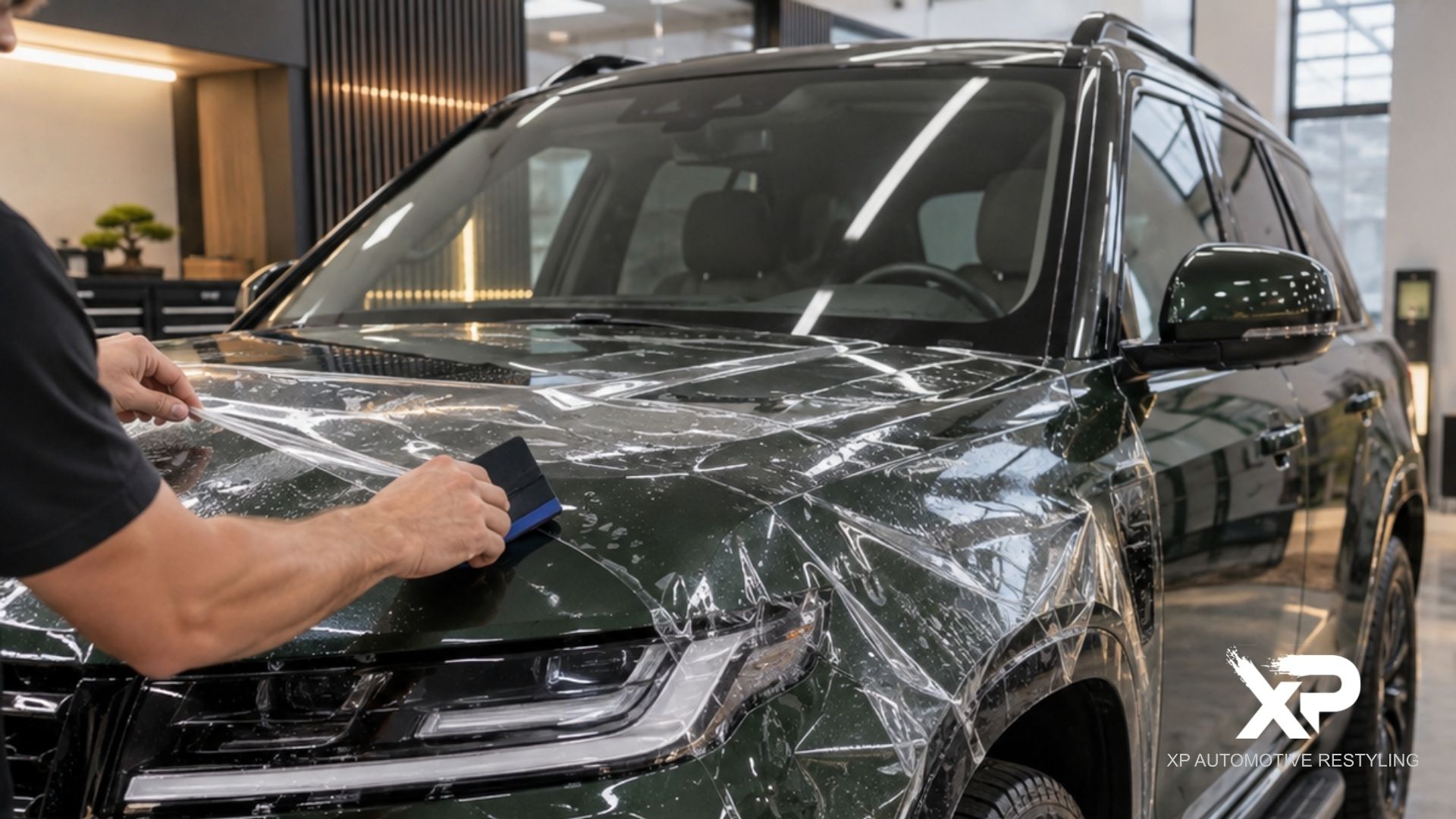
Modern automotive PPF typically uses a transparent thermoplastic polyurethane film designed to conform to painted body panels. When a small stone strikes the protected surface, the film takes the initial contact rather than leaving the paint directly exposed.
Several characteristics contribute to this protection:
- Impact resistance: The film helps absorb minor strikes from stones, gravel, and other road particles.
- Flexible construction: PPF conforms to curved panels while maintaining a protective layer over the paint.
- Self-healing topcoat: Many premium films can recover from light surface marks when exposed to appropriate warmth.
- Optical clarity: Quality film preserves the appearance of the underlying paint, including its color and gloss.
- Surface durability: The film provides a sacrificial layer that can take everyday wear instead of the factory finish.
However, PPF protection has limits. A sufficiently large or forceful impact can still penetrate the film or damage the panel beneath it. Paint protection film does not prevent dents, collision damage, or every possible scratch.
Its value comes from reducing the smaller, more frequent impacts that gradually affect a luxury vehicle’s appearance.
Which Parts of a Luxury Car Are Most Vulnerable to Road Debris?
The front bumper, hood, front fenders, mirror caps, rocker panels, and areas behind the wheels are among the most vulnerable surfaces on a luxury car. These panels are positioned where debris from surrounding traffic or the vehicle’s own tires is most likely to strike.
Not every vehicle experiences damage in exactly the same places, though.
Front Bumper and Hood
The front end receives direct exposure to particles traveling through the air or bouncing off the road. Sports cars with low noses can be especially susceptible because their bumpers and leading hood edges sit closer to the pavement.
Front Fenders and Mirror Caps
Fenders and mirrors are frequently exposed during highway driving. Their forward-facing shapes can catch small particles that might otherwise pass around the vehicle.
Rocker Panels and Lower Bodywork
Wide tires and aggressive wheel fitments can throw debris against the lower sides of a vehicle. On some performance models, the sections immediately behind the wheels experience considerable wear.
This is why PPF coverage should reflect the vehicle’s design rather than relying exclusively on a generic package.
For example, a luxury sedan used for regular commuting may benefit primarily from front-end protection, while a low sports car with wide rear tires may justify additional coverage around its rocker panels and rear quarter sections.
Identifying those exposure points helps direct the investment toward the areas most likely to suffer damage.
Is Full-Front PPF Enough for a Luxury Car?
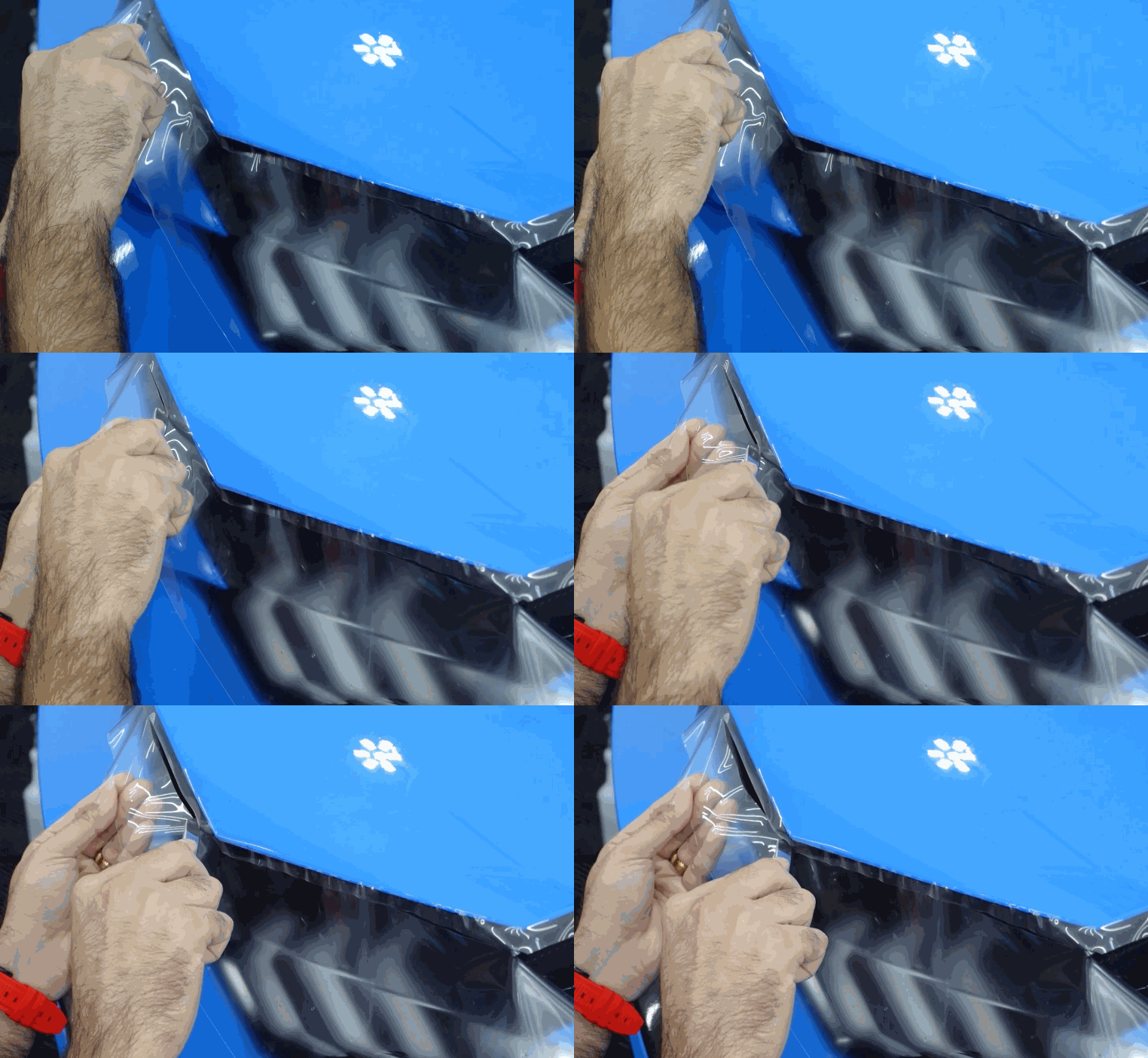
Full-front PPF is often an effective choice for luxury cars because it protects the panels most exposed to debris from vehicles ahead. However, additional coverage may be worthwhile for cars with vulnerable lower bodywork, wide tires, or frequent highway use.
A typical full-front package covers the front bumper, complete hood, front fenders, and mirror caps. Protecting entire panels can also avoid the visible transition lines sometimes associated with partial-front coverage.
At XP Automotive Restyling, we consider how the vehicle is driven before discussing whether full-front protection is sufficient.
A luxury coupe used primarily for weekend drives around New Hope may have different exposure than a performance sedan regularly traveling Route 202 or commuting across Bucks County.
Owners should also think about how long they intend to keep the vehicle and how important preserving its original paint is to them. Broader protection may be appealing for a long-term enthusiast vehicle, but full-body PPF is not automatically necessary.
The most sensible PPF installation is one that protects the areas facing the greatest risk while remaining appropriate for the owner’s priorities and budget.
Can Paint Protection Film Preserve the Appearance of High-End Paint Finishes?
Paint protection film can help preserve high-end automotive finishes by reducing direct contact between the paint and common road hazards. This is particularly valuable for luxury cars with distinctive colors, carefully maintained finishes, or paintwork the owner wants to keep original.
The film is designed to be visually discreet when properly selected and installed. On glossy paint, a quality gloss PPF can maintain the vehicle’s reflective appearance without requiring a noticeable change in color.
For owners of luxury and performance cars, that matters because the vehicle’s finish is often a major part of its design. Deep metallic colors, sculpted panels, and carefully detailed bodywork deserve protection that doesn’t interfere with their appearance.
Paint protection film can also reduce the need for certain cosmetic repairs caused by everyday road exposure. Preventing a chip is generally preferable to addressing damaged paint after the fact, particularly when preserving the original finish is a priority.
Still, the condition of the paint before installation matters. PPF is transparent, so existing scratches, chips, or other defects may remain visible beneath it. Proper inspection and preparation help ensure the film enhances the vehicle’s appearance rather than drawing attention to imperfections.
For New Hope luxury-car owners, the appeal is straightforward: enjoy the car on the road while reducing the chances that routine driving leaves permanent marks on its finish.
Does PPF Protect Luxury Cars Better Than Ceramic Coating?
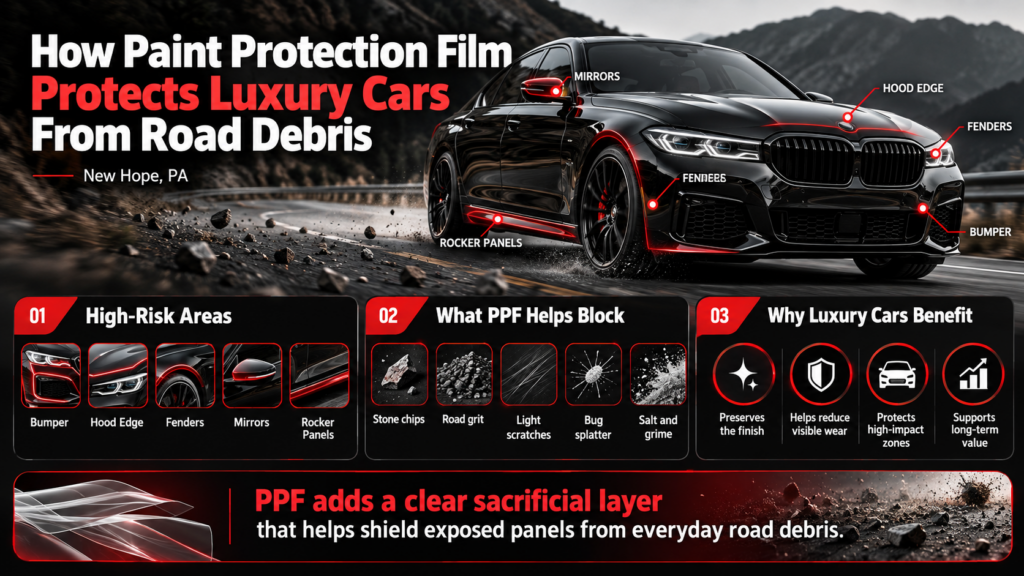
Paint protection film provides better protection against rock chips and physical road debris than ceramic coating because it creates a thicker, impact-resistant barrier. Ceramic coating serves a different purpose, primarily improving surface properties, chemical resistance, and ease of cleaning.
For luxury-car owners, understanding that distinction helps avoid investing in a product that doesn’t address their main concern.
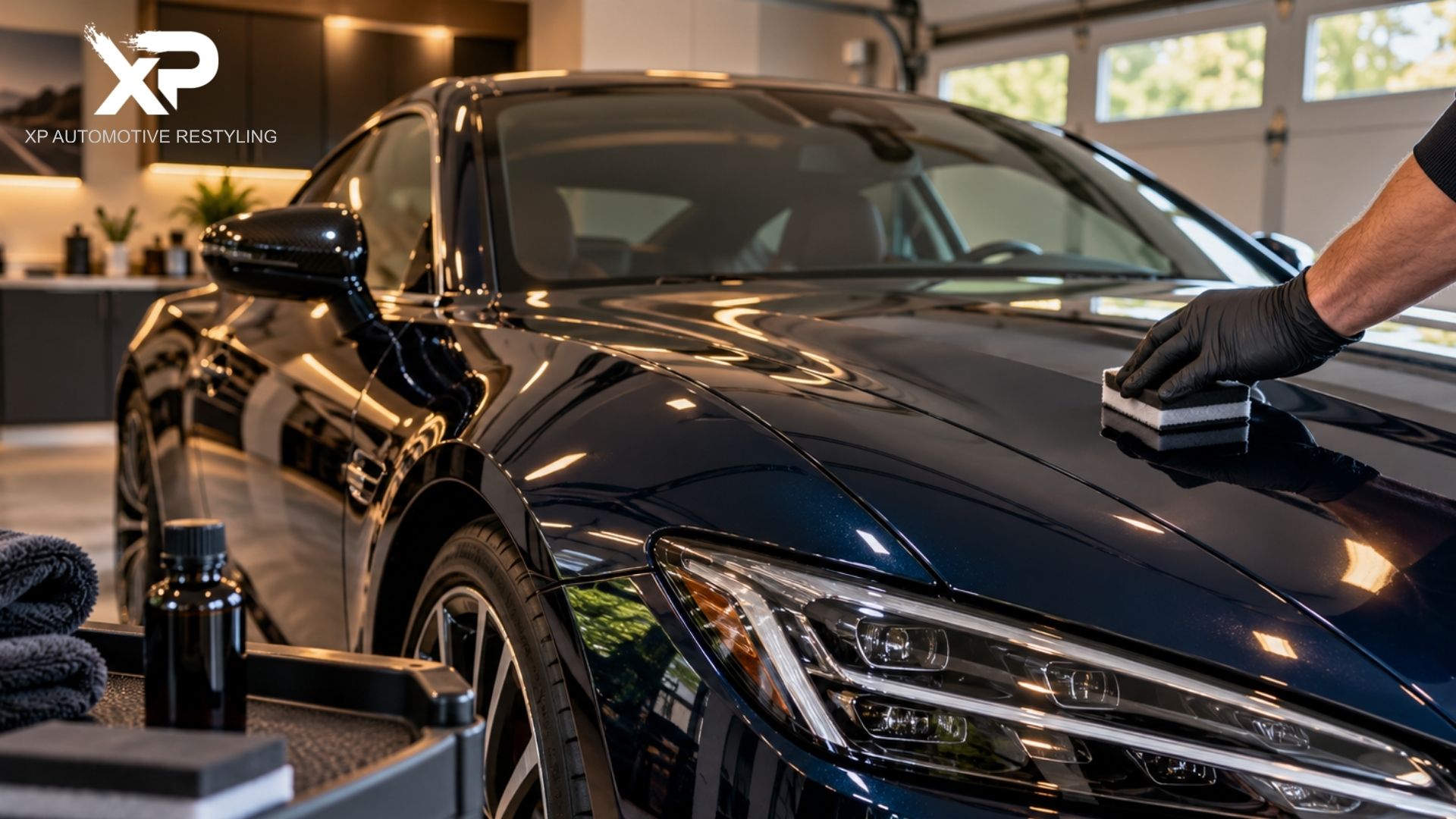
Ceramic coating can make road grime, water, and other contaminants easier to remove. However, it cannot absorb stone impacts the way PPF can. A small rock striking a ceramic-coated bumper can still chip the paint underneath.
PPF installation is therefore the more appropriate choice when physical paint damage is the priority. Some owners choose to combine both products, using film on high-impact areas and ceramic coating on other painted surfaces.
Neither product makes a vehicle completely damage-proof. The advantage of combining them is that each addresses a different aspect of exterior protection.
Why Does Professional PPF Installation Matter for Luxury Vehicles?
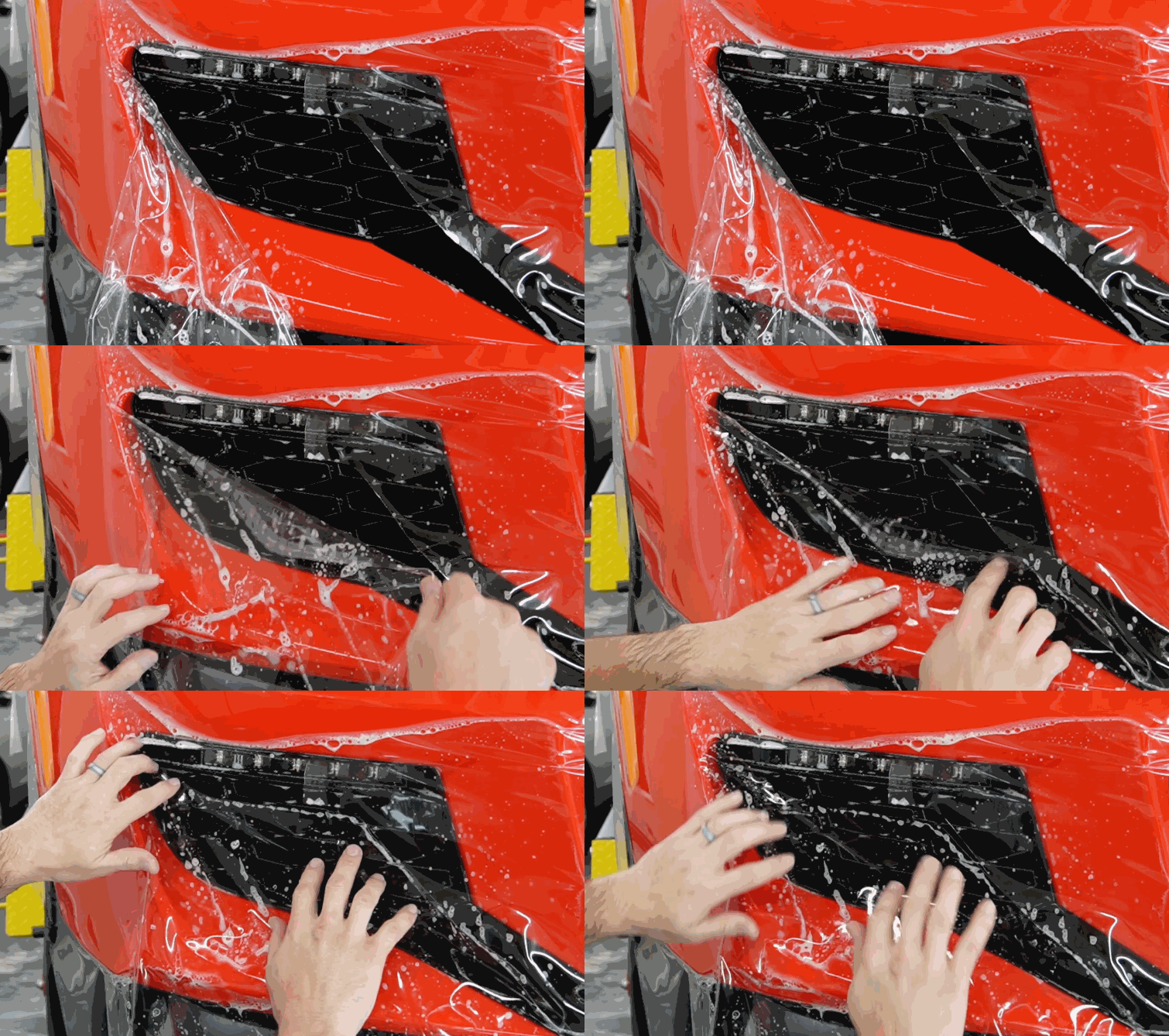
Professional PPF installation is essential for luxury vehicles because precise fitment, surface preparation, and careful film handling directly affect protection and appearance. Complex bodywork, sharp contours, large panels, and delicate finishes require an installation approach suited to the individual vehicle.
A successful installation involves several important stages:
- Paint inspection: The vehicle is examined for existing scratches, chips, contamination, and imperfections that may remain visible beneath the film.
- Surface preparation: The paint is thoroughly cleaned and decontaminated to create a suitable surface for film application.
- Film preparation: Patterns are selected and adjusted to match the vehicle’s body panels and coverage requirements.
- Precise positioning: The film is carefully aligned and fitted around curves, edges, and other design features.
- Moisture removal: Installation solution is worked out from beneath the film to support proper adhesion.
- Final inspection: The protected surfaces are checked for alignment, visible contamination, edge quality, and other installation concerns.
At XP Automotive Restyling, we understand that protecting a luxury vehicle should not compromise the details that make it distinctive. Our installation process includes careful preparation, precise pattern fitment, and quality-control checks.
We also use a hybrid pattern solution that allows us to tailor coverage to the vehicle’s contours rather than relying on a one-size-fits-all approach.
The objective is to achieve reliable paint protection film coverage while maintaining a clean, discreet finish that complements the original design.
How Should You Maintain PPF on a Luxury Car?
Maintaining PPF involves regular gentle washing, prompt contaminant removal, and following the film manufacturer’s care recommendations. Proper maintenance helps preserve the film’s appearance and protective properties over time.
For luxury cars driven around New Hope, road dust, insects, bird droppings, and seasonal grime should not be allowed to accumulate unnecessarily. Although quality film provides a protective surface, contaminants can still affect its appearance when neglected.
A few maintenance habits make a meaningful difference:
- Wash the vehicle using compatible automotive cleaning products and clean microfiber wash media.
- Remove insect residue, bird droppings, and other contaminants promptly.
- Avoid abrasive compounds or aggressive polishing unless specifically approved for the film.
- Keep high-pressure water jets away from exposed film edges.
- Follow the installer’s curing and initial washing instructions after installation.
Many modern films feature self-healing topcoats that can recover from certain light surface marks when exposed to appropriate warmth. However, this characteristic should not be confused with the ability to repair deep scratches, tears, or punctures.
A professionally installed PPF wrap can provide years of useful protection, but its actual lifespan depends on film quality, exposure, driving conditions, and maintenance.
For garage-kept luxury cars, reduced environmental exposure may help maintain the film’s appearance, although occasional driving still requires proper cleaning and care.
Conclusion: Protect Your Luxury Car Without Compromising Its Appearance
Paint protection film helps luxury cars maintain their original appearance by shielding vulnerable surfaces from rock chips, gravel, road debris, and minor everyday impacts. For New Hope drivers, the right coverage can provide valuable protection without changing the vehicle’s distinctive design.
Whether your car spends most of its time in a garage or regularly travels throughout Bucks County, exposed paint remains vulnerable whenever the vehicle is on the road.
The key is selecting coverage that matches its design, driving habits, and long-term ownership goals. Full-front PPF may provide the protection you need, while expanded or full-body coverage can make sense for vehicles with additional high-impact areas.
At XP Automotive Restyling, we offer professional PPF installation tailored to the needs of luxury and performance vehicles. Contact our team to schedule a consultation and discuss the best paint protection film coverage for your luxury car in New Hope, PA.
XP Automotive Restyling - PPF, Window Tinting, Ceramic Coatings