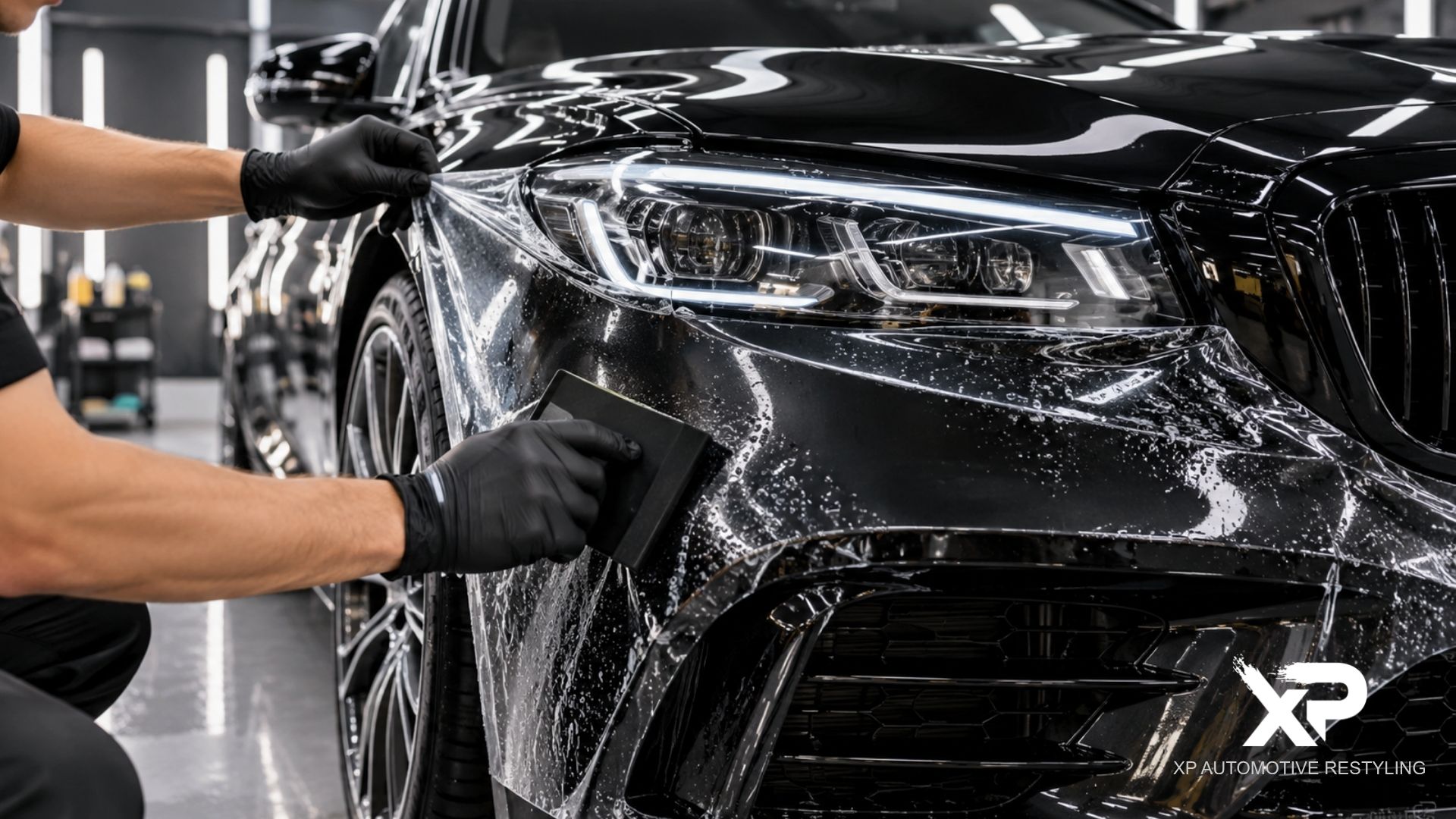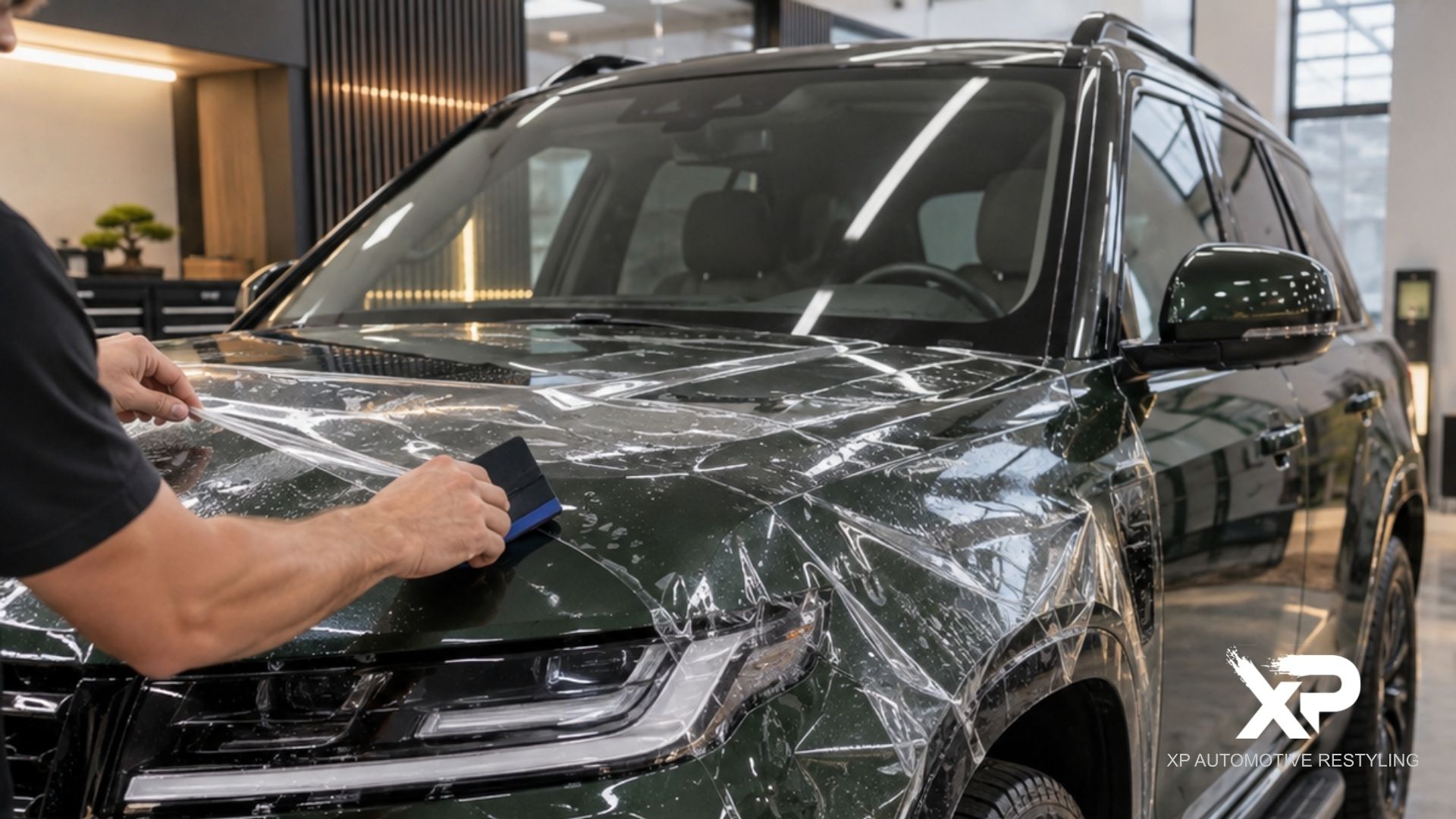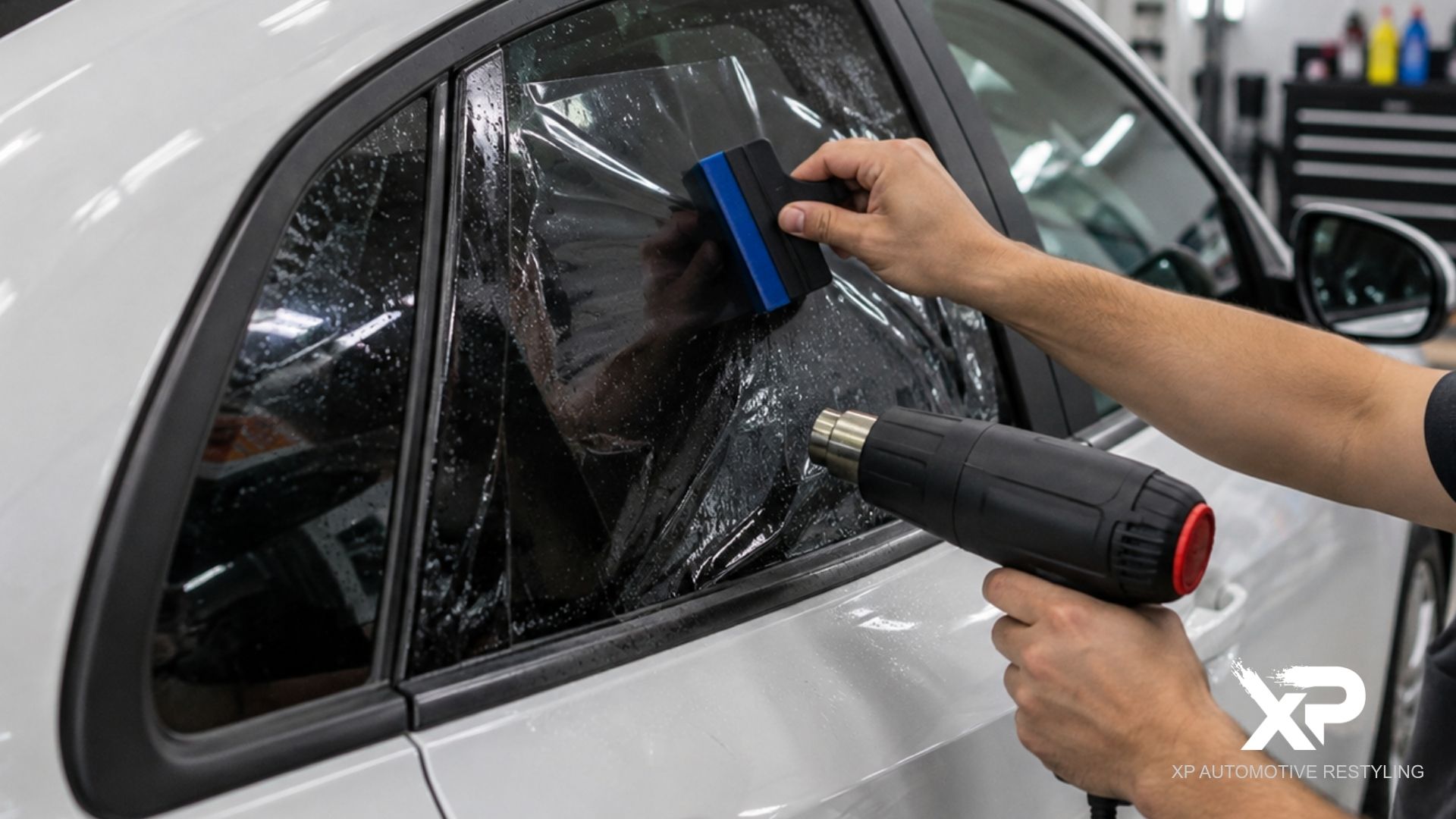
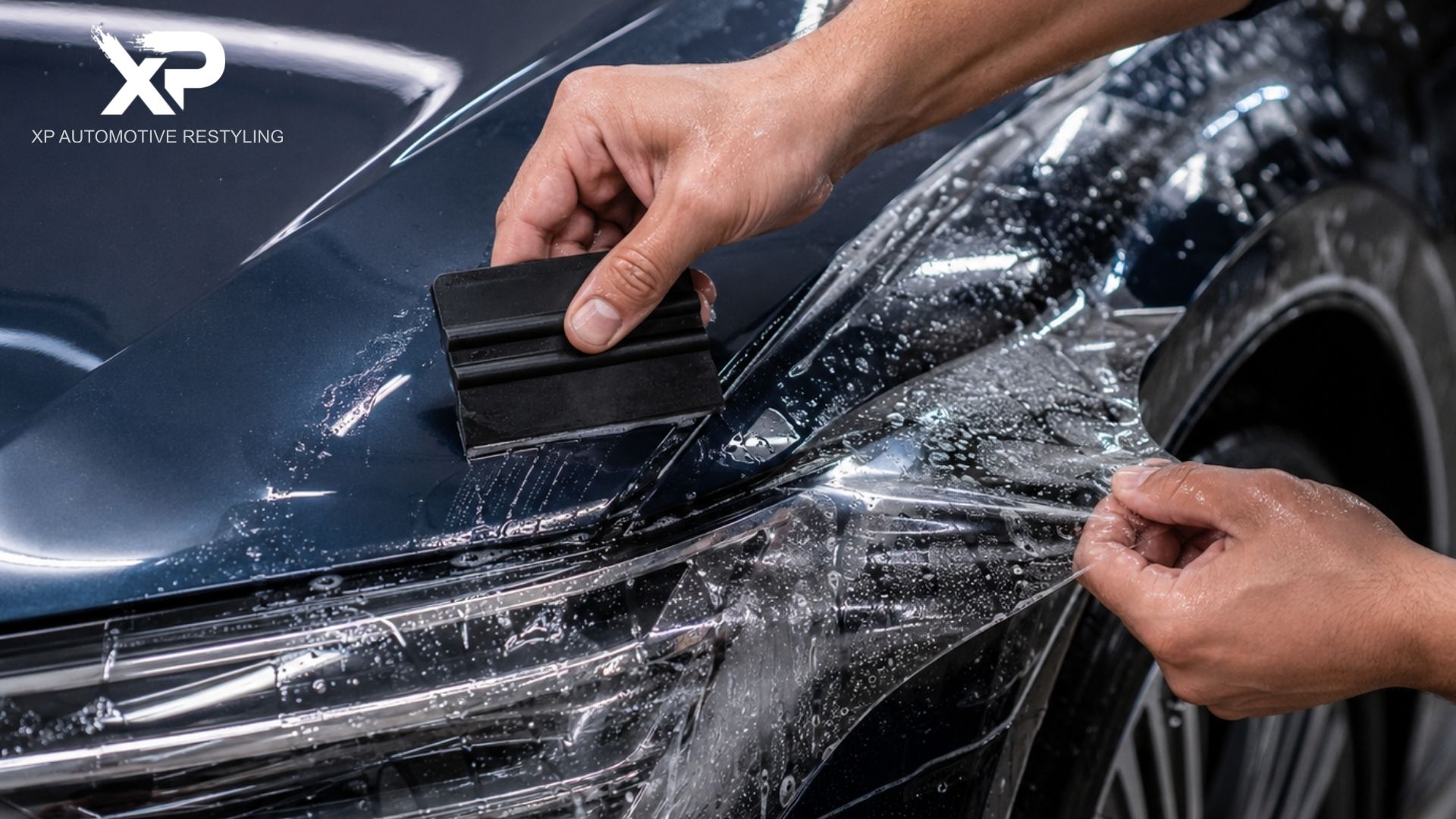
A PPF wrap is a transparent paint protection film applied to painted vehicle surfaces to help protect against rock chips, road debris, minor scratches, bug splatter, and environmental exposure. Unlike cosmetic products that sit on top of the paint for appearance purposes, paint protection film creates a physical barrier designed to absorb everyday wear before it reaches the factory finish.
That simple concept is one of the reasons PPF has become increasingly popular among Southampton drivers. Whether a vehicle spends its time commuting through Bucks County, traveling on Route 1, or sitting outdoors throughout the year, the paint is constantly exposed to conditions that slowly affect its appearance.
As a team that works with these products every day, we’ve seen firsthand how many misconceptions still exist around paint protection film and PPF installation. This guide is designed to explain what a PPF wrap actually is, how it works, and why so many vehicle owners choose it as part of a long-term protection strategy.
Why Vehicle Paint Takes More Damage Than Most Drivers Realize
Most paint damage doesn’t happen during dramatic events. It happens during ordinary Tuesdays.
A morning commute. A quick stop at a shopping center. A few miles behind a construction truck. A summer afternoon parked outside while you’re at work.
None of those situations seem significant on their own, but paint damage prevention is often about understanding accumulation rather than isolated incidents.
Sources of Everyday Paint Wear Around Southampton
- Small stones kicked up during highway driving
- Dust and gravel from construction areas throughout Bucks County
- Bug residue left on paint during warmer months
- UV exposure during long periods of outdoor parking
- Minor scratches from daily vehicle use
At XP Automotive Restyling, many of the vehicles we see don’t have one major paint issue. Instead, they show hundreds of small signs of exposure that have gradually built up over months or years.
That’s what makes vehicle paint protection such a relevant topic for daily drivers. The damage often develops slowly enough that people don’t notice it until the vehicle looks noticeably different than it did when it was new.
What Makes Paint Protection Film Different From Other Protective Products?
Paint protection products are often discussed together, but they don’t all perform the same role.
Waxes, sealants, ceramic coatings, and paint protection film each contribute something different to automotive paint protection. Rather than replacing one another, they solve different problems.
The Key Difference
A wax or sealant primarily enhances appearance and provides a temporary layer of protection.
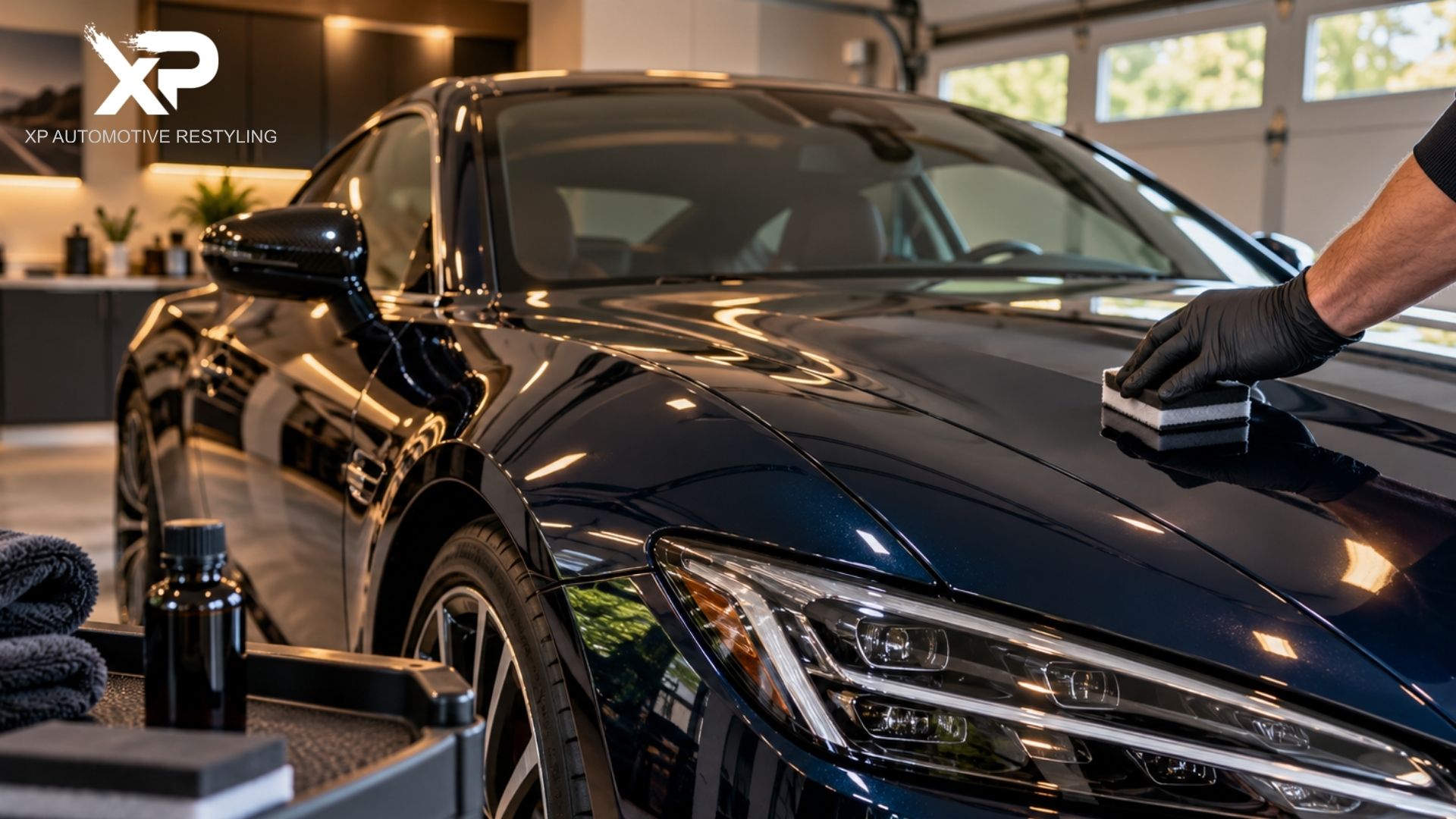
A ceramic coating helps improve chemical resistance, cleaning ease, and surface performance.
A clear bra, or paint protection film, serves a different purpose altogether. It creates a physical barrier between the paint and external impacts.
That distinction becomes important when dealing with debris, gravel, or minor scratches. Unlike liquid-applied products, self healing paint protection film is specifically engineered to absorb and disperse certain types of impact before they affect the paint underneath.
The result isn’t just surface enhancement. It’s actual impact protection.
Understanding that difference helps explain why paint protection film occupies a unique place among modern vehicle protection options.
The Types of Damage a PPF Wrap Is Designed to Handle
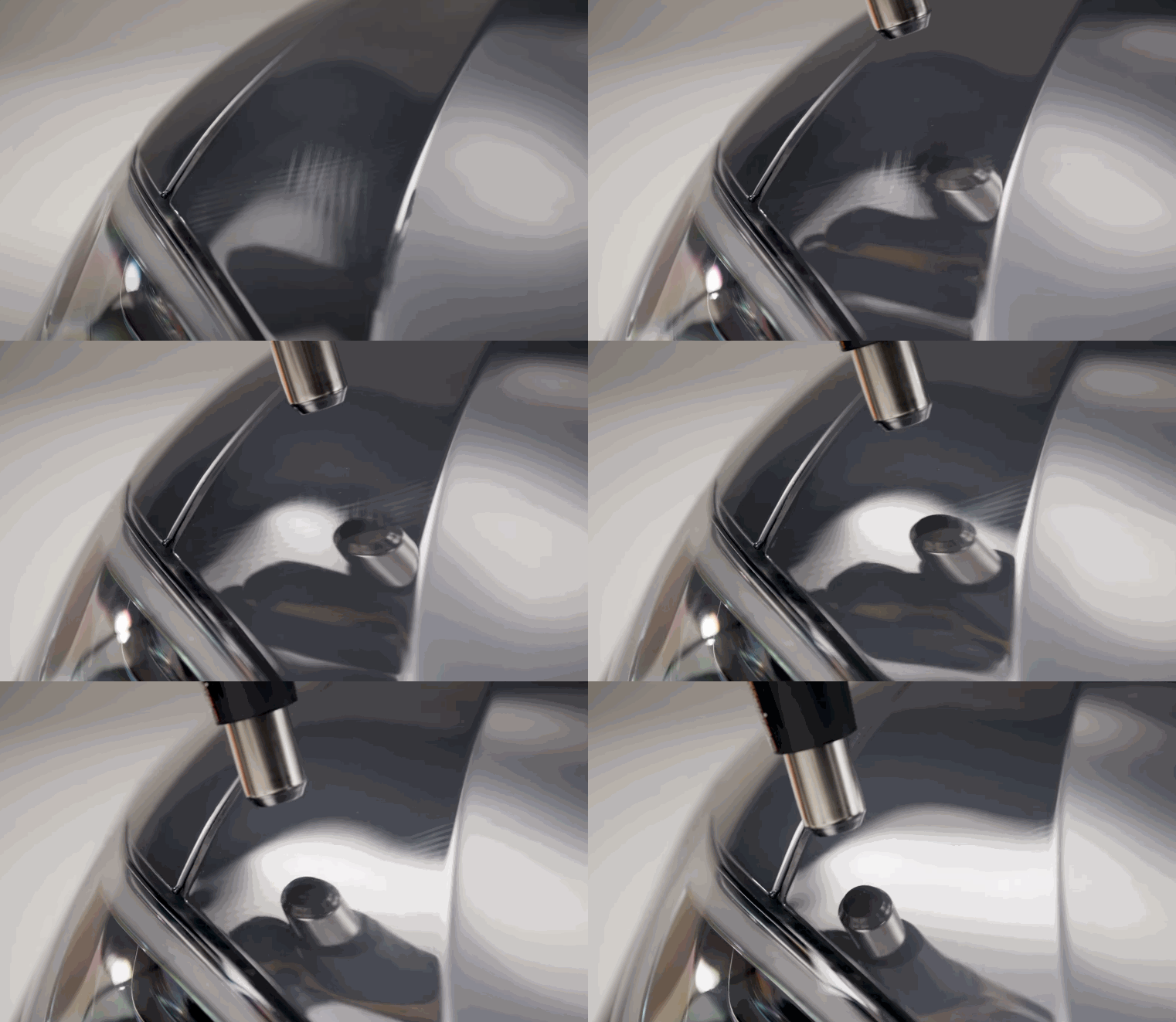
Not every threat to vehicle paint looks the same.
Some forms of damage arrive suddenly, while others take years to become noticeable. A quality PPF wrap is designed to help reduce both types.
What Paint Protection Film Commonly Helps Protect Against
- Rock chips caused by highway traffic and road debris
- Surface scratches from daily vehicle use
- Bug splatter that can stain paint during summer driving
- Road debris impacting front-facing surfaces
- UV exposure that gradually affects paint appearance
These risks are particularly relevant in Pennsylvania, where vehicles regularly transition between highway travel, suburban roads, seasonal weather changes, and construction-heavy areas.
The goal isn’t to make a vehicle invincible. Instead, rock chip protection and scratch protection film help reduce the cumulative damage that typically occurs during everyday ownership.
For many drivers, highway paint protection becomes most valuable not after a single drive, but after years of repeated exposure to the same conditions.
Where Paint Protection Film Is Usually Installed
One of the most flexible aspects of paint protection film is that it doesn’t have to cover the entire vehicle to provide meaningful benefits.
Coverage can be customized based on driving habits, exposure levels, and personal priorities. Some owners focus on the highest-impact areas, while others prefer more comprehensive protection.
Common Areas Selected for PPF Coverage
- Front bumpers
- Hoods
- Side mirrors
- Front fenders
- Rocker panels
- Full vehicle applications
Notice a pattern? Most of these areas are positioned directly in the path of debris, airflow, and road contaminants.
That’s why front end PPF remains one of the most popular choices. The front of the vehicle typically receives the highest concentration of impacts during normal driving.
At XP Automotive Restyling, we often explain custom PPF coverage by starting with exposure rather than coverage packages. The question isn’t “How much film do you want?” It’s “Which areas of your vehicle face the greatest risk?”
For some owners, that leads to targeted protection. For others, it leads to full body paint protection film. The right answer depends entirely on how the vehicle is used and what level of protection makes the most sense for long-term ownership.
What a Driver Notices After Living With PPF
The interesting thing about paint protection film is that most of its value isn’t felt on installation day. When a vehicle first leaves the shop, the difference is often subtle. The paint looks the same, the color hasn’t changed, and there isn’t an obvious transformation. The real appreciation tends to develop later.
Six months down the road, the front bumper still looks cleaner than expected. A year later, the hood has fewer chips than similar vehicles. Two years later, the paint still maintains much of the appearance it had when the film was installed.
The Benefits That Become More Noticeable Over Time
- Easier maintenance and cleaning
- Less worry about everyday road debris
- Better vehicle appearance protection during long-term ownership
- Reduced accumulation of small cosmetic damage
- Greater confidence during highway driving and daily commuting
Many of the PPF benefits are psychological as much as physical. Owners often spend less time worrying about every small impact because they know an additional layer of protection is in place.
That’s why long term paint protection tends to be appreciated more with time. The longer someone owns the vehicle, the easier it becomes to see the difference between protected and unprotected paint.
Common Questions Drivers Have About PPF Wraps
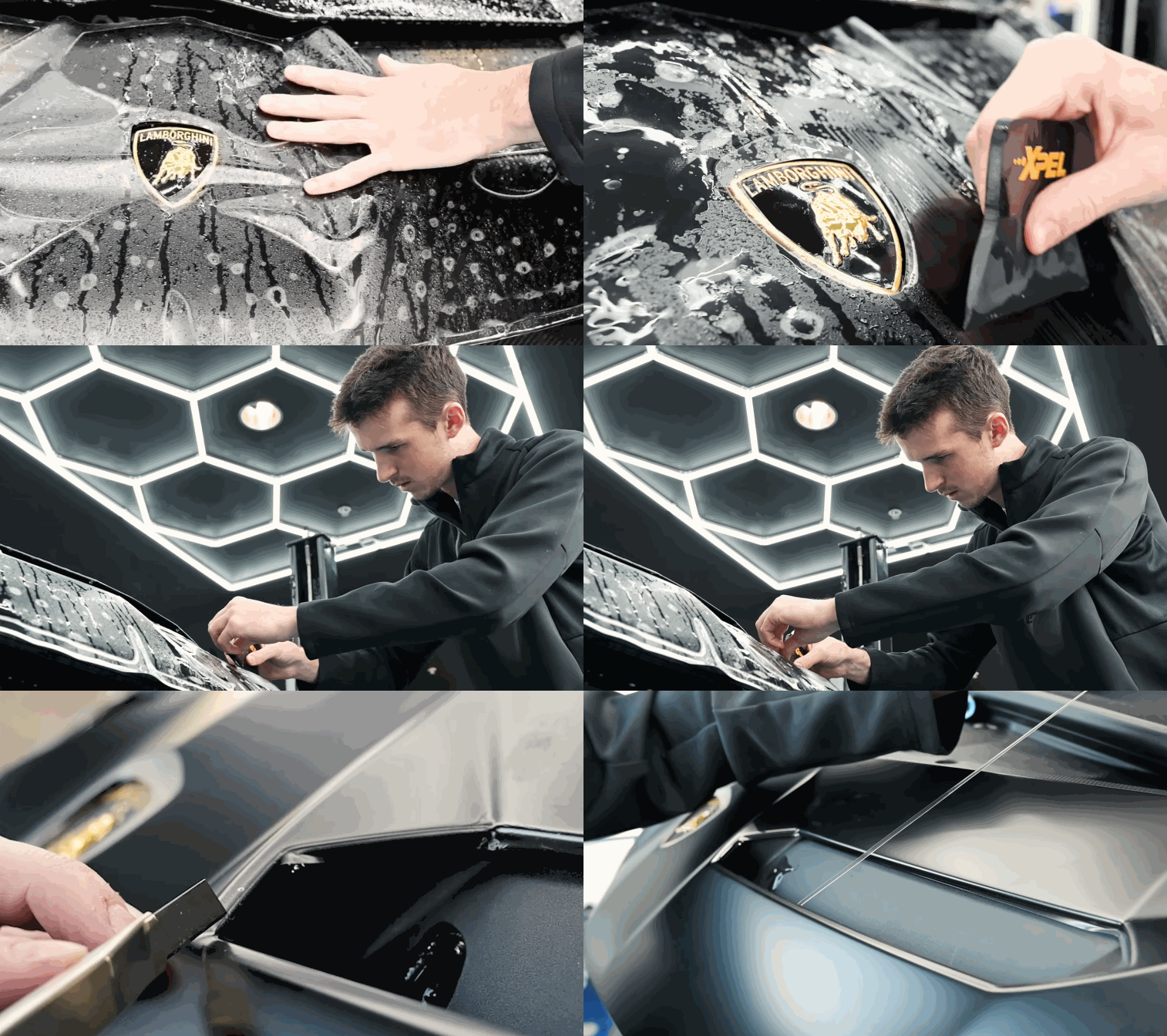
Before deciding on paint protection film, most people have a handful of similar questions. Interestingly, the questions today are very different than they were ten years ago because modern PPF technology has evolved significantly.
“Will I Be Able to See the Film?”
In most situations, no. High-quality films are designed to be extremely clear and blend naturally with factory paint.
“Does It Require Special Care?”
Not really. PPF maintenance is generally straightforward and involves many of the same safe washing practices already recommended for vehicle care.
“How Long Does It Last?”
The paint protection film lifespan depends on factors such as film quality, installation quality, maintenance, and exposure conditions. Premium products are designed for long-term performance rather than short-term use.
“Will It Turn Yellow Over Time?”
This concern comes from older generations of film. Today’s materials offer significantly improved clarity and UV resistance compared to products available years ago.
The key takeaway is that many assumptions about PPF are based on outdated experiences. The products available today are far more advanced, more durable, and more refined than what many drivers remember from the past.
How to Know if Paint Protection Film Makes Sense for Your Vehicle
Rather than asking whether PPF is worth it, a better question is whether your vehicle experiences the kind of exposure that paint protection film is designed to address.
Paint Protection Film May Make Sense If…
- You drive frequently on highways or major commuting routes.
- Your vehicle spends significant time parked outdoors.
- You plan to keep the vehicle for several years.
- Preserving the condition of the paint is important to you.
- You want daily driver protection rather than frequent paint correction.
Notice that none of those factors mention luxury vehicles.
One of the biggest misconceptions in the industry is that car paint protection is only relevant for exotic or high-end cars. In reality, many daily commuters benefit from PPF installation because they accumulate far more road exposure than vehicles that spend most of their lives in garages.
At XP Automotive Restyling, we’ve installed protection on everything from family SUVs and pickup trucks to sports cars and luxury vehicles. The deciding factor is usually how the vehicle is used, not how expensive it is.
When viewed through that lens, paint protection film becomes less about status and more about practical ownership.
Conclusion: Understanding the Value of a PPF Wrap
A PPF wrap is ultimately a transparent protective layer designed to help preserve automotive paint from the everyday damage that comes with driving. From rock chips and road debris to bug splatter and long-term environmental exposure, paint protection film creates a barrier that helps reduce wear before it reaches the paint itself.
As we’ve covered throughout this guide, the benefits extend beyond appearance alone. Quality paint protection film can contribute to easier maintenance, improved long-term appearance, and greater peace of mind during daily driving.
Just as importantly, professional PPF installation plays a major role in how the film performs over time. The quality of the material and the quality of the installation work together to determine the final result.
At XP Automotive Restyling, we help Southampton drivers understand their options and choose protection solutions that fit their vehicles, driving habits, and ownership goals. Whether you’re considering partial coverage or a more comprehensive package, our team is here to help you make an informed decision.
If you’d like to learn more about paint protection film services in Southampton, PA, contact XP Automotive Restyling today. Schedule a consultation, ask questions, and let us help you explore the protection options that make the most sense for your vehicle.
XP Automotive Restyling - PPF, Window Tinting, Ceramic Coatings