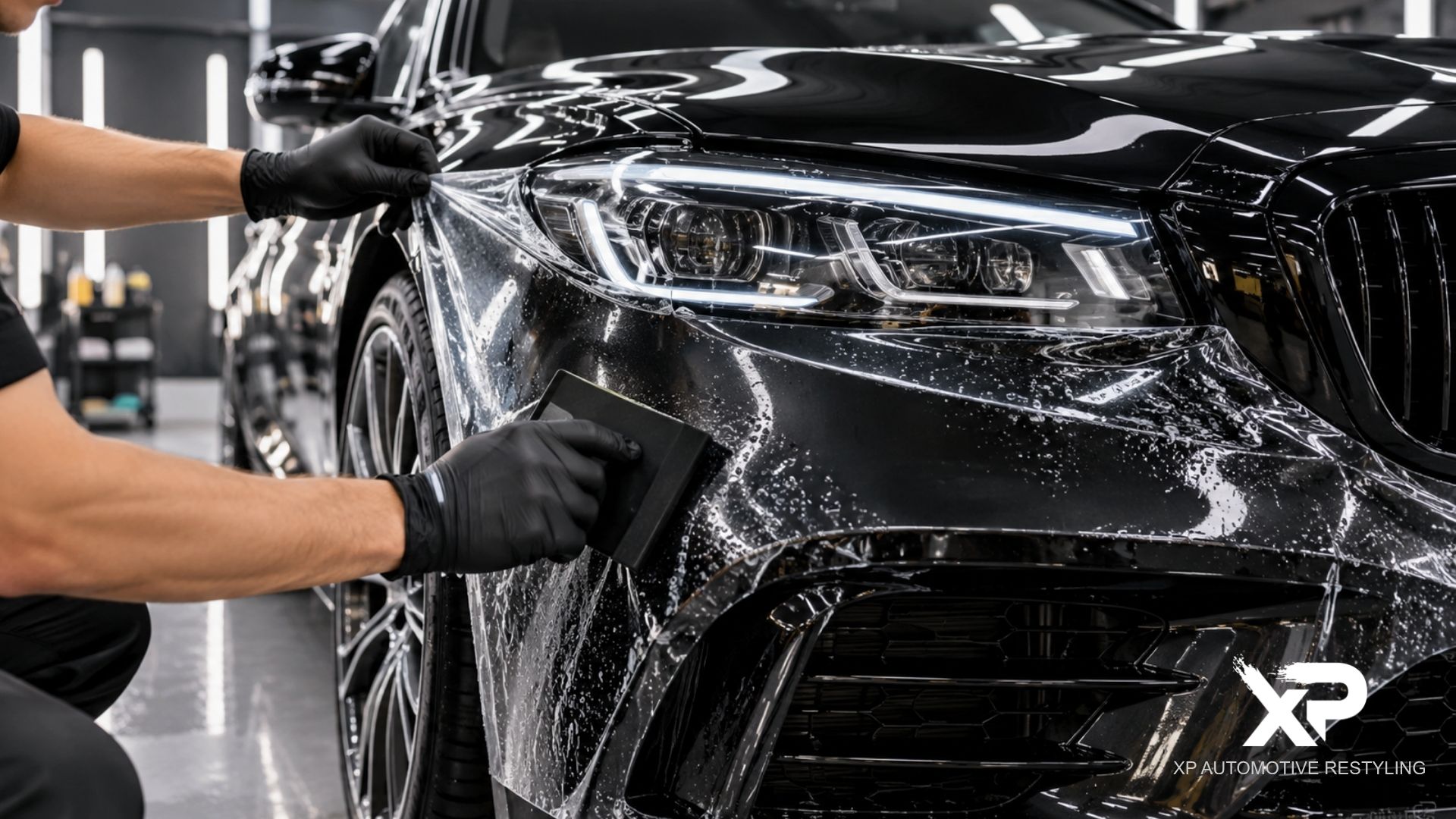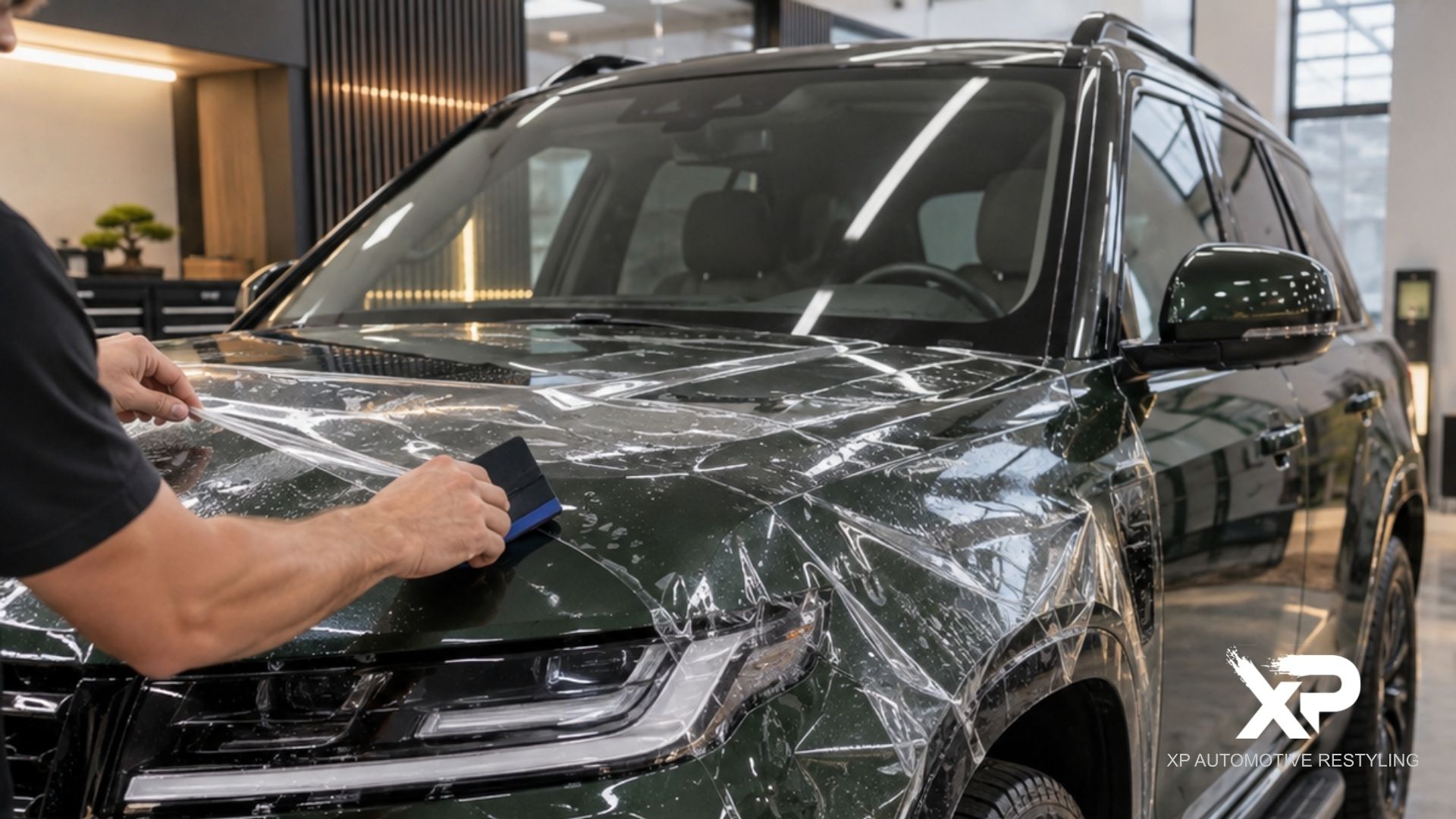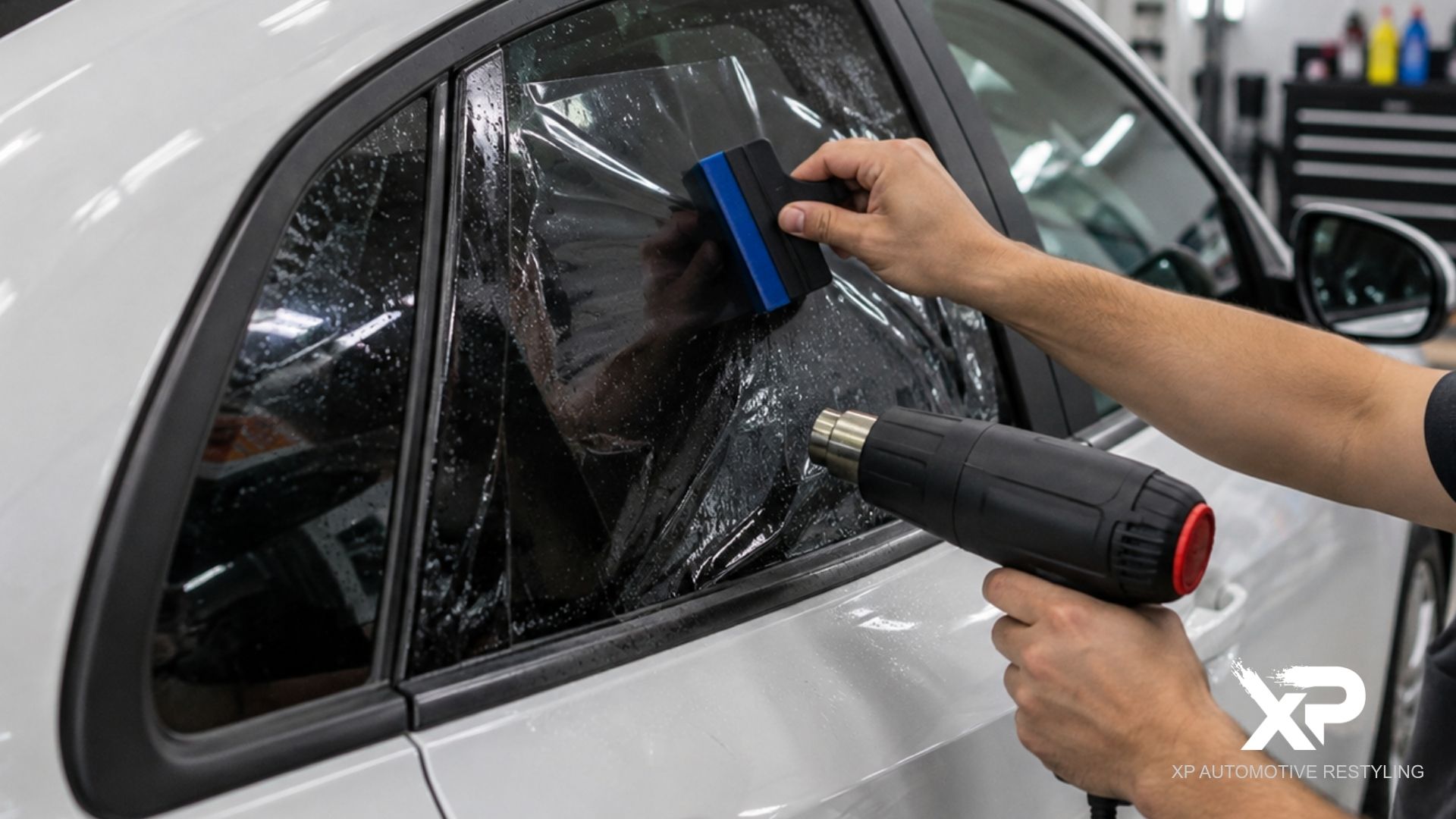
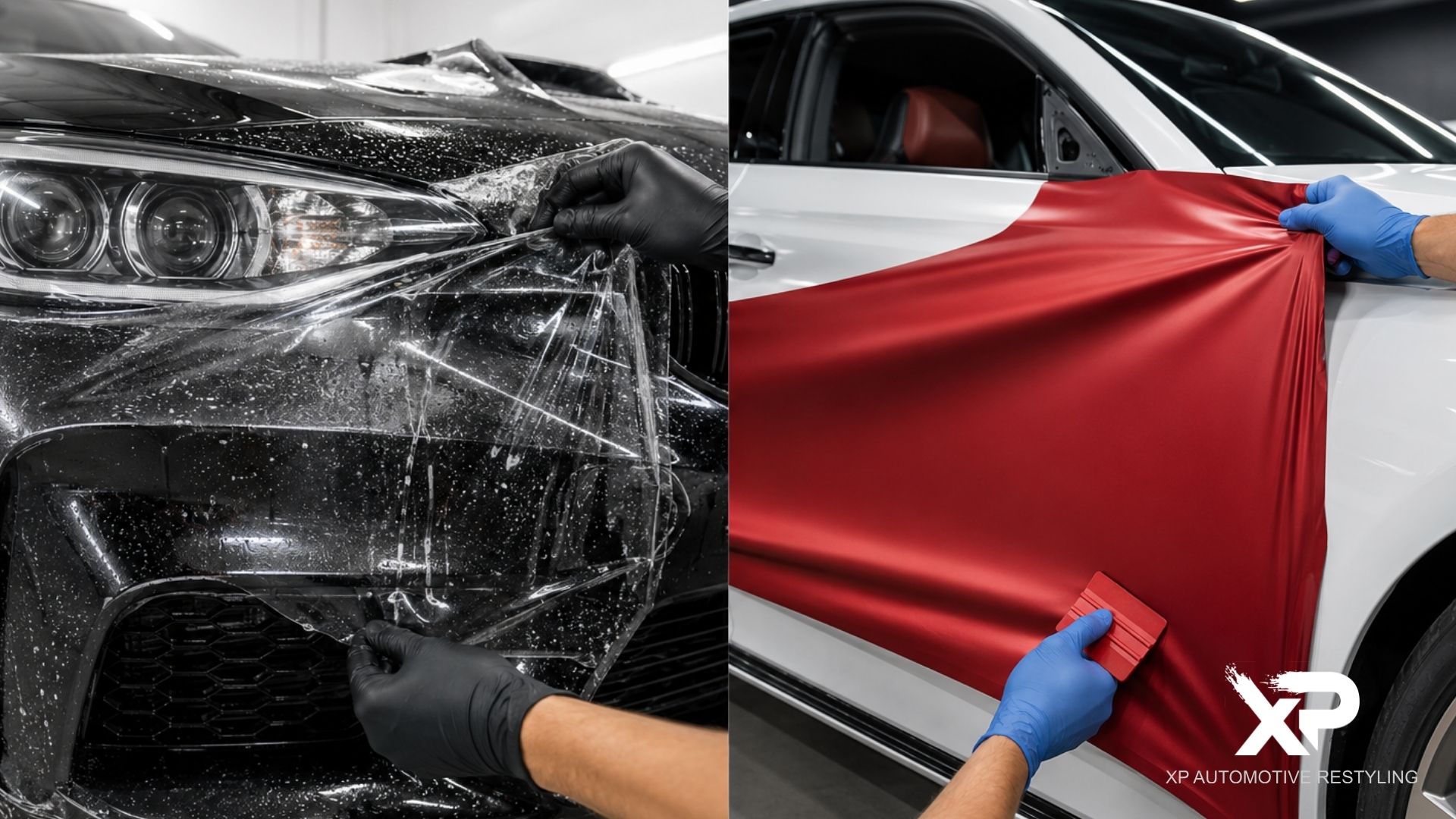
The main difference between paint protection film and vinyl wrap is that paint protection film is designed to protect vehicle paint from rock chips, scratches, and road debris, while a vinyl wrap is designed to change a vehicle’s appearance. Paint protection film prioritizes car protection, while vinyl wrap focuses on customization, color changes, and visual styling.
PPF Wrap vs Vinyl Wrap: What’s the Real Difference?
Paint protection film is designed primarily for protection, while a vinyl wrap is designed primarily for appearance and customization. Although both products cover painted surfaces, they solve very different problems and are often chosen for completely different reasons.
That distinction becomes especially important for drivers in Southampton, PA. A vehicle commuting on Route 1, traveling through Bucks County, or spending long hours parked outdoors faces daily exposure to road debris, contaminants, and environmental wear. Some owners want to protect against that damage. Others want to completely transform the look of their vehicle.
Both paint protection film and vinyl wrap have legitimate uses, but the best option depends on what matters most to the owner. For some, preserving factory paint is the priority. For others, creating a unique appearance is the goal.
What Is Paint Protection Film and What Is It Designed to Do?
Most PPF installers recommend early PPF installation because factory paint is easiest to protect before damage begins accumulating. The goal isn’t to repair existing wear. It’s to prevent that wear from happening in the first place.
The reality is that paint starts facing challenges immediately after a vehicle leaves the dealership. Even careful drivers encounter hazards they can’t fully control.
What Begins Affecting Paint Right Away?
- Rock chips from surrounding traffic
- Road debris kicked up during highway travel
- Bug splatter during warmer months
- Environmental contamination from dust, pollen, and pollutants
- UV exposure from daily outdoor parking
At XP Automotive Restyling, we’ve seen many vehicles arrive only a few months after purchase already showing minor chips and surface imperfections. While these issues may seem small individually, they can accumulate surprisingly quickly.
Protecting original paint while it’s still in near-perfect condition gives factory paint protection the greatest chance of delivering long-term vehicle paint preservation benefits.
What Is a Vinyl Wrap and What Is It Designed to Do?
A vinyl wrap is primarily used to change the appearance of a vehicle without permanently repainting it. While it does cover painted surfaces, its primary purpose is customization rather than protection.
For many vehicle owners, the appeal lies in flexibility. A vehicle can be transformed into something completely different without altering the original paint underneath.
Popular Reasons Drivers Choose Vinyl Wrap
- Color Changes: A color change wrap allows owners to achieve finishes that may not be available from the factory.
- Unique Finishes: Matte, satin, gloss, metallic, and specialty finishes offer a wide range of styling options.
- Branding Applications: Businesses frequently use wraps to display logos, graphics, and advertising.
- Personal Expression: Many owners simply want their vehicle to stand out from everything else on the road.
Vinyl wrap does provide some surface coverage, but it is not engineered to perform like paint protection film when it comes to resisting impacts. Its strength lies in vehicle customization, not impact absorption.
Which Provides Better Protection Against Road Damage?
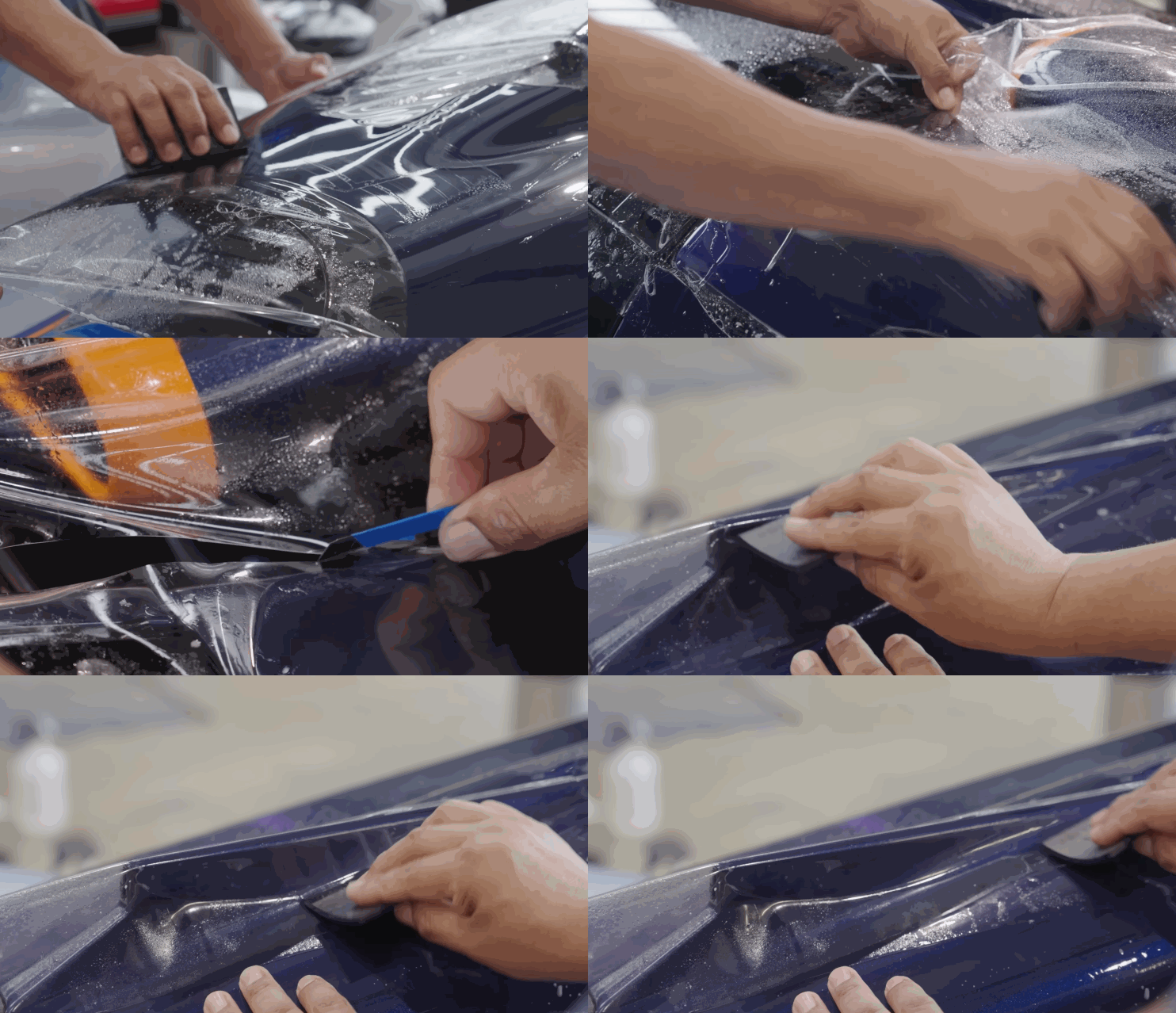
Paint protection film provides significantly more protection against physical impacts than vinyl wrap.
This is one of the clearest distinctions between the two products. While both cover the paint, they are built differently and intended to handle different challenges.
For drivers regularly using Route 1, I-95, and other heavily traveled roads around Southampton and Bucks County, those differences become meaningful. Every highway mile creates opportunities for debris to contact the vehicle’s paint.
That is why many paint protection film benefits revolve around preserving paint rather than changing appearance. When the primary concern is road debris protection and impact resistance, paint protection film is specifically designed for that role.
Can Paint Protection Film and Vinyl Wrap Be Used Together?
Yes, paint protection film and vinyl wrap can sometimes be combined when both appearance and protection are priorities.
Many vehicle owners assume they must choose one or the other. In reality, certain projects benefit from using both materials strategically.
Situations Where Combining Both May Make Sense
- A driver wants a custom color while also protecting high-impact areas.
- A business vehicle needs branding but also faces heavy daily road exposure.
- An owner wants a custom vehicle wrap while preserving the finish underneath in vulnerable areas.
- Long-term appearance and protection are equally important goals.
The planning process becomes more important when combining products because installation order, compatibility, and coverage decisions all influence the final result.
At XP Automotive Restyling, these projects usually begin with understanding priorities first. Some owners lean heavily toward aesthetics. Others focus primarily on vehicle protection solutions. Once those goals are clear, it’s easier to determine whether a combination of PPF over vinyl wrap or separate protection strategies makes the most sense.
Which Option Lasts Longer on a Daily Driver?
Longevity depends on the product itself, installation quality, maintenance habits, and the conditions the vehicle faces every day. Neither material exists in a vacuum. A vehicle parked indoors and driven occasionally will have a different experience than one that spends years commuting through Bucks County traffic and Pennsylvania weather.
One reason paint protection film is often associated with long term vehicle protection is that it was specifically engineered to withstand physical abuse from the road. Vinyl wrap, on the other hand, was developed primarily for appearance changes and visual customization.
Factors That Influence Lifespan
- Quality of the material
- Installation standards
- Exposure to sunlight and weather
- Parking conditions
- Washing and maintenance practices
Rather than focusing on exact timelines, it is more useful to understand how each product ages. The paint protection film lifespan is generally tied to its ability to continue protecting paint from impacts and environmental exposure. The vinyl wrap lifespan is more closely associated with maintaining color, finish quality, and visual appearance.
A vehicle that spends years outdoors will challenge both products more than a vehicle kept in a garage. Likewise, a daily commuter traveling Route 1 every morning will expose its surfaces to more wear than a weekend-only vehicle.
The takeaway is that durability is influenced as much by usage patterns as by the material itself.
Which Is Better for New Vehicles in Southampton, PA?
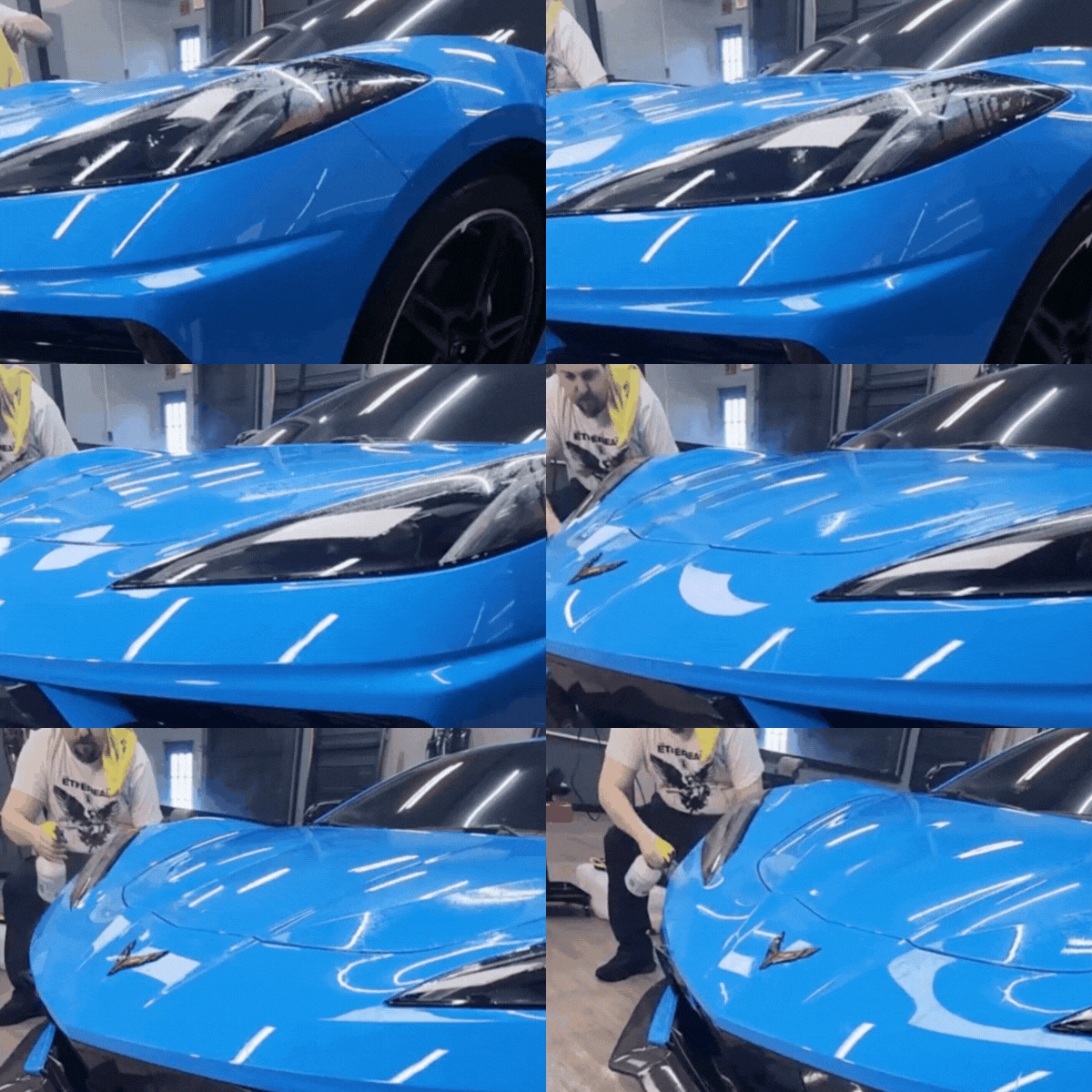
Paint protection film is often the preferred option when preserving factory paint is the primary objective.
New vehicle owners typically have a unique opportunity. The paint is in its best condition, and protection can be installed before significant wear begins. Once rock chips, scratches, and environmental damage occur, preservation becomes more difficult than prevention.
Why Many New Vehicle Owners Choose Paint Protection Film
- Factory Paint Preservation: The original finish can be protected before exposure begins accumulating.
- Resale Considerations: Maintaining paint condition may help preserve the vehicle’s appearance and overall appeal over time.
- Daily Driving Protection: New vehicles immediately face road debris, insects, and environmental contaminants during normal use.
- Long-Term Ownership Goals: Many owners plan to keep their vehicles for years and want the paint to age as gracefully as possible.
For Southampton drivers, that decision often becomes even more relevant because local commuting routes, highway travel, and outdoor parking expose vehicles to conditions that gradually affect paint quality.
At XP Automotive Restyling, we frequently see new vehicle owners choosing paint preservation strategies early because they recognize that protecting pristine paint is often easier than correcting damaged paint later. While vinyl wrap can be an excellent solution for customization, new car paint protection and vehicle appearance protection goals often align more closely with paint protection film.
Conclusion: Choosing the Right Solution for Your Vehicle
Paint protection film is generally the better choice for protection, while vinyl wrap is generally the better choice for appearance changes.
That distinction may sound simple, but it highlights the core difference between these two products. One is designed to help defend paint from road hazards and environmental exposure. The other is designed to transform how a vehicle looks.
Neither option is universally better than the other. The right choice depends entirely on what the owner hopes to achieve. Some drivers prioritize preserving factory paint. Others want a completely different color or finish. Some ultimately decide that a combination of both products best supports their goals.
The most important decision often isn’t choosing between materials. It’s choosing the right product for the intended purpose and ensuring it is installed correctly.
At XP Automotive Restyling, we help Southampton drivers evaluate their priorities, compare available options, and determine whether paint protection film, vinyl wrap, or a combination of both makes the most sense for their vehicles.
If you’re considering vehicle protection or customization services, contact XP Automotive Restyling today. Our team can answer your questions, discuss your goals, and help you choose the solution that fits your vehicle, driving habits, and long-term plans. Schedule a consultation and discover which option is right for your vehicle.
XP Automotive Restyling - PPF, Window Tinting, Ceramic Coatings