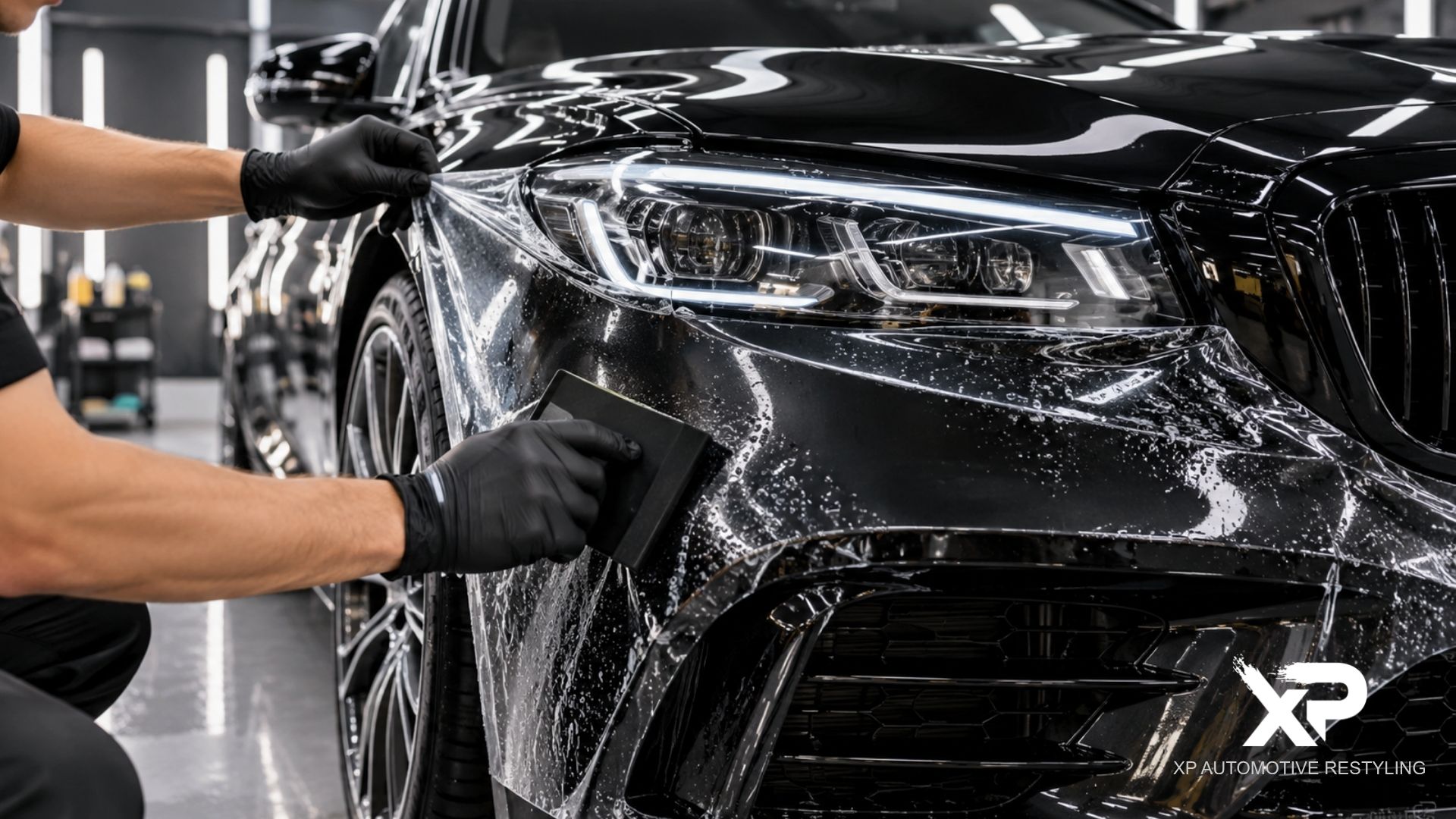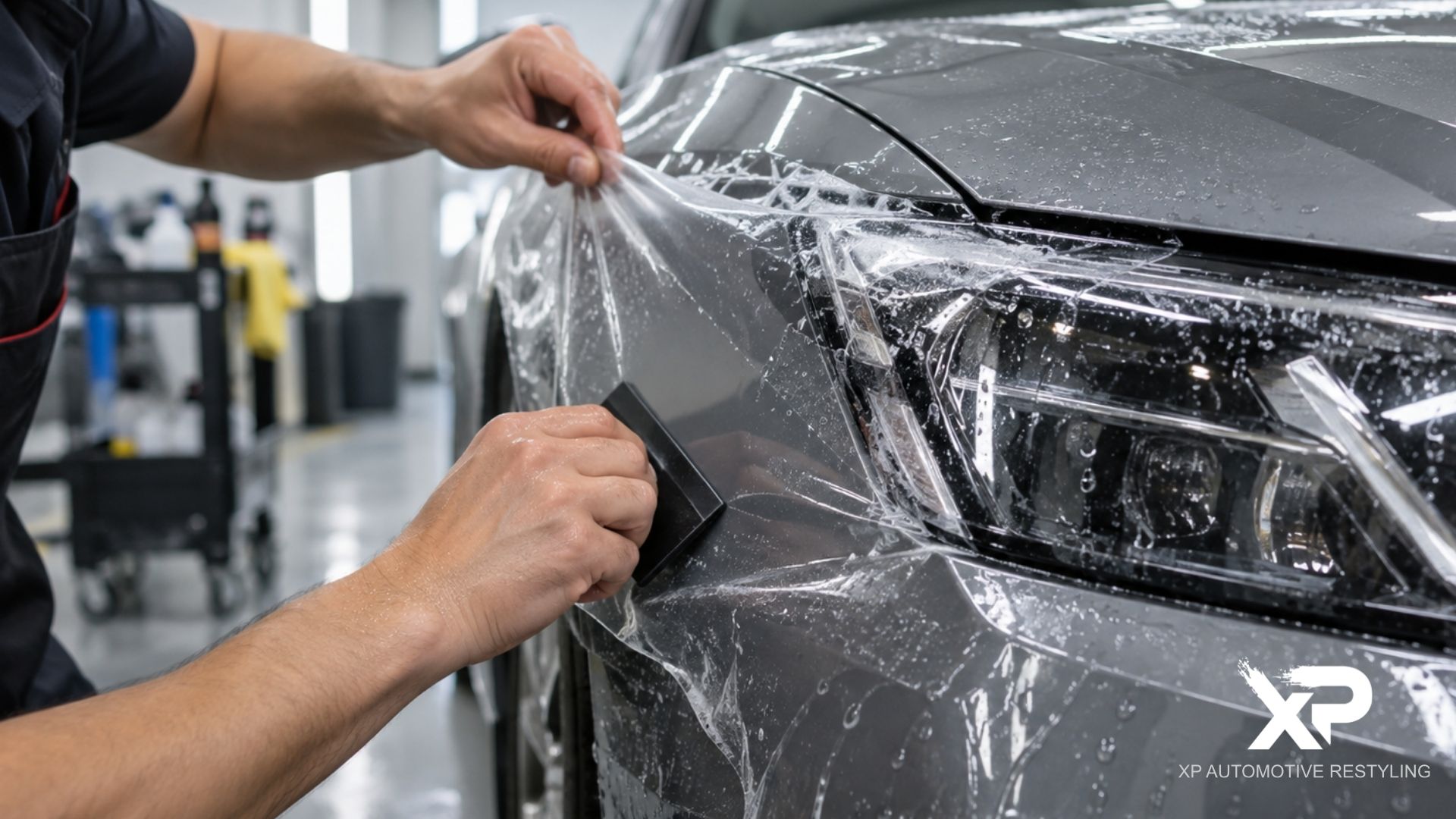
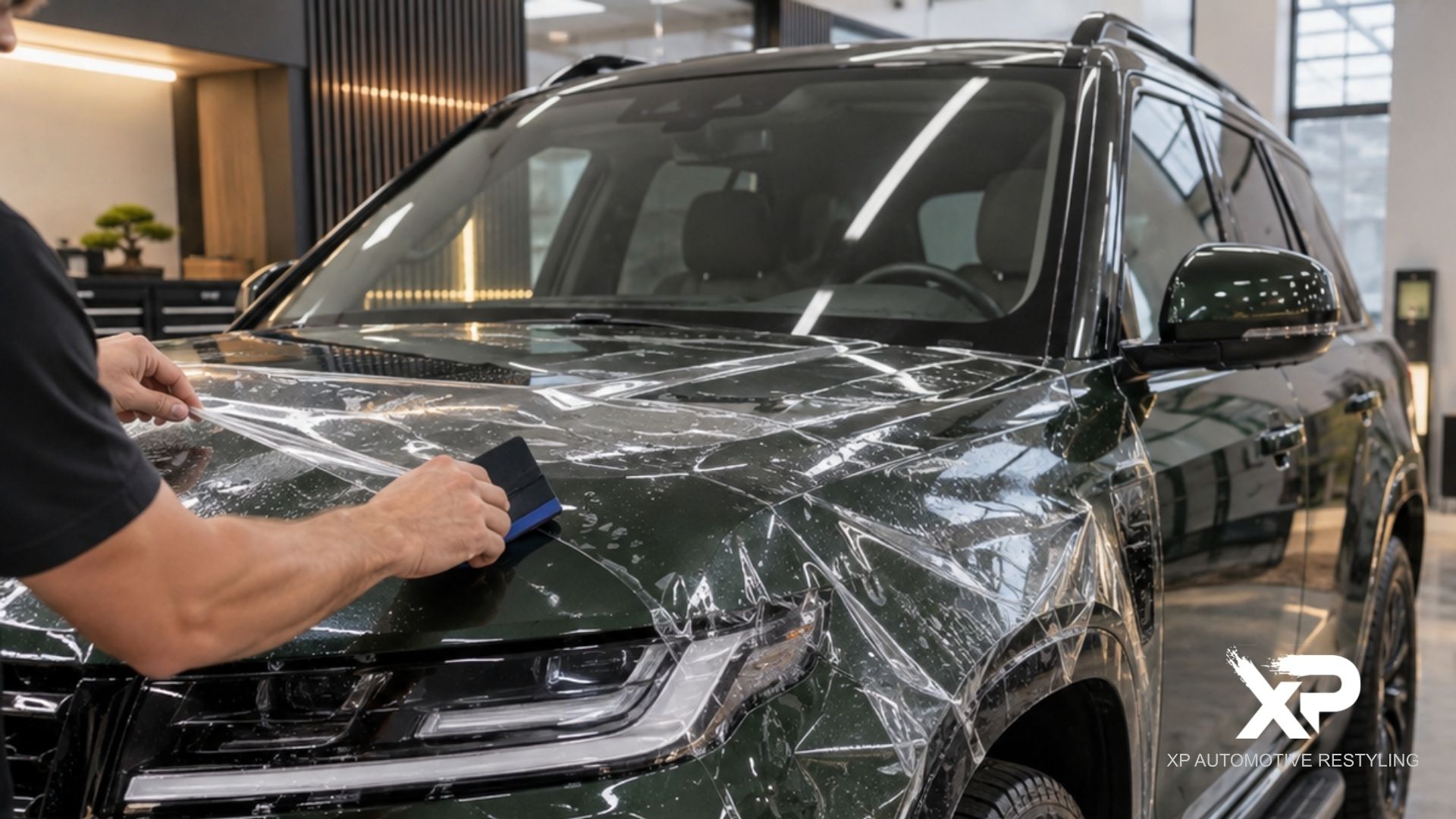
Paint protection film (PPF) can help protect an SUV’s highest-wear painted surfaces from rock chips, road debris, scratches, and everyday contact. For Richboro daily drivers, professional PPF installation can target the front end, rocker panels, door edges, rear loading areas, and other vulnerable surfaces without requiring full-body coverage.
Why Can Daily Use Be Hard on an SUV’s Paint?
Daily use exposes SUVs to repeated minor impacts and contact that can gradually leave chips, scratches, and scuffs across the paint. Their size, body design, passenger use, and versatility can also create vulnerable areas beyond the front bumper and hood.
Around Richboro, an SUV may spend the same day traveling Second Street Pike, heading toward Route 332, sitting in a Bucks County parking lot, and carrying passengers or cargo. Highway and suburban driving can expose the front end to debris, while ordinary loading and unloading creates an entirely different type of wear around the rear of the vehicle.
SUV proportions can contribute to the problem. Rocker panels and lower doors sit directly in the path of material thrown from the tires, while wider fenders or quarter panels may collect impacts behind the wheels. Families also tend to use every part of an SUV, which means door edges, door cups, and cargo areas see frequent physical contact.
At XP Automotive Restyling, we look beyond mileage when discussing paint protection film for SUVs. How passengers enter the vehicle, where it is parked, what it carries, and which roads it regularly travels can all help determine where protection will provide the most practical value.
For a daily driver, preserving the finish isn’t necessarily about keeping every panel flawless. It’s about preventing repeated, predictable wear from becoming permanent paint damage.
Which Areas of an SUV Usually Need PPF the Most?
The front bumper, hood, fenders, mirror caps, rocker panels, lower doors, and rear cargo area are among the most useful places to consider for SUV PPF coverage. The right combination depends on where the individual vehicle experiences impacts and contact.
Rather than treating every SUV identically, it helps to divide protection according to how damage reaches the vehicle:
- Front bumper and hood: Frequently exposed to stones, gravel, insects, and debris thrown by traffic.
- Front fenders and mirror caps: Forward-facing surfaces that can accumulate chips with regular road mileage.
- Rocker panels: Vulnerable to grit and debris kicked up by the SUV’s own tires.
- Lower doors: Particularly relevant on vehicles with body shapes that leave these surfaces exposed to road spray and small impacts.
- Door edges and handle areas: Frequent passenger use can create small scratches and contact marks.
- Rear bumper and cargo sill: Loading groceries, luggage, sports equipment, strollers, or other cargo can introduce scuffs near the liftgate.
This is why PPF for SUVs doesn’t have to mean wrapping the entire vehicle. Strategic protection can concentrate the film where physical wear is most likely to occur.
Once those areas are identified, coverage can be built around actual use instead of simply choosing the largest package available.
Is Front-End PPF Worth It for an SUV in Richboro?
Front-end PPF can be particularly useful for Richboro SUVs that accumulate regular commuting or highway mileage because the forward-facing panels receive a concentrated amount of road debris. The bumper, hood, fenders, and mirrors are usually the first surfaces we evaluate when rock chips are the main concern.
A short local trip and sustained higher-speed driving don’t expose paint in exactly the same way. An SUV regularly traveling beyond Richboro through Bucks County or connecting with larger regional roads spends more time behind other vehicles, where loose aggregate and small debris can be thrown backward at speed.
There are also different ways to approach front-end paint protection. A driver may choose targeted coverage for selected impact areas, while someone accumulating substantial mileage may prefer full-front PPF that protects complete forward-facing panels.
Full-front coverage can include the entire hood and fenders rather than stopping the film partway across those surfaces. Beyond providing additional protection, this can create a more uniform visual result by avoiding partial-film lines across large panels.
We don’t assume every SUV needs the same amount of film at XP Automotive Restyling. The value of PPF installation comes from matching coverage to exposure. A garage-kept SUV driven occasionally around town can justify a different approach from one covering hundreds of miles every week.
Why Are Rocker Panels and Lower Doors Important on SUVs?
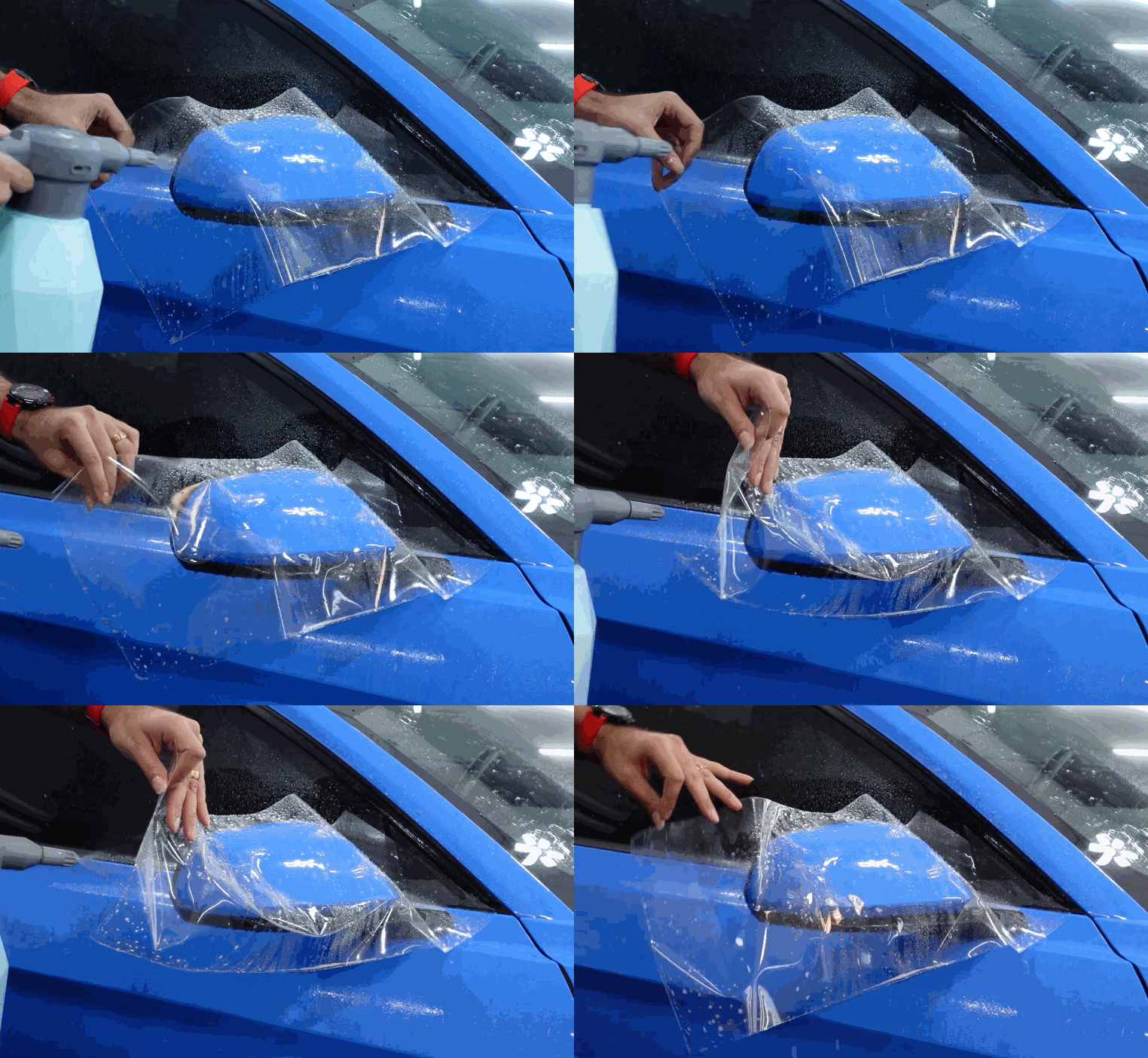
Rocker panels and lower doors can be some of the most overlooked high-wear areas on an SUV because they receive debris from below rather than directly ahead. Paint protection film in these areas can help defend against repeated contact with grit, gravel, road spray, and material thrown from the tires.
SUV design makes this especially vehicle-specific. Tire width, wheel offset, fender shape, mud guards, running boards, and body contours all influence where debris travels. On some models, the area immediately behind the front wheels takes noticeably more abuse than the rest of the side.
Road Exposure Adds Up Gradually
A single drive through Richboro may not leave obvious damage. The problem is repetition. Miles of Bucks County driving, construction zones, loose road material, and Pennsylvania’s seasonal grime can slowly mark lower painted surfaces.
Winter adds another layer of exposure. Road treatments and dirty moisture collect around the lower body, while warmer months bring construction debris and loose aggregate. PPF creates a physical sacrificial layer over the paint in these impact-prone zones.
Side Protection Doesn’t Have to Cover Every Door
Protecting lower sections can be more practical than covering complete side panels when the owner’s primary concern is road-generated wear. A carefully planned SUV paint protection package can concentrate coverage around rocker panels and the portions of the doors that actually receive repeated impacts.
That’s one of the advantages of treating PPF as customizable protection rather than an all-or-nothing service. For an SUV that sees daily use, a few carefully selected areas can make a meaningful difference in how the finish ages.
Here’s the second half, continuing with the same article and varying the formatting from the first sections.
Can PPF Protect an SUV From Loading and Passenger Wear?
PPF can help protect an SUV from scratches and scuffs caused by frequent passenger use and loading, particularly around door edges, handle areas, and the rear cargo opening. These aren’t traditional rock-chip zones, but they can become some of the most visibly worn surfaces on a frequently used SUV.
The rear bumper is a good example. Boxes, luggage, sports equipment, tools, and other items can make contact with the painted surface below the liftgate as they’re moved in and out. A transparent strip of paint protection film across this area provides a sacrificial surface for that repeated contact without substantially changing the appearance of the vehicle.
Door areas experience a different kind of wear. Fingernails, rings, keys, bags, and frequent opening against tight parking spaces can leave small marks around handles and edges. Families using an SUV every day may notice these areas aging faster simply because every door gets used so often.
This is where targeted PPF coverage becomes useful. Instead of protecting a large panel unnecessarily, film can be placed where contact repeatedly occurs. For an SUV used for school runs, errands, work, and weekend activities, those small high-contact areas can be just as relevant as the surfaces exposed to road debris.
Should You Choose Full-Front or Expanded PPF Coverage?
Full-front PPF is a strong starting point when road impacts are the main concern, while expanded coverage makes more sense when an SUV also experiences significant wear along its sides, lower body, or cargo areas. The decision should follow the vehicle’s exposure rather than a fixed package hierarchy.
At XP Automotive Restyling, we typically consider several factors before recommending how far protection should extend:
- Weekly mileage: More time on Route 232, Route 332, and surrounding Bucks County roads generally means more exposure to road debris.
- Vehicle design: Wide tires, pronounced quarter panels, and exposed rocker areas can create additional impact zones.
- Passenger use: Frequently used doors may justify protection around edges and handles.
- Cargo habits: Regular loading can make rear bumper protection particularly useful.
- Ownership plans: Someone hoping to preserve the original finish for years may prioritize broader coverage than an owner focused primarily on front-end chips.
Expanded SUV PPF coverage doesn’t necessarily mean full-body film. Full-front protection can be combined with rocker panels, rear impact areas, or other selected surfaces to create a package that addresses the vehicle’s actual weak points.
That flexibility is particularly useful for a daily driver PPF installation because the goal is practical protection. You can spend the coverage where the SUV receives the wear instead of protecting every square inch simply because the option exists.
Does PPF Make Sense for an SUV That Already Has Some Paint Wear?
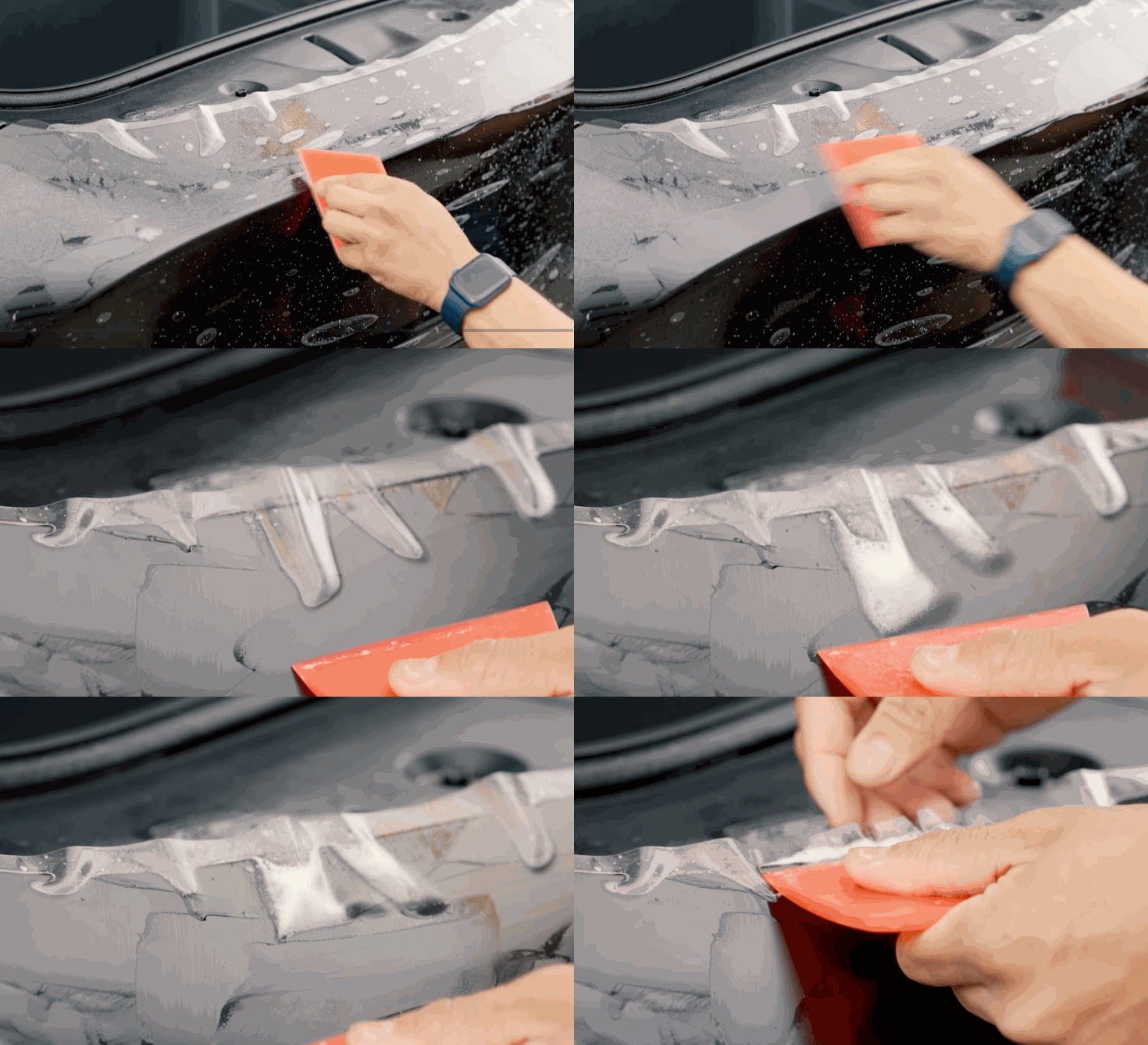
An SUV with minor existing paint wear can still benefit from paint protection film, but the condition of the surface should be evaluated before installation. PPF protects what is underneath it going forward. It does not erase rock chips, deep scratches, or other existing paint defects.
Transparent film tends to preserve the condition it covers, which makes paint preparation an important part of the process. Contamination needs to be removed, and scratches or other imperfections should be evaluated to determine whether correction is appropriate before the film goes on.
A few small imperfections don’t automatically disqualify an older or higher-mileage SUV from PPF. In fact, an owner who plans to keep the vehicle for several more years may still find considerable value in preventing additional wear.
What we don’t recommend is assuming the film will cosmetically repair the paint. A chip that is visible beforehand may remain visible afterward. The purpose of PPF installation is to add physical protection, not substitute for bodywork or paint correction.
This distinction allows owners to make a more sensible decision. The vehicle doesn’t need to be brand new to benefit from long-term paint protection, but the condition underneath should be understood before installation begins.
Does Professional PPF Installation Matter More on Large SUVs?
Professional PPF installation is particularly important on large SUVs because their bodywork can include broad panels, complex bumpers, pronounced curves, sensors, trim, and difficult transitions. Achieving discreet coverage requires much more than simply laying a large sheet of film over the paint.
Installation starts with surface preparation. Dirt or bonded contamination left beneath transparent film can remain visible, so the paint needs to be properly cleaned and evaluated first.
Fitment becomes equally important. Large hoods and bumpers require accurate film positioning, while curves, vents, wheel arches, and body lines require controlled handling of the material. Excessive tension can create problems, but poor positioning can compromise both coverage and appearance.
At XP Automotive Restyling, our professional PPF installation process also considers how the pattern fits the individual vehicle. We use a hybrid pattern solution to achieve the closest possible OEM-style fitment, rather than treating every panel as though one installation method works equally well.
Edge work and final inspection complete the process. The objective is for the paint protection film to do its job without becoming the first thing you notice when looking at the SUV.
Conclusion: Protect Your SUV Where Daily Use Hits Hardest
Paint protection film gives daily-driven SUVs a physical barrier against the chips, scratches, scuffs, and repeated contact that high-wear areas experience over time. The most effective approach isn’t automatically covering everything. It’s identifying where your SUV takes the most abuse and protecting those surfaces accordingly.
For Richboro drivers, that may mean full-front PPF for regular road mileage, rocker and lower-door protection for debris thrown by the tires, or film around the rear bumper for frequent cargo loading. Vehicle design, mileage, passenger use, parking, and ownership plans can all shape the right combination.
Quality film is only part of the equation. Careful surface preparation, appropriate coverage, precise fitment, and professional PPF installation determine how well that protection integrates with the vehicle.
At XP Automotive Restyling, we can build a PPF package around how your SUV is actually used rather than forcing every vehicle into the same solution. Contact our team to schedule a consultation and discuss Paint Protection Film for your SUV in Richboro, PA, including targeted, full-front, expanded, and full-body coverage options.
XP Automotive Restyling - PPF, Window Tinting, Ceramic Coatings