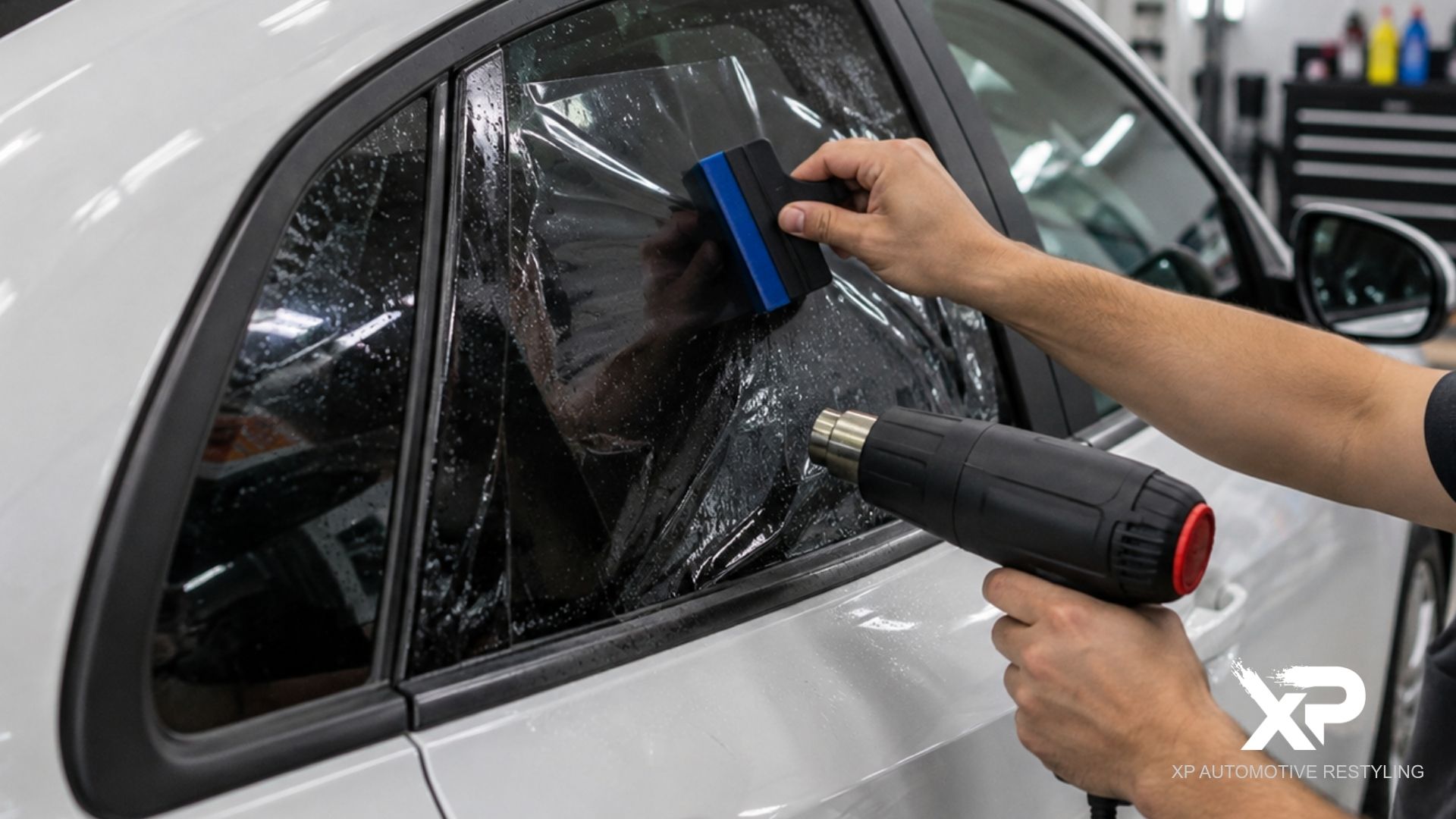
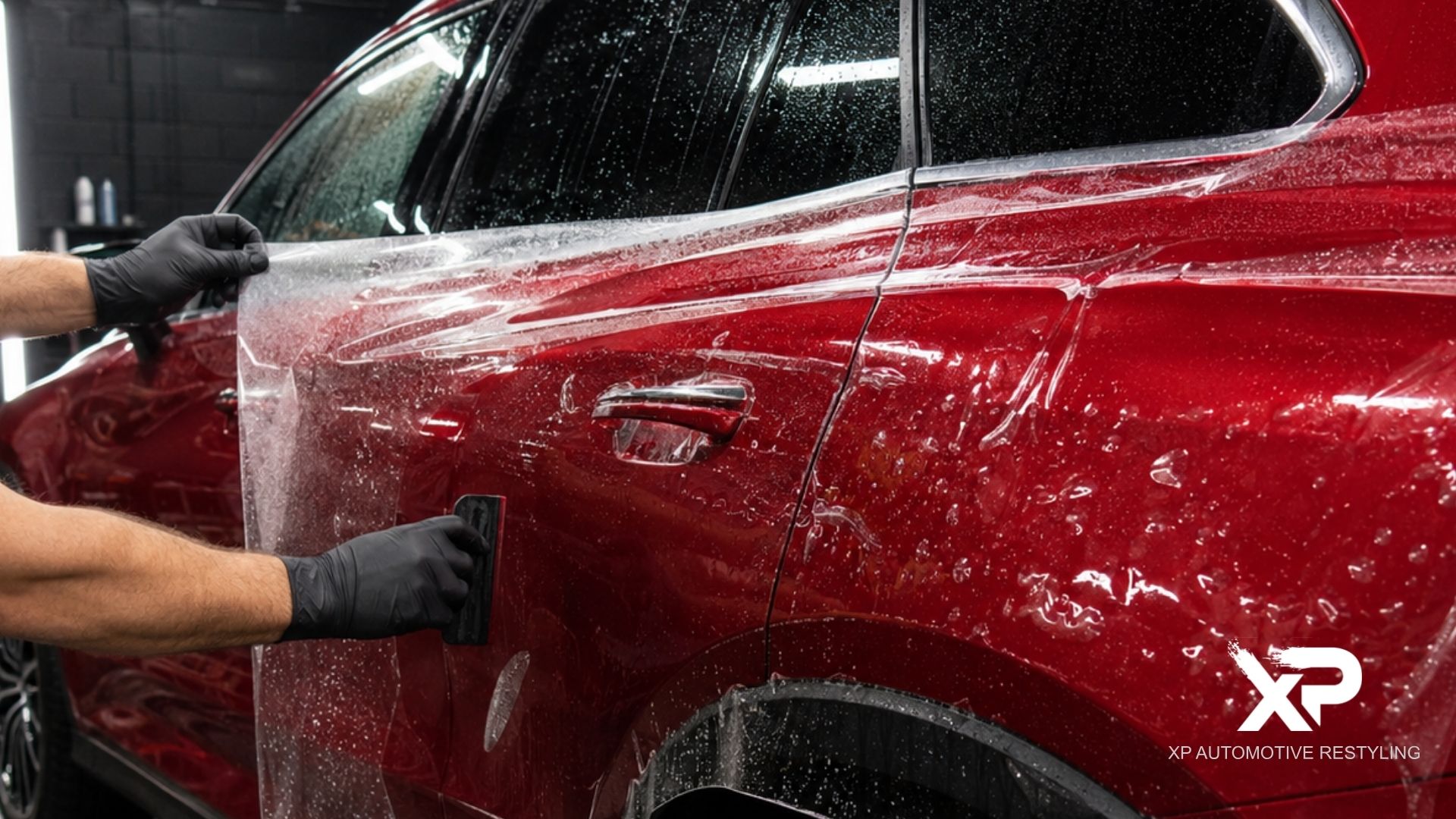
Full-front paint protection film is often the strongest starting point for a daily-driven luxury vehicle because it protects the panels that receive the greatest concentration of road impacts. Expanded PPF coverage or full-body protection may make sense for owners seeking more comprehensive luxury vehicle protection, depending on mileage, parking conditions, ownership plans, and vehicle design.
Daily Driving Changes the Way You Should Think About PPF
Daily-driven luxury vehicles generally benefit most from protecting their highest-exposure surfaces first, and full-front PPF provides a practical balance for many owners. More coverage is not automatically better. The right amount of paint protection film depends on where the vehicle is driven, how frequently it is used, and which surfaces are most likely to take damage.
A luxury badge doesn’t change what happens when a loose stone is thrown toward the hood at highway speed. In fact, we tend to look beyond the price of the vehicle when discussing protection. A premium SUV traveling hundreds of miles each week may need a different strategy than an exotic car that spends most of its time garaged.
That distinction matters around Doylestown. Regular trips on Route 202 and Route 611, commuting throughout Bucks County, highway travel beyond the immediate area, and frequent parking all create opportunities for cosmetic wear. A vehicle doesn’t need to encounter one dramatic incident for its finish to change. Small chips and abrasions can accumulate gradually through ordinary use.
For that reason, we approach PPF installation around the life of the vehicle rather than its badge. Protecting a daily-driven luxury car starts with understanding which panels repeatedly face the road and building coverage around those areas.
Why Does Daily Use Change the PPF Needs of a Luxury Car?
Frequent driving increases the number of opportunities for rock chips, road debris, bug impacts, and minor surface contact, regardless of how expensive the vehicle is. Every additional mile creates another chance for something to reach an exposed painted surface.
This is where cumulative exposure becomes more important than vehicle category. A luxury sedan, performance coupe, and premium SUV may have very different shapes, but if each travels through Bucks County five or six days a week, all three are repeatedly exposed to debris kicked up by surrounding traffic.
Highway mileage tends to increase that exposure further. Higher speeds can make small stones and loose debris more consequential when they strike the front end. Regular commuting also means more time around trucks, construction traffic, changing road surfaces, and other vehicles.
At XP Automotive Restyling, we consider those habits when discussing daily driver PPF. Someone regularly traveling between Doylestown and surrounding communities may benefit from broader protection than an owner driving the same model only occasionally. Effective luxury car paint protection should account for actual road debris protection needs rather than assuming every luxury vehicle requires the same package.
Which Luxury Vehicle Panels Are Most Vulnerable During Daily Driving?
The front bumper, hood, front fenders, mirror caps, rocker panels, and other forward-facing or lower surfaces usually face the greatest exposure during daily driving. However, vehicle design can shift where that damage accumulates, which is why premium vehicles deserve a more individualized look before coverage is selected.
The front bumper is the obvious starting point because it meets debris first. Hoods and fenders follow closely, particularly their leading surfaces. Mirror caps project into the airflow and can collect small impacts that owners don’t always anticipate.
Beyond those familiar areas, body design starts to matter. Consider how several common design features affect exposure:
- Low front ends: Performance-oriented bumpers and splitters sit closer to road debris and can receive frequent impacts.
- Wide rear quarters: Wider bodywork can catch material thrown backward by the front tires.
- Pronounced rocker panels: Lower side surfaces may collect grit, grime, and tire-thrown debris.
- Sculpted bodywork: Flared fenders and aggressive aerodynamic elements can create additional exposed surfaces.
This is why custom PPF coverage can be particularly useful on premium vehicles. Identifying the actual high-impact PPF areas allows protection to follow the vehicle’s geometry instead of forcing every car into the same template. The result is a more deliberate approach to front-end paint protection and other vulnerable surfaces.
Is Full-Front PPF Enough for a Luxury Daily Driver?
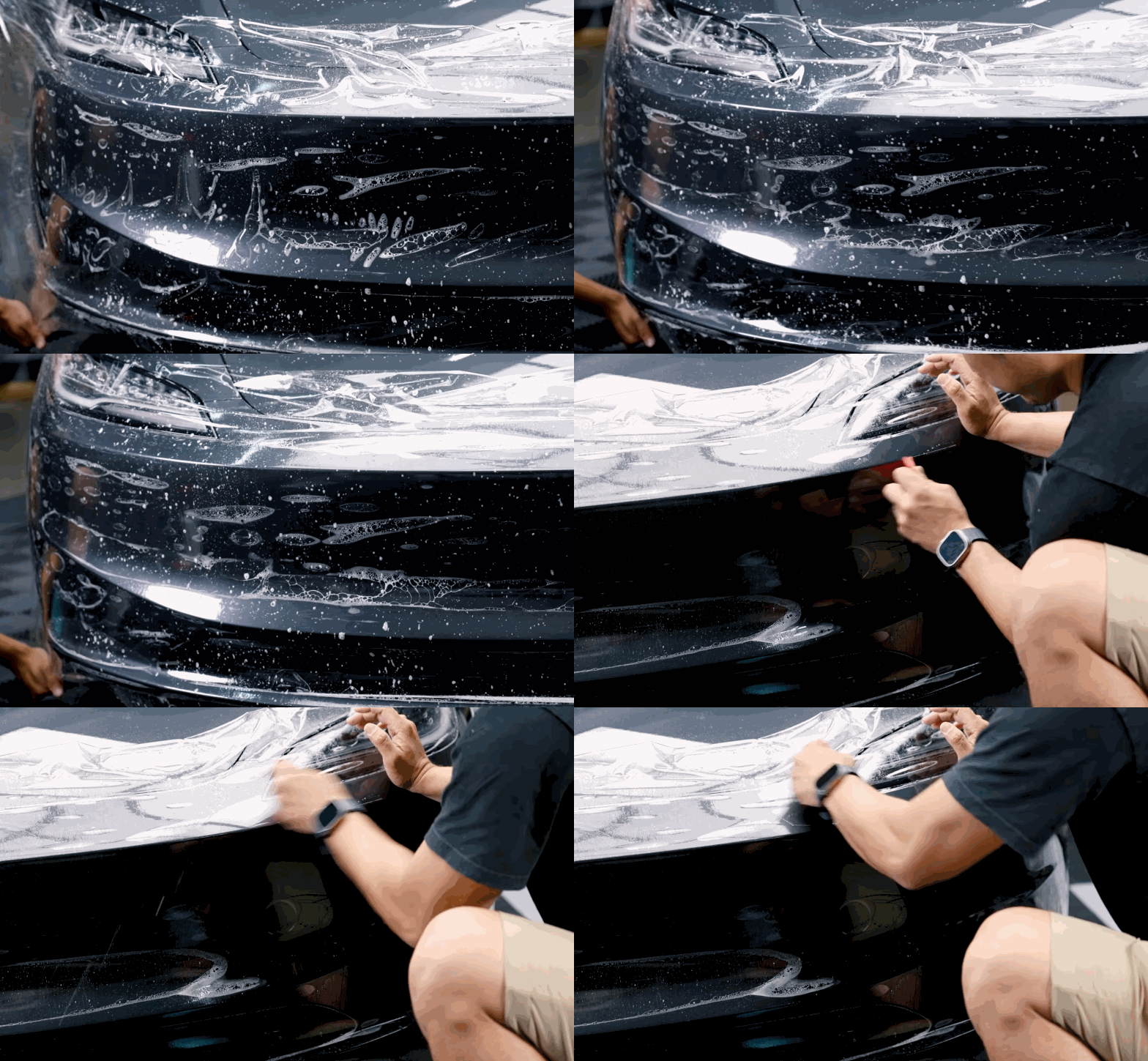
Full-front PPF is enough for many daily-driven luxury vehicles when the primary goal is preventing the road damage concentrated at the front of the car. It provides substantially broader protection than partial coverage without requiring film across every painted panel.
A typical full-front PPF package covers the complete hood, front bumper, front fenders, and mirror caps, although exact coverage can vary by installer and vehicle. That combination protects the surfaces facing the majority of direct impacts during normal commuting.
There is also an appearance advantage to protecting complete panels. Partial packages may terminate somewhere across the hood or fenders, creating a transition line between protected and unprotected paint. Full-panel coverage eliminates those particular seams, which can be especially appealing on luxury vehicles where owners pay close attention to finish quality.
For someone regularly using Route 202, Route 611, and other Bucks County roads, full-front protection often occupies a useful middle ground. It concentrates the investment where road exposure is highest while leaving the doors, roof, rear panels, and other lower-risk areas uncovered.
It isn’t the universal answer, though. Some luxury vehicles have exposed rocker panels, wide rear quarters, or other design characteristics that justify extending protection beyond the front. A professional PPF installation should account for those details, allowing luxury car PPF coverage to match both the vehicle and the miles it will actually travel.
When Should PPF Coverage Extend Beyond the Front End?
Expanded PPF coverage makes sense when vulnerable surfaces extend beyond the traditional front end or when frequent driving repeatedly exposes other panels to debris and everyday contact. The goal is not necessarily to cover the entire vehicle, but to identify where additional protection would actually be useful.
Vehicle design makes a significant difference here. A performance car with wide rear quarters may collect tire-thrown debris differently than a luxury sedan with relatively narrow bodywork. Likewise, a large SUV may have lower doors, running areas, or loading surfaces that experience types of wear that aren’t addressed by a conventional full-front package.
Depending on the vehicle, additional protection may be useful on:
- Rocker panels: Low positioning leaves them exposed to grit, gravel, and debris thrown by the tires.
- Lower doors: Wider vehicles and certain body designs can expose these surfaces to material coming off the road.
- A-pillars: Their forward-facing position can make them vulnerable during frequent highway travel.
- Rear wheel arches and quarter panels: Particularly relevant on vehicles with wide rear bodywork or aggressive wheel and tire setups.
- Luggage areas: Rear bumper loading surfaces can experience scratches from bags, equipment, and everyday cargo.
At XP Automotive Restyling, we prefer to think of this as extended PPF coverage rather than an automatic jump to full-body protection. Strategic additions such as rocker panel PPF can address a vehicle’s specific weak points while keeping the coverage proportional to how the car is used.
That approach is particularly valuable for luxury vehicle paint preservation. Protecting the panels that actually face repeated exposure can provide meaningful additional coverage without assuming every daily-driven luxury vehicle needs film on every painted surface.
Is Full-Body PPF Worth It on a Vehicle You Drive Every Day?
Full-body Paint Protection Film can be worthwhile for owners who want consistent protection across virtually every painted surface and intend to preserve the vehicle’s original finish for years. Its value comes from the level of protection it provides throughout ownership, not simply from being the largest PPF package available.
For a daily driver, exposure doesn’t stop at the front bumper. Parking lots can introduce minor contact around doors and quarter panels. High annual mileage increases exposure to environmental contamination and road debris, while outdoor parking places the entire vehicle in contact with changing weather conditions.
Full-body coverage can be especially compelling when an owner plans to keep the vehicle long term. It may also deserve consideration when the car has an unusual, specialized, or difficult-to-match factory finish where preserving the original paint is a particularly high priority.
Still, complete car protection isn’t necessary for everyone. An owner primarily concerned with rock chips may be perfectly satisfied with a full front and a few strategically selected additional panels. Someone who wants more comprehensive long-term paint preservation, however, may appreciate having the same protective barrier across the entire vehicle.
The right decision comes down to how much cosmetic wear you’re comfortable accepting. Full-body PPF makes the most sense when preserving a consistently protected finish matters enough to justify protecting surfaces beyond the usual high-impact zones.
Does Luxury Paint Require a Different Approach to PPF Installation?
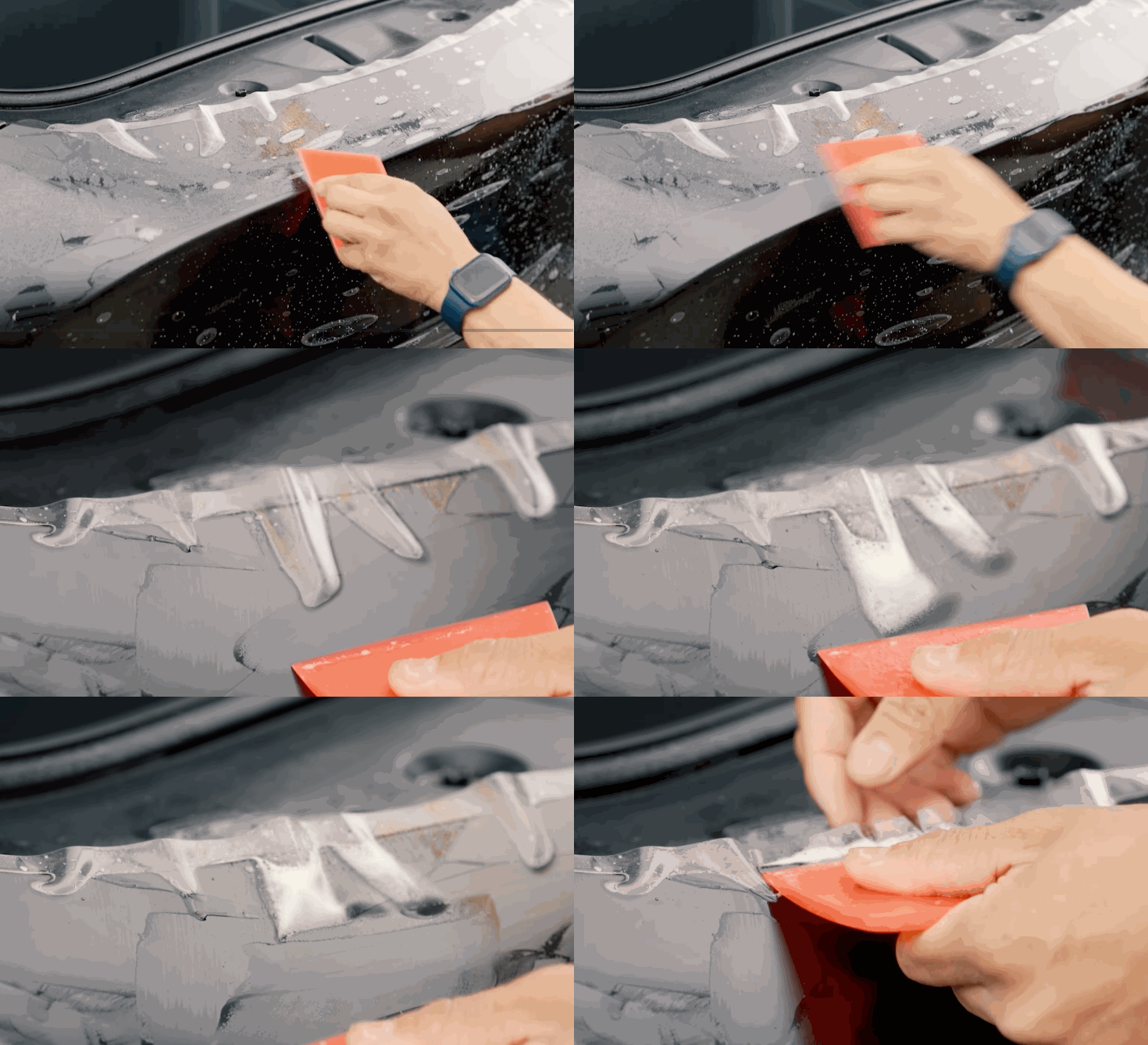
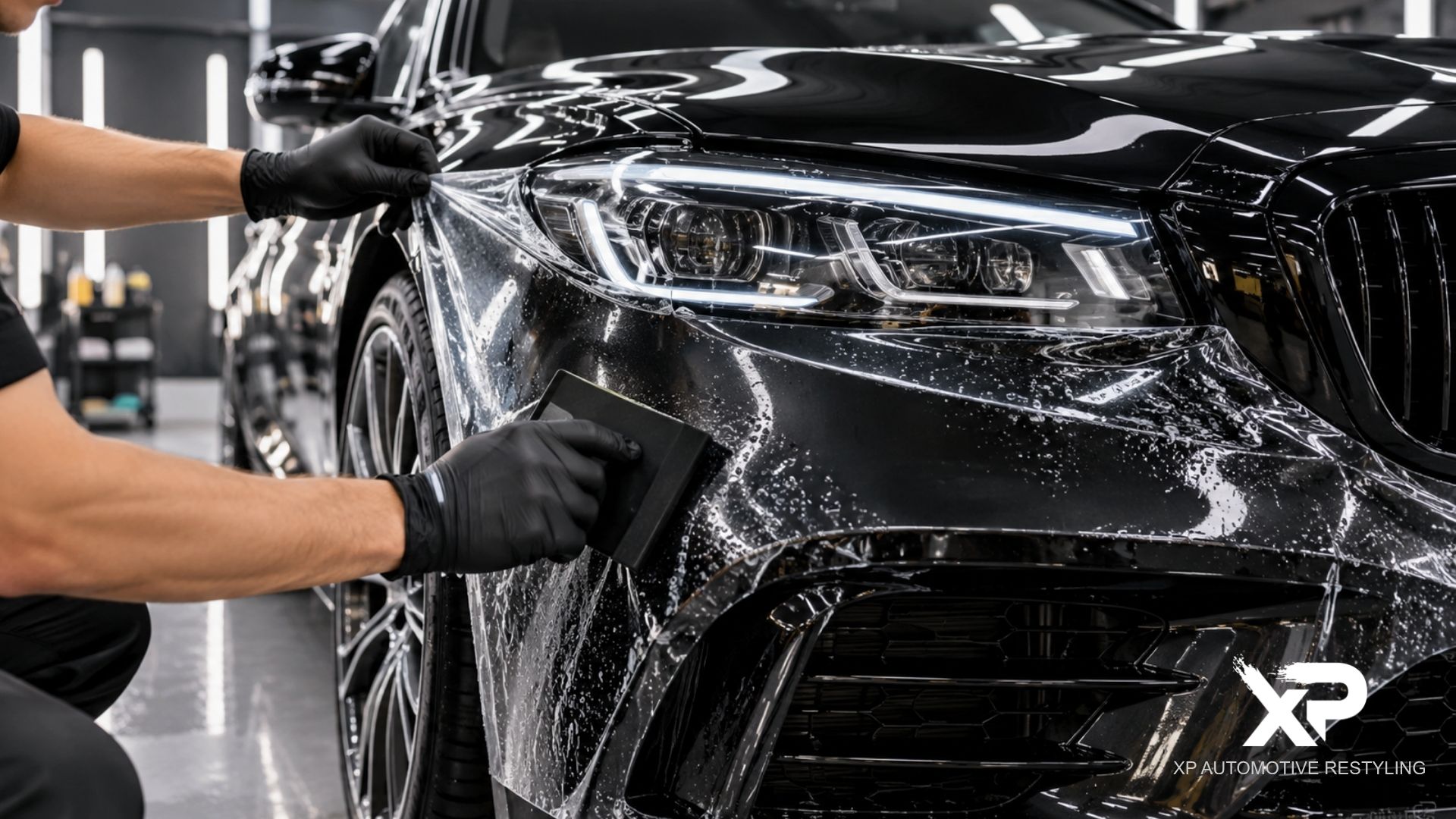
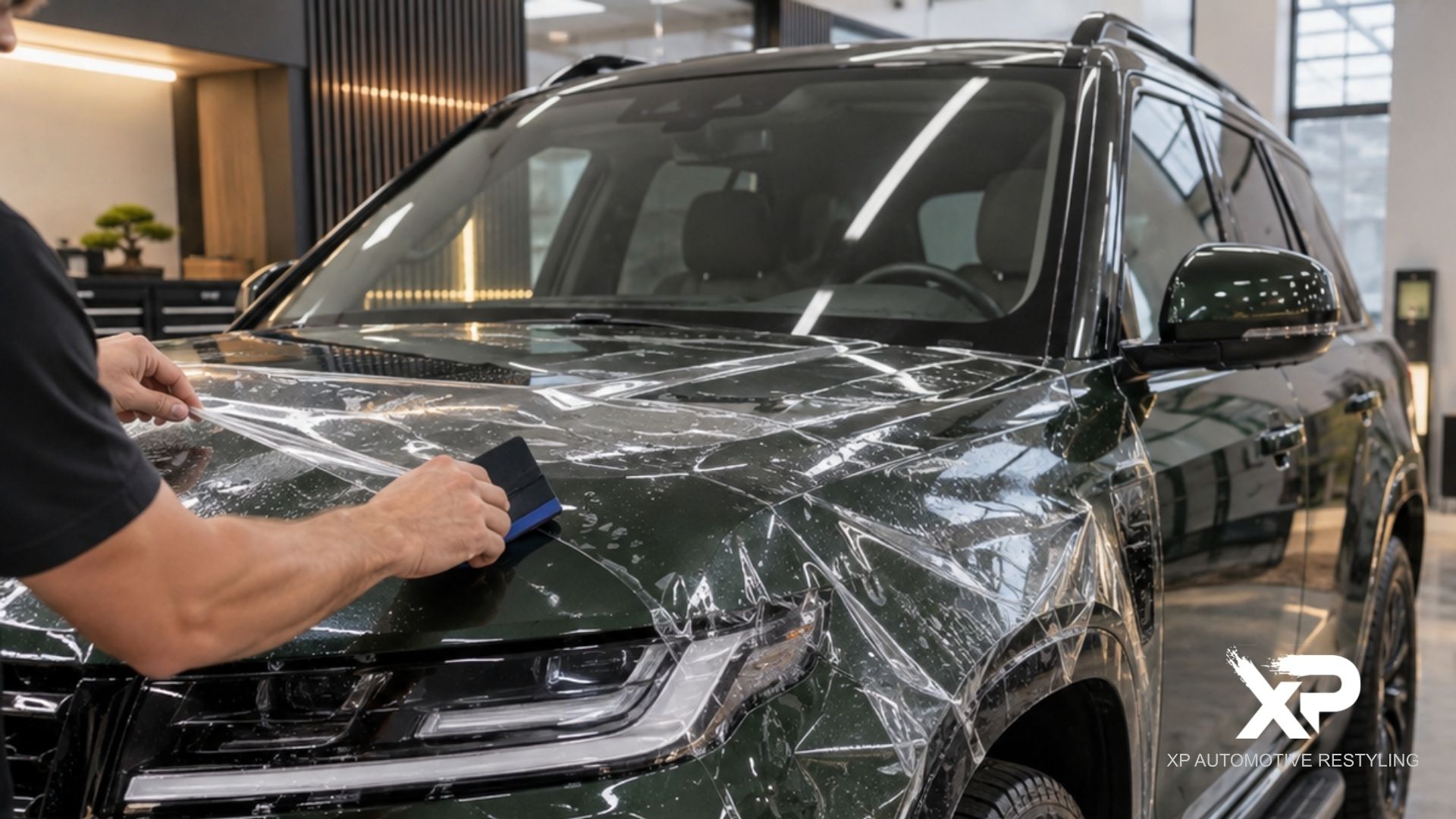
The fundamentals of PPF installation don’t change simply because a vehicle is expensive, but premium finishes, complicated bodywork, and higher expectations for appearance make preparation and fitment especially important. On a luxury vehicle, small installation imperfections can be just as distracting as the paint damage the film was intended to prevent.
A careful luxury car PPF installation begins with the condition of the surface. Paint should be inspected under proper lighting, cleaned, and decontaminated before film is applied. Existing imperfections may also need to be addressed because PPF protects the finish underneath rather than magically correcting it.
From there, the installer has to account for the vehicle itself. Deep curves, vents, sculpted bumpers, sharp transitions, and complex panel geometry can make fitting film considerably more demanding. Pattern selection, film positioning, tension management, edge finishing, and seam placement all influence how noticeable the finished installation becomes.
Dark paint and high-gloss finishes can be particularly unforgiving because trapped contamination, poorly finished edges, or inconsistent fitment may be easier to notice. The objective of seamless paint protection film is to make protection visually unobtrusive wherever the vehicle’s design allows it.
This is why workmanship should carry as much weight as the amount of film being purchased. A professional PPF installation isn’t defined only by how many panels are covered. It’s defined by how carefully those panels are prepared, fitted, and finished.
How Should Doylestown Drivers Choose Between Targeted and Full-Body PPF?
Doylestown drivers should choose between targeted and full-body PPF based on where their vehicle accumulates exposure, how long they expect to own it, and how closely they want to preserve its present condition. The best coverage plan is rarely determined by vehicle price alone.
A useful way to make that decision is to look at your normal ownership habits:
- Consider your annual mileage. A vehicle covering significant mileage every year encounters far more opportunities for road damage than an occasional-use car.
- Look at your usual routes. Regular Route 202 or Route 611 travel may place more emphasis on front-end and highway-impact protection.
- Think about where you park. Garaged vehicles experience a different type of exposure than cars regularly parked outdoors or in busy public lots.
- Consider your ownership timeline. Long-term owners may place greater value on preserving as much original paint as possible.
- Decide how much cosmetic wear bothers you. Some owners primarily want to prevent obvious chips, while others want comprehensive protection against everyday wear across the vehicle.
The answer doesn’t have to be either minimal coverage or full-body film. Custom PPF coverage might pair a complete front end with rocker panels, rear impact areas, or other vulnerable surfaces identified on the specific vehicle.
At XP Automotive Restyling, that’s how we approach a luxury vehicle protection plan. Rather than assuming the largest package is automatically the right one, we can evaluate the vehicle, its design, and how it’s driven around Doylestown and Bucks County. A thoughtful Doylestown PPF recommendation should solve the owner’s actual protection needs instead of simply maximizing the amount of film installed.
Conclusion: Protect the Parts of Your Luxury Vehicle That Match Your Driving
Full-front PPF is a strong choice for many daily-driven luxury vehicles, while extended or full-body coverage becomes increasingly valuable as road exposure and long-term preservation goals grow. The right solution ultimately depends on mileage, vehicle design, parking conditions, and how long you intend to keep the car.
Effective paint protection film coverage should feel intentional. For one owner, that could mean protecting the complete front end from frequent highway debris. For another, it could mean adding rocker panels and rear impact areas. For someone focused on maintaining the entire factory finish as consistently as possible, full-body protection may be the better fit.
Whatever coverage level you choose, preparation and professional PPF installation play a major role in the final appearance and long-term performance of the film.
At XP Automotive Restyling, we help luxury vehicle owners in Doylestown, PA choose PPF based on how their cars are actually driven. Contact our team to schedule a consultation, and we’ll evaluate your vehicle, discuss your priorities, and build a protection plan that makes sense for the miles ahead.
XP Automotive Restyling - PPF, Window Tinting, Ceramic Coatings