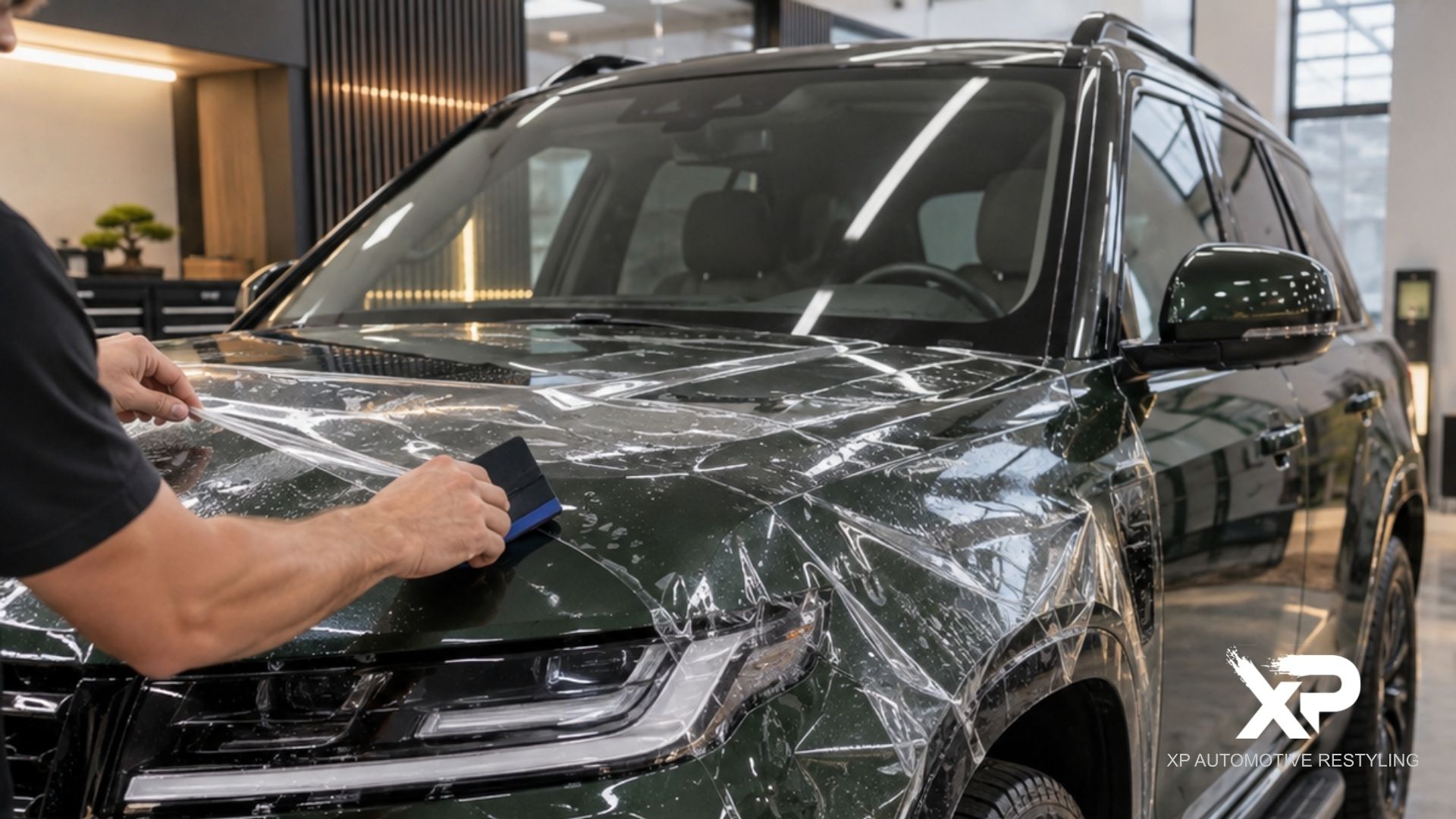
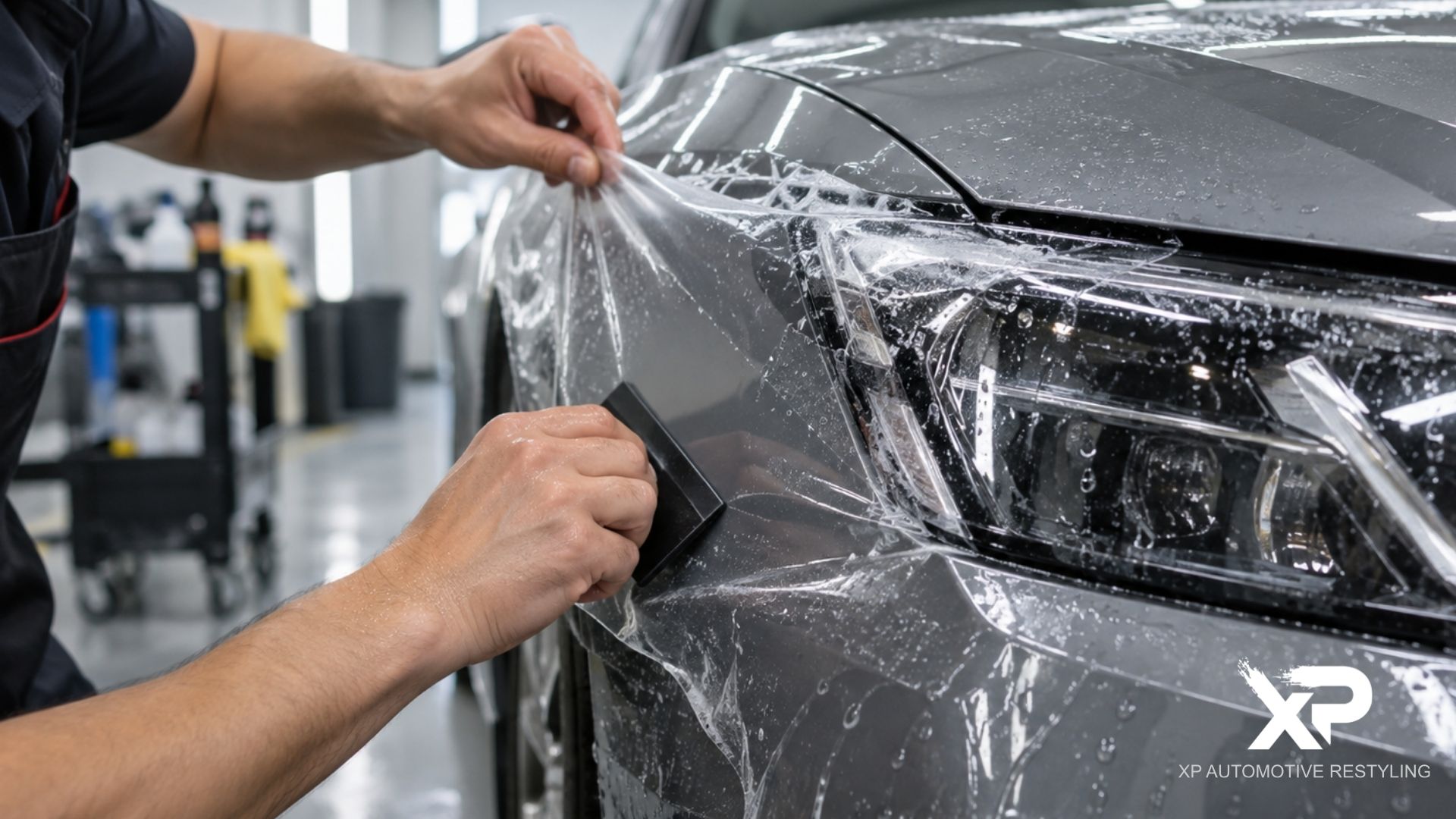
Clear bra and paint protection film generally refer to the same type of transparent urethane film, although clear bra traditionally describes front-end coverage while PPF is the broader modern term. Today’s PPF installation can provide clear paint protection for individual high-impact areas, the complete front end, or nearly the entire painted exterior.
Why Do People Still Call Paint Protection Film a Clear Bra?
The term clear bra became popular because early automotive film applications were primarily used on front-facing panels as a transparent alternative to traditional vinyl or leather car bras. The name stuck, even as the material and the ways we use it changed considerably.
Traditional car bras covered areas such as the hood and front bumper with an opaque physical barrier. Protective film offered a different solution. It could defend those same impact-prone areas while allowing the vehicle’s original paint color and finish to remain visible. Calling it a clear bra for cars made the purpose immediately understandable.
Over time, paint protection film became the more accurate umbrella term. Modern installations aren’t restricted to the nose of the vehicle anymore. We can protect rocker panels, doors, rear quarter panels, loading areas, and many other surfaces that have nothing to do with a traditional “bra.”
At XP Automotive Restyling, we still hear both terms from Southampton drivers. Someone might ask us about clear bra while another asks for PPF, yet both may ultimately be looking for the same type of automotive protection film. What matters more is identifying which areas of the vehicle need protection and choosing coverage accordingly.
Is Clear Bra the Same Material as Modern PPF?
Clear bra and modern PPF generally belong to the same category of protective film, but today’s materials can be considerably more advanced than products drivers may remember from years ago. An older clear bra installation isn’t necessarily representative of how current paint protection film looks or performs.
Modern urethane paint protection film is engineered to create a transparent physical barrier over the factory finish. Depending on the specific product, its construction may incorporate several useful characteristics:
- Improved optical clarity: Quality film is designed to preserve the appearance of the paint underneath rather than noticeably changing it.
- Stain resistance: Modern top coats can make common environmental contamination easier to manage.
- UV stability: Current films are engineered to maintain clarity and resist the discoloration associated with some older products.
- Self-healing properties: Some self-healing PPF can reduce the appearance of fine surface marks when exposed to heat.
- Improved surface technology: Modern top coats can provide better slickness and easier maintenance than earlier generations.
These advancements are one reason drivers shouldn’t judge current clear paint protection solely by a piece of aging film they may have seen years ago. Issues historically associated with older products, such as obvious film lines, discoloration, or a less refined appearance, don’t automatically describe modern PPF.
That said, not every film uses identical materials or offers the same characteristics, warranty, self-healing behavior, or expected service life. The specific product and installation quality still matter.
Does Clear Bra Only Protect the Front of a Vehicle?
Clear bra is most closely associated with front-end protection, but a modern PPF installation can extend far beyond the hood and front bumper. Today’s coverage can be customized around the panels that actually experience wear instead of being limited by the original meaning of the term.
A traditional partial-front package typically concentrates on portions of the hood and fenders along with other forward-facing areas. Full-front PPF expands that idea by protecting complete panels across the front of the vehicle, helping avoid partial coverage lines while increasing the protected surface area.
From there, PPF can be extended to areas such as:
- Front bumper
- Full hood and front fenders
- Mirror caps
- Rocker panels
- Door edges
- Lower doors
- Areas behind the wheels
- Rear bumper loading areas
That flexibility is useful because impacts don’t occur exclusively at the front. A vehicle with wide rear quarter panels, for example, may throw debris toward its own paint behind the wheels. Low rocker panels can take repeated abuse from material kicked up by the tires. Door edges face an entirely different type of everyday contact.
The better way to think about PPF coverage is to follow the vehicle’s exposure. Traditional clear bra coverage can still make sense when front-end impacts are the primary concern, while expanded packages can protect additional areas that see regular wear.
What Does Paint Protection Film Actually Protect Against?
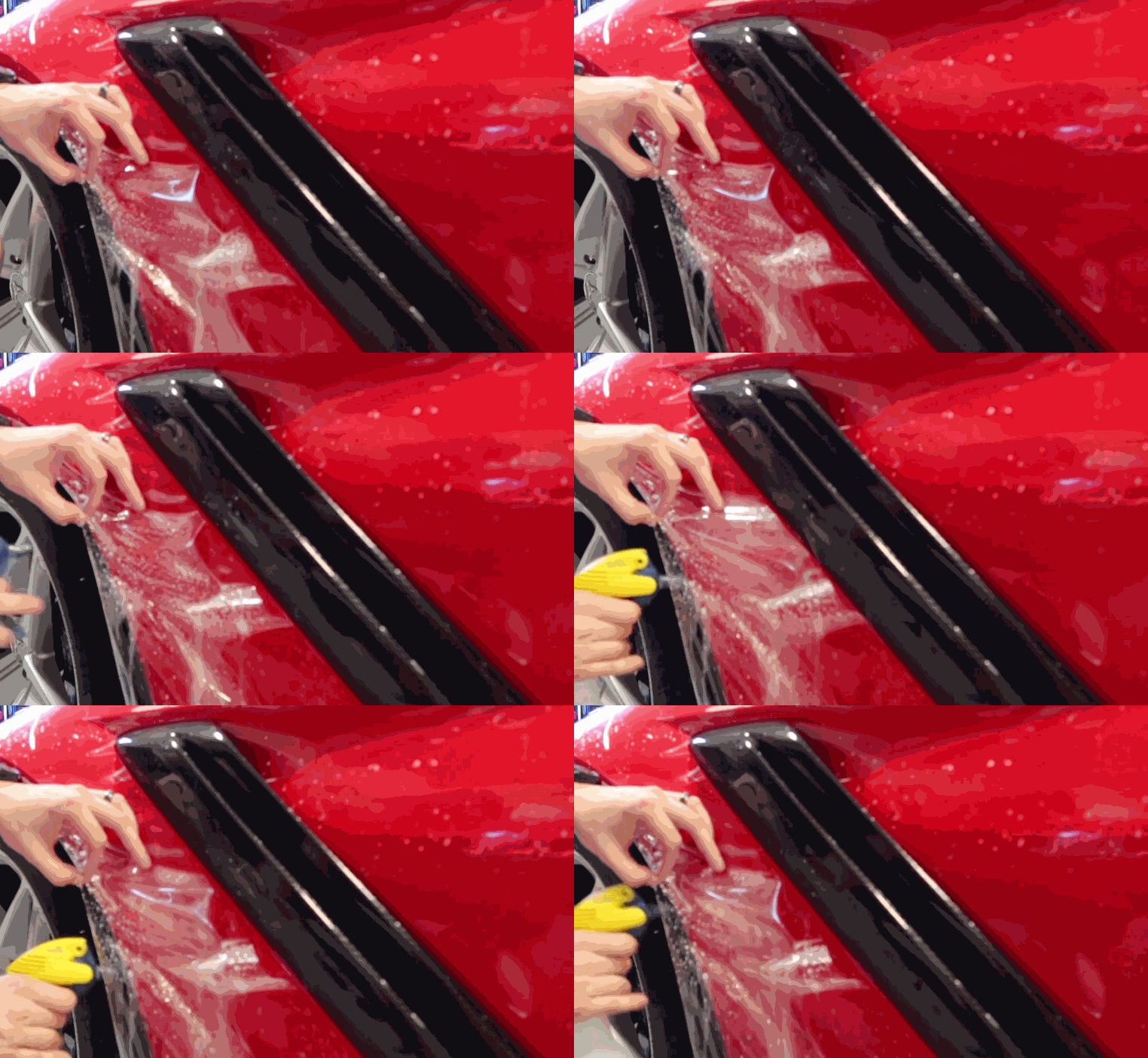
Paint protection film is primarily designed to help protect painted surfaces against rock chips, road debris, light scratches, scuffs, and other minor physical damage. Its biggest distinction from many other detailing products is that PPF provides an actual physical layer between the outside world and the factory finish.
For Southampton drivers, that can be particularly relevant on a vehicle that regularly travels Route 1 or accumulates highway mileage throughout Bucks County. Small stones and debris can strike the bumper, hood, mirror caps, and other exposed surfaces at speed. Over enough miles, individual impacts can turn into a front end covered with small chips.
PPF provides rock chip protection by taking many of those impacts before they reach the paint. The same physical barrier can provide useful road debris protection and help with minor scuffs or surface contact that would otherwise occur directly against the clear coat.
Protection Has Limits
PPF should not be treated as an invisible shield against every possible form of damage. A sufficiently large or sharp impact can penetrate the film. It won’t prevent a dent caused by a major impact, and it cannot protect the vehicle from serious collision damage.
At XP Automotive Restyling, we think setting that expectation matters. Good PPF protection isn’t about promising that nothing will ever happen to your paint. It’s about reducing the types of everyday cosmetic damage that vehicles commonly accumulate through normal use.
That’s also what separates PPF from wax or ceramic coating. Those products can offer useful surface and maintenance benefits, but they don’t provide the same physical impact-absorbing layer. When the priority is automotive paint protection against chips, scuffs, and road impacts, paint protection film serves a distinctly different purpose.
How Does Professional PPF Installation Affect the Final Result?
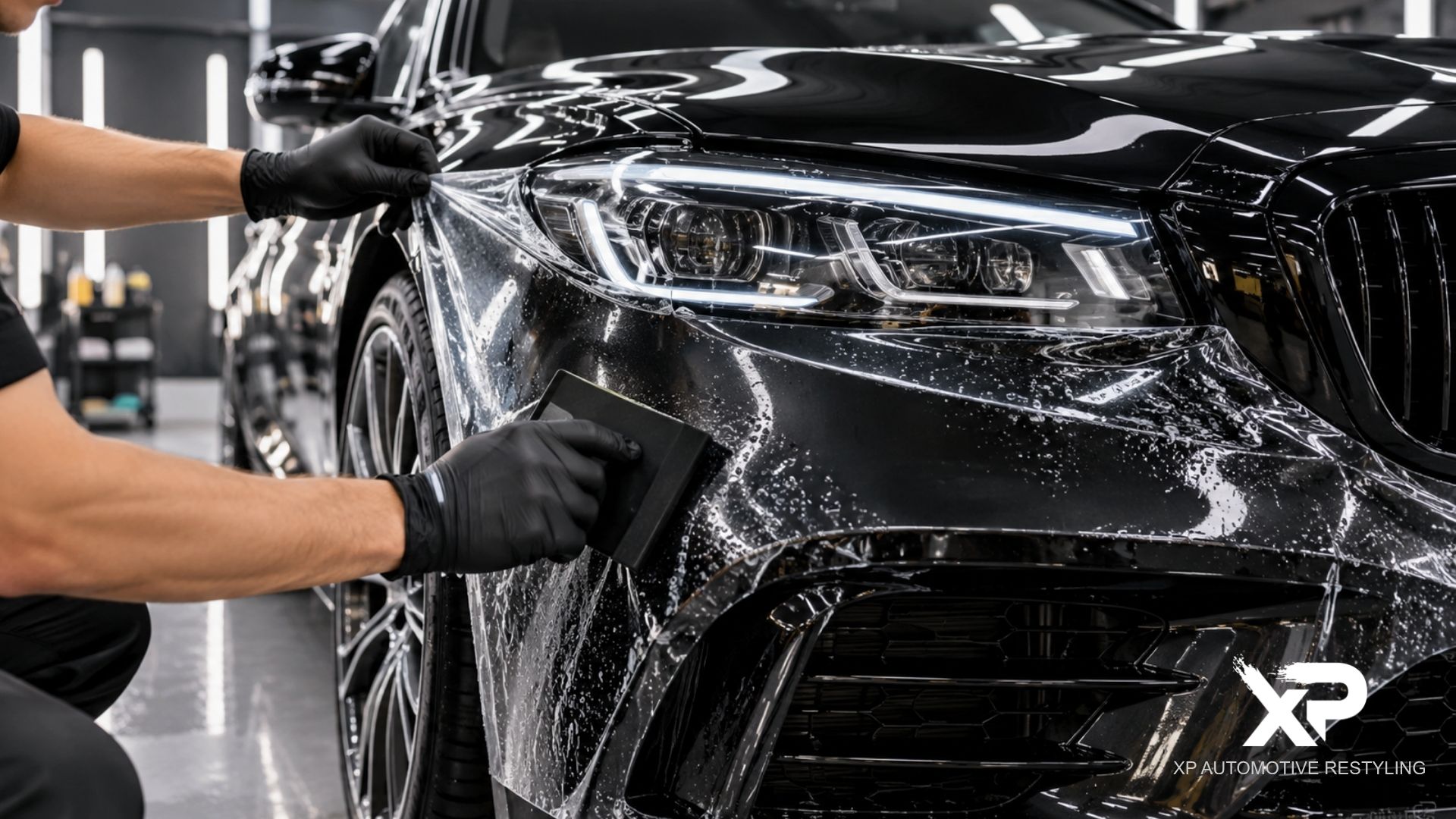
Installation quality has a major effect on how discreetly paint protection film fits the vehicle and how well it performs over time. A professional PPF installation is much more involved than positioning a transparent adhesive sheet over the paint.
Before film touches the vehicle, the finish needs to be evaluated. Existing rock chips, scratches, stains, or other paint defects remain visible underneath transparent PPF, so paint preparation is an important part of setting expectations. The surface also needs to be thoroughly cleaned and decontaminated because trapped debris can affect both appearance and adhesion.
From there, installation becomes a matter of precision. A skilled PPF installer has to manage several variables:
- Pattern fitment: The film needs to match the dimensions and contours of the intended panel.
- Positioning: Proper alignment helps maintain consistent coverage around body lines and adjacent panels.
- Solution removal: Installation solution and air need to be carefully worked out from beneath the film.
- Complex surfaces: Bumpers, vents, sensors, curves, and recessed areas require controlled stretching and positioning.
- Edge management: Where possible and appropriate, thoughtful edge finishing helps create a cleaner visual result.
- Final inspection: The completed installation should be checked for alignment, edges, contamination, and overall finish.
Modern vehicles can have surprisingly complicated bodywork. A bumper with sharp transitions, multiple vents, parking sensors, and deep curves behaves very differently from a flat hood. Managing those shapes without creating unnecessary tension is part of the craft behind seamless paint protection film.
When PPF is installed well, the film shouldn’t compete visually with the vehicle. It should protect the finish while allowing the design and paint underneath to remain the focus.
Which PPF Coverage Makes Sense for Southampton Drivers?
The most useful PPF coverage for a Southampton driver depends on mileage, regular routes, parking conditions, vehicle design, and how much cosmetic wear the owner wants to prevent. More film isn’t automatically the right answer for every vehicle.
At XP Automotive Restyling, we prefer to look at where the car is actually accumulating exposure. A daily driver regularly using Route 1 or I-295 has different priorities from an enthusiast vehicle that spends most weekdays in a garage.
For frequent Bucks County commuters, full-front PPF can offer a practical balance because it concentrates protection across the bumper, hood, front fenders, and mirror caps. These are some of the surfaces most exposed to stones, construction debris, and material thrown up by surrounding traffic.
Targeted front-end paint protection may be enough when an owner primarily wants to address the highest-impact zones while keeping coverage focused. Expanded protection becomes more relevant when the vehicle’s design exposes rocker panels, lower doors, rear quarter panels, or other areas to repeated debris.
Pennsylvania’s seasonal conditions matter too. Winter grime, warmer-weather construction, highway mileage, and changing road surfaces all contribute to the type of wear a regularly driven vehicle accumulates.
That’s why we approach PPF Southampton PA coverage as a vehicle-specific decision. A daily driver PPF package should reflect daily exposure, while custom PPF coverage can be expanded when the owner’s use or preservation goals justify it.
Is Clear Bra Still a Useful Term When Shopping for PPF?
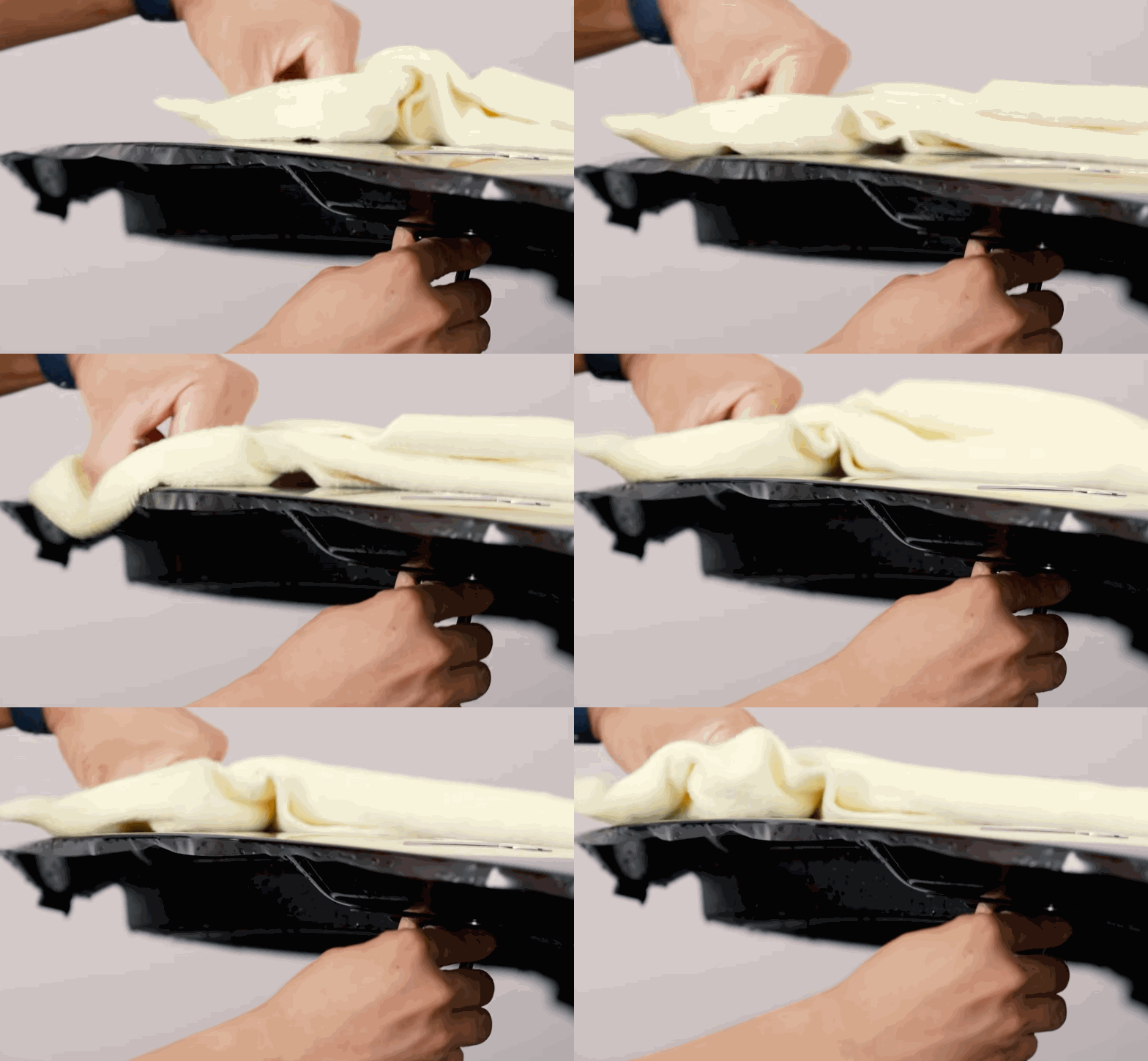
Clear bra is still a useful and widely understood term, but the specific film, protected panels, and installation process tell you far more than the name itself. Two installers can both advertise a clear bra installation while providing substantially different coverage.
Instead of focusing only on terminology, ask exactly what you’re getting. Does “clear bra” mean a portion of the hood and fenders? Does it include the entire front bumper? Are the mirrors protected? Is it actually a full-front package?
Those details affect both protection and appearance.
Film characteristics are also worth discussing. Ask about the material’s surface technology, warranty, maintenance requirements, and expected characteristics over time. Installation details such as pattern fitment and edge finishing can be equally important.
The experience of the paint protection film installer matters because PPF is ultimately both a product and an installation service. Excellent film can still produce a disappointing result when preparation or fitment is poor.
So, while searching for PPF services or clear bra will get you into the right product category, the better conversation begins with what film is being installed, where it will go, and how the work will be completed.
Clear Bra or PPF: What Should You Ask for?
You don’t need to choose between clear bra and PPF as though they are competing products. The more important decision is selecting the right paint protection film and deciding which areas of your vehicle actually need coverage.
The terminology becomes much easier once you think in terms of protection goals.
Protecting the Traditional Impact Zone
If your main concern is rock chips across the front of the vehicle, ask about partial-front and full-front PPF packages. This is the protection most closely associated with the traditional clear bra concept.
Covering More Than the Nose
If your vehicle regularly takes debris along the rocker panels or behind the wheels, expanded PPF coverage options can address those specific surfaces. Track-style or high-impact packages can make sense when the vehicle’s use creates additional exposure.
Preserving Nearly Every Painted Surface
Full-body PPF extends physical protection across most or all painted exterior panels. It can be valuable for owners with comprehensive preservation goals, but it isn’t necessary simply because a vehicle is new, expensive, or frequently driven.
Ultimately, the clear bra vs PPF question is mostly about language. The meaningful decision is how much vehicle paint protection matches the way you drive and the condition you want to preserve.
Conclusion: Focus on the Protection, Not Just the Name
Clear bra and paint protection film generally describe the same category of transparent protective film, with clear bra traditionally referring to front-end applications and PPF serving as the broader modern term. What matters more is the film being used, where it’s installed, and the quality of the installation.
For Southampton drivers, that means thinking beyond terminology and considering actual exposure. Bucks County commuting, highway mileage, construction debris, and Pennsylvania road conditions can all influence which panels are most likely to accumulate chips and cosmetic wear.
Film quality, appropriate coverage, thorough paint preparation, and professional PPF installation ultimately have a greater impact on the result than whether you call the product clear bra or PPF.
At XP Automotive Restyling, we help drivers choose protection based on their vehicle and how they actually use it. Contact our team for Paint Protection Film services in Southampton, PA, and schedule a consultation to determine which PPF coverage best matches your driving habits and protection goals.
XP Automotive Restyling - PPF, Window Tinting, Ceramic Coatings