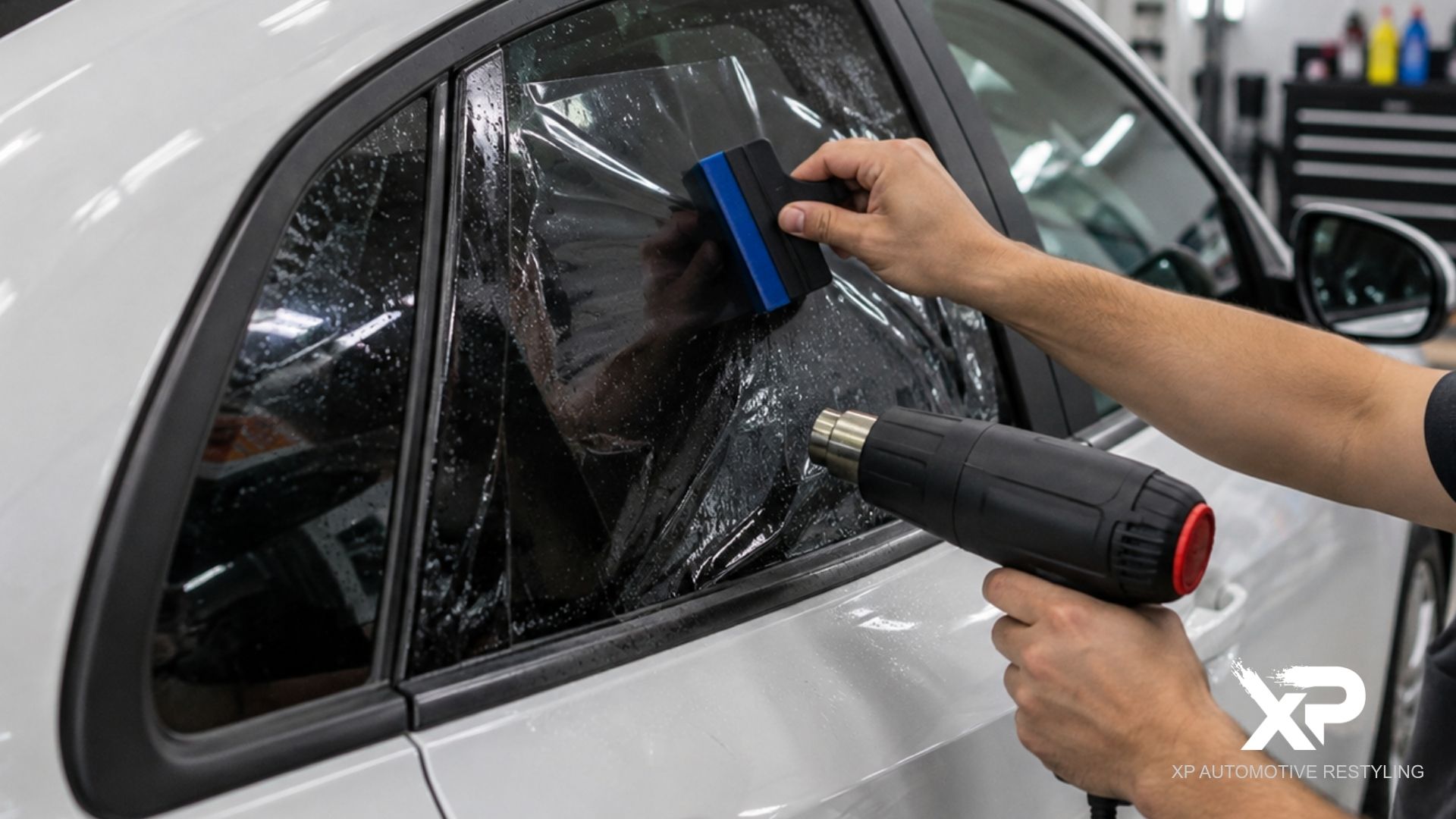
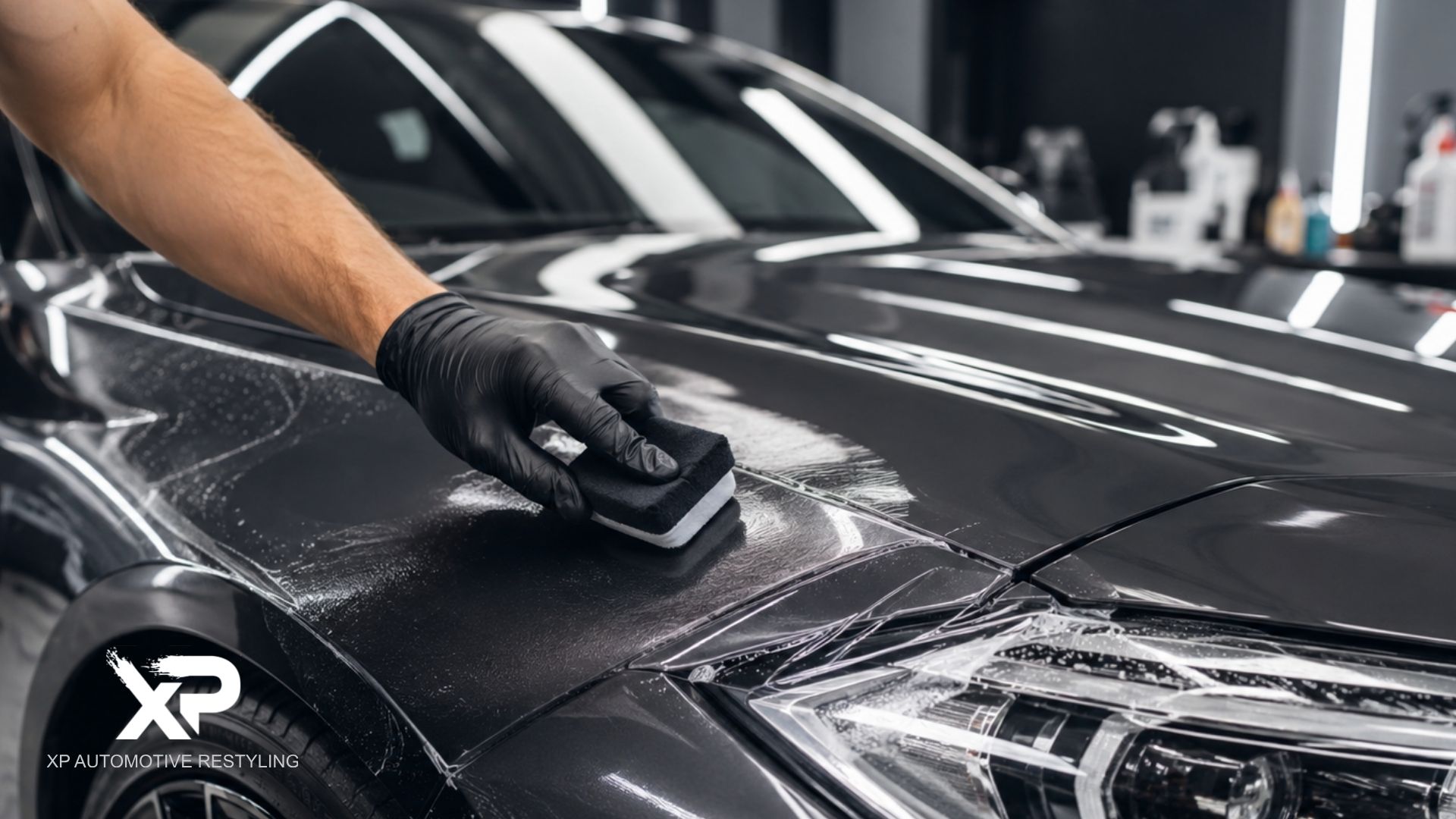
Yes, many modern paint protection film products can be treated with compatible waxes or sealants, but polishing requires greater caution because abrasives may affect the film’s top coat. Safe PPF maintenance means checking manufacturer recommendations before you wax PPF or polish PPF, rather than treating the film exactly like automotive clear coat.
Caring for PPF Is Different From Caring for Bare Paint
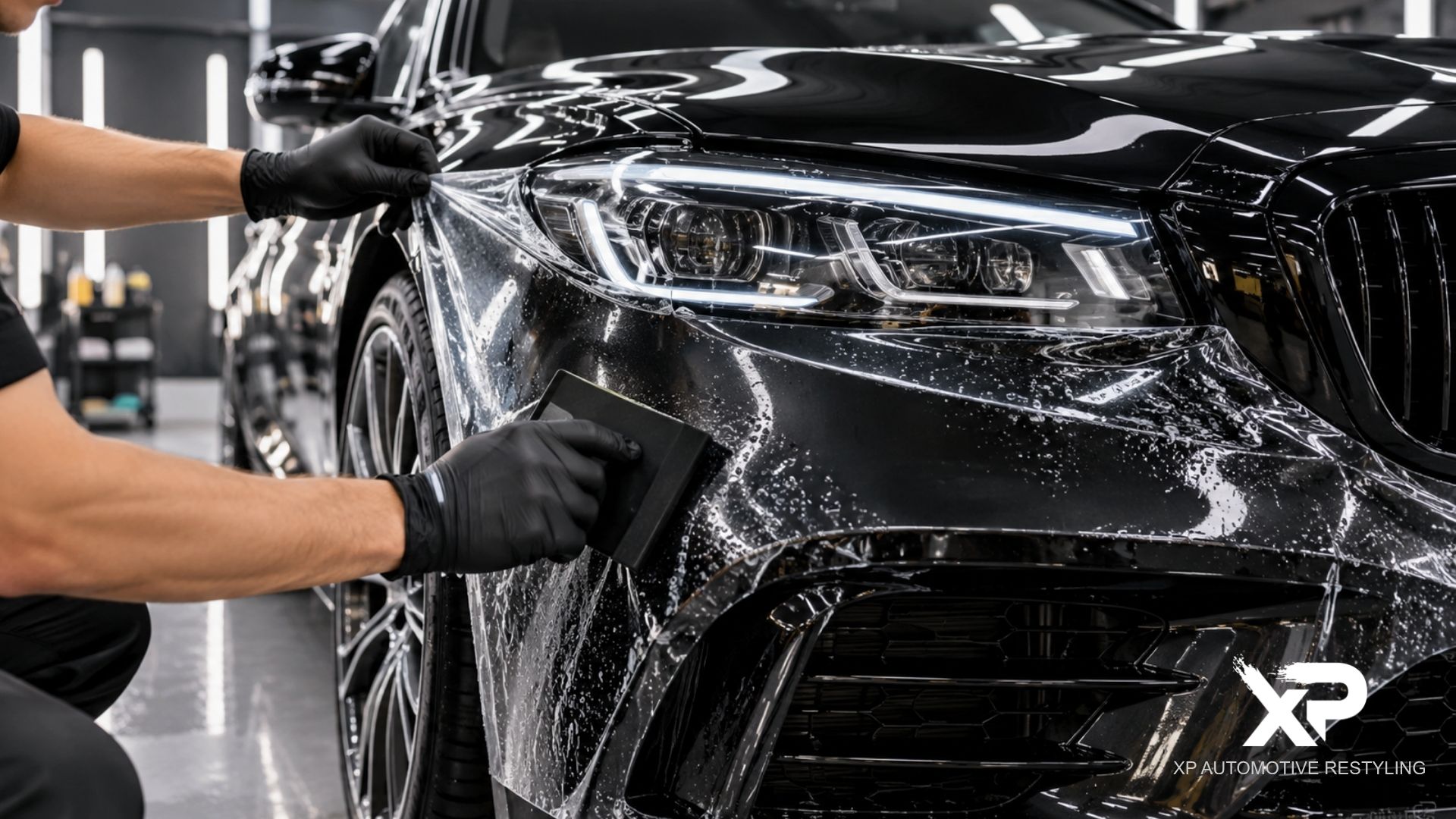
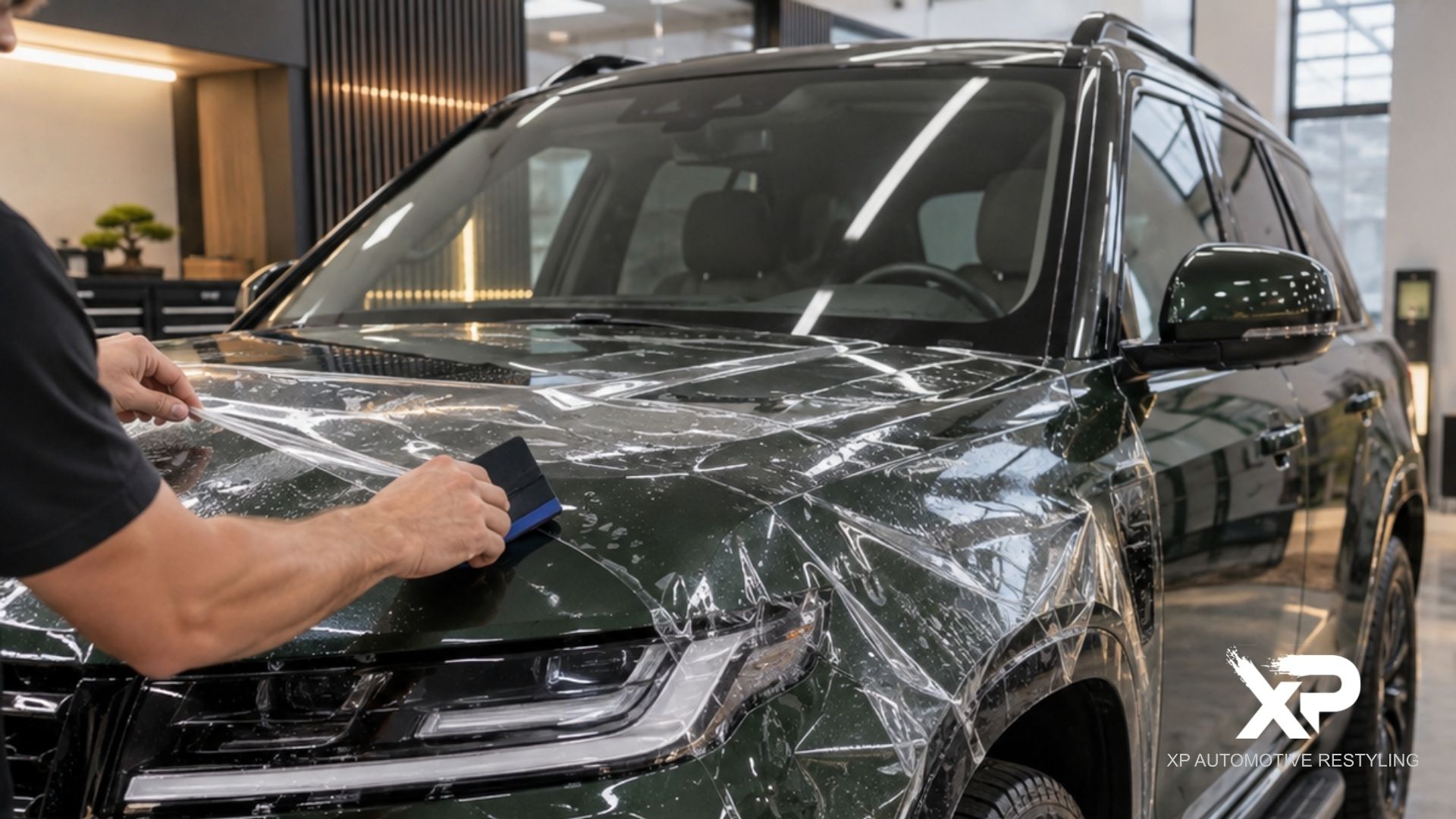
Paint protection film requires different care than exposed automotive clear coat because the film is a flexible protective material with its own surface technology. A product or correction technique that works perfectly well on factory paint isn’t automatically the right choice for PPF.
That’s an important distinction because modern film does much more than simply sit over the paint. Depending on the product, its top coat may provide stain resistance, hydrophobic properties, enhanced gloss, and self-healing behavior. Aggressive chemicals or unnecessary abrasion can interfere with those characteristics.
For a daily driver in Southampton, the film also deals with plenty of contamination before maintenance even enters the picture. Regular Route 1 travel and commuting throughout Bucks County can leave bug residue and road film across forward-facing panels. Outdoor parking brings pollen, bird droppings, and tree contamination, while Pennsylvania’s changing seasons introduce everything from summer insects to winter road grime.
Good paint protection film care accounts for both the material and the conditions the vehicle encounters. Proper PPF maintenance helps preserve clarity and appearance while allowing the film to continue serving its primary purpose as a layer of automotive paint protection.
Can You Apply Wax Over Paint Protection Film?
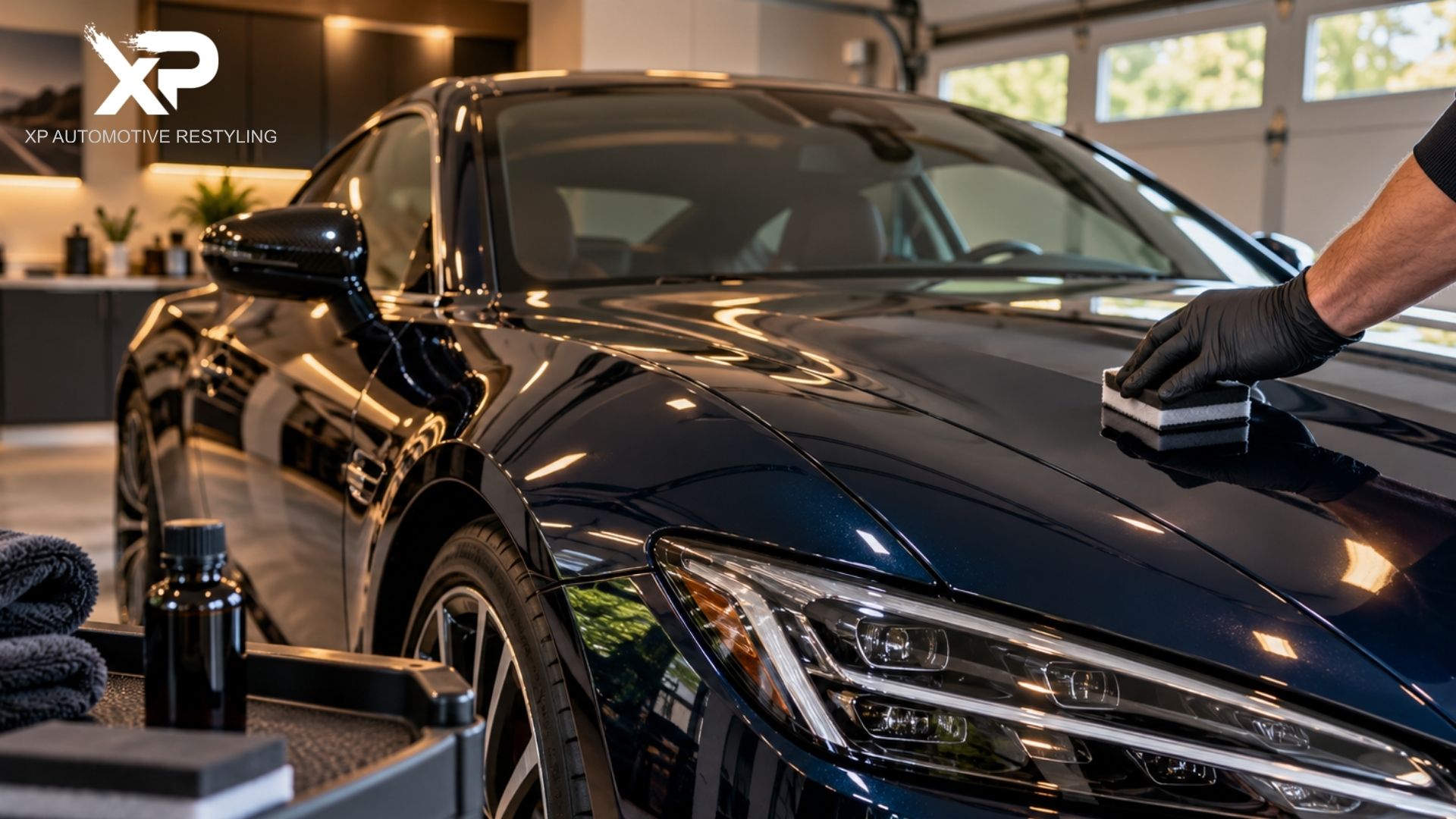
Compatible wax can generally be applied over many paint protection film products, but we recommend confirming that the wax is appropriate for the specific film before using it. PPF isn’t bare paint, so grabbing whatever wax happens to be on the shelf isn’t the approach we’d take with a protected vehicle.
At XP Automotive Restyling, we look at waxing PPF as an optional maintenance step rather than something every film automatically needs. A suitable product may enhance slickness, gloss, or water behavior, but it does not make the underlying film thicker or substantially improve its ability to absorb road impacts.
When choosing a PPF-safe wax, there are a few things worth checking:
- Avoid waxes containing abrasive cleaning or polishing agents unless the film manufacturer specifically permits them.
- Be cautious with strong solvents or aggressive chemical formulations.
- Avoid products with dyes that could potentially discolor or alter the appearance of clear film.
- Apply products carefully near seams and edges, where dried wax residue can become visible and difficult to remove.
Modern PPF top coats also change the role traditional wax plays. Many quality films already have slick, stain-resistant surface properties, so owners don’t necessarily need to wax Paint Protection Film as frequently as they might wax unprotected clear coat.
The best way to maintain PPF is to use products that complement the film instead of assuming another layer is always beneficial. Sometimes proper washing and basic maintenance are all the film needs.
Can Paint Protection Film Be Polished?
Paint protection film can sometimes be polished, but polishing PPF requires considerably more caution than polishing automotive clear coat. Abrasive correction physically alters the surface, and an overly aggressive approach can damage the film’s top coat instead of improving its appearance.
That difference matters because traditional paint correction often relies on removing a microscopic amount of clear coat to level imperfections. With PPF, you’re working on a manufactured film with a finite top layer and specific surface properties.
Light Correction Is Not the Same as Compounding
Very light PPF polishing may be appropriate for certain films and certain surface problems. The product, pad, machine speed, pressure, heat generation, and condition of the film all matter.
Heavy compounding is a different situation. Treating PPF like badly swirled clear coat and repeatedly working an aggressive compound into it can create haze, alter texture, generate excessive heat, or compromise the top coat.
Identify the Problem Before Trying to Correct It
A dull or stained section of film doesn’t automatically need polishing. What appears to be surface deterioration may actually be bonded contamination, mineral deposits, product residue, or another issue that requires a different treatment.
When PPF surface care moves beyond ordinary cleaning, identifying the problem first is far safer than reaching immediately for a machine polisher. Professional evaluation is particularly worthwhile when the film has persistent staining, reduced gloss, unusual haziness, or marks that don’t respond to normal maintenance.
Knowing when not to polish Paint Protection Film is just as important as knowing how correction can be performed.
What About Self-Healing PPF and Light Surface Marks?
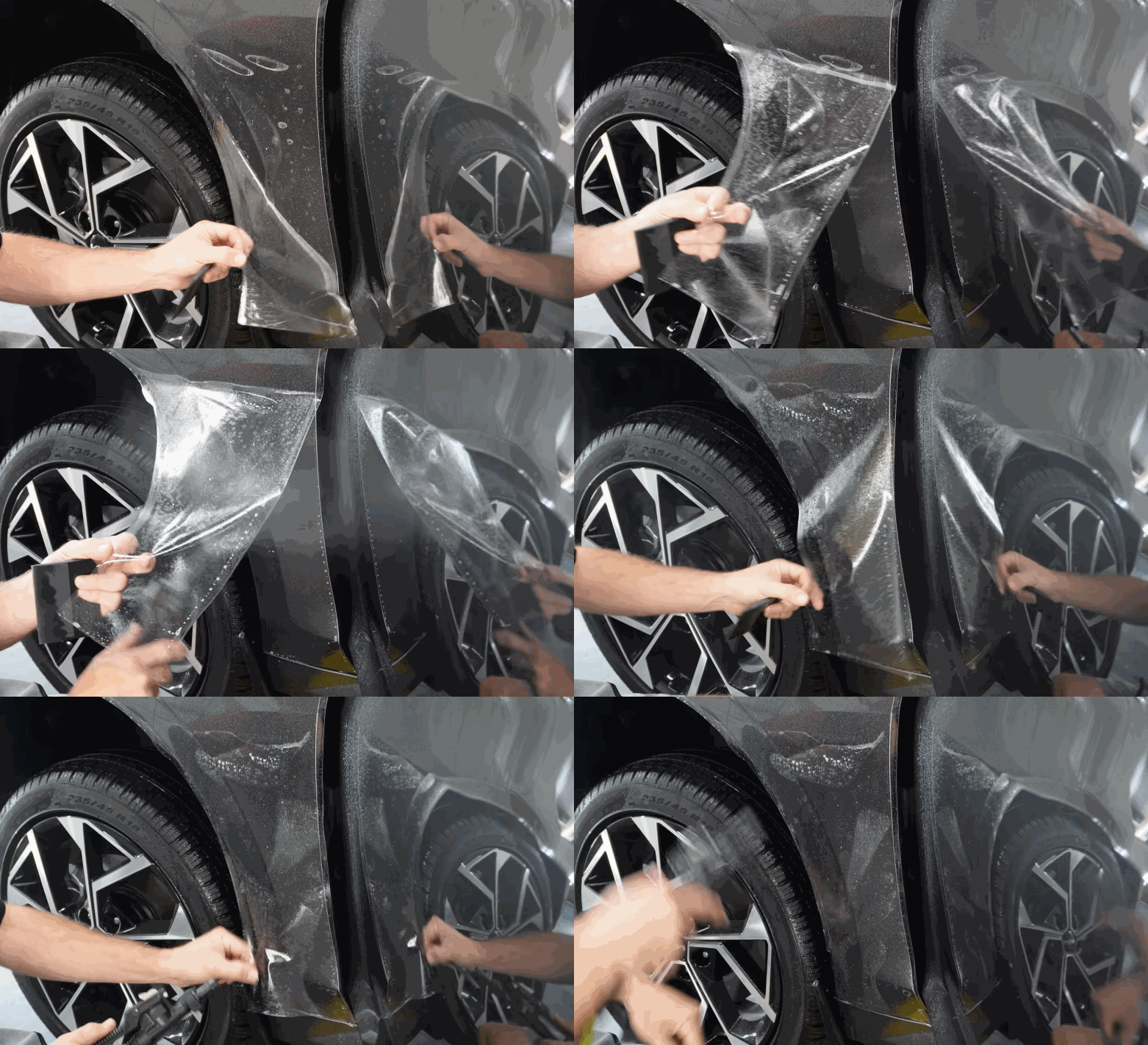
Light surface marks in self-healing PPF may become less noticeable when the film is exposed to heat, which means polishing may not be necessary at all. Before attempting abrasive correction, it’s worth understanding whether the mark is actually something the film’s top coat was designed to address.
Self-healing technology works because the top layer can respond to warmth. Depending on the specific film, heat from sunlight, warm water, or carefully controlled professional heat can help the surface recover from fine marks.
There are limits, however. Self-healing behavior should not be confused with unlimited PPF scratch resistance. A rock impact that tears or punctures the film will not magically disappear. The same applies to deep scratches that penetrate the PPF or damage the factory paint beneath it.
At XP Automotive Restyling, this is one reason we prefer evaluating the film before unnecessarily correcting it. Trying to polish every visible mark can introduce abrasion and heat to a surface that may have recovered on its own or needed an entirely different treatment.
Effective Paint Protection Film maintenance isn’t about constantly working on the material. It’s about understanding what the film can handle, recognizing when intervention is actually necessary, and preserving as much of its original surface technology as possible.
Which Products Should You Avoid on PPF?
Harsh chemicals, abrasive compounds, aggressive solvents, and incompatible detailing products should generally be avoided on paint protection film. Even when a product is marketed for automotive detailing, that doesn’t automatically make it suitable for the top coat of every PPF.
The main concern is unnecessary chemical or mechanical stress. Petroleum-heavy products and strong solvents may interact poorly with certain films or adhesives. Abrasive polishes can alter the top coat, while aggressive cleaners may affect gloss, slickness, or other surface characteristics. Waxes containing dyes or harsh solvents can also be problematic depending on the film formulation.
Product buildup deserves attention as well. Thick waxes and detailing products can collect along seams and film edges, leaving visible white or discolored residue. Trying to remove hardened buildup aggressively can create another problem by placing unnecessary pressure on those edges.
There isn’t one universal list of PPF cleaning products that applies to every film. Materials and top-coat technologies vary between manufacturers, which is why manufacturer-specific recommendations should take priority when selecting PPF-safe products.
Good Paint Protection Film care is usually simpler than people expect. Use appropriate products, avoid unnecessary aggression, and don’t assume that stronger chemicals produce better results.
How Should You Wash PPF Before Waxing or Applying a Protectant?
Paint Protection Film should be thoroughly and safely cleaned before applying wax, sealant, or another compatible protectant. Putting a finishing product over dirty film can trap contamination, create uneven results, and work against the clean appearance you’re trying to achieve.
A practical preparation process can be kept straightforward:
- Remove loose contamination first. Rinse away dust, grit, pollen, and other particles before making physical contact with the surface.
- Wash with an appropriate automotive shampoo. Use a film-compatible product and proper wash media rather than harsh household cleaners.
- Address remaining contamination. Bug residue, road grime, and other stubborn deposits should be safely removed before applying anything over the film.
- Rinse thoroughly. Soap and cleaning-product residue shouldn’t remain beneath a wax or protectant.
- Dry with clean microfiber towels. Gentle drying helps prepare a clean, residue-free surface for the next product.
Edges require a little extra awareness when you wash Paint Protection Film. Dirt can accumulate around exposed seams, but aggressively directing high-pressure water into an edge is unnecessary and can potentially contribute to lifting.
Thorough PPF cleaning gives any compatible protectant a clean surface to work on. More importantly, careful washing remains the foundation of PPF maintenance, whether you plan to add wax afterward or leave the film exactly as it is.
Does PPF Need Wax, or Is Ceramic Coating a Better Option?
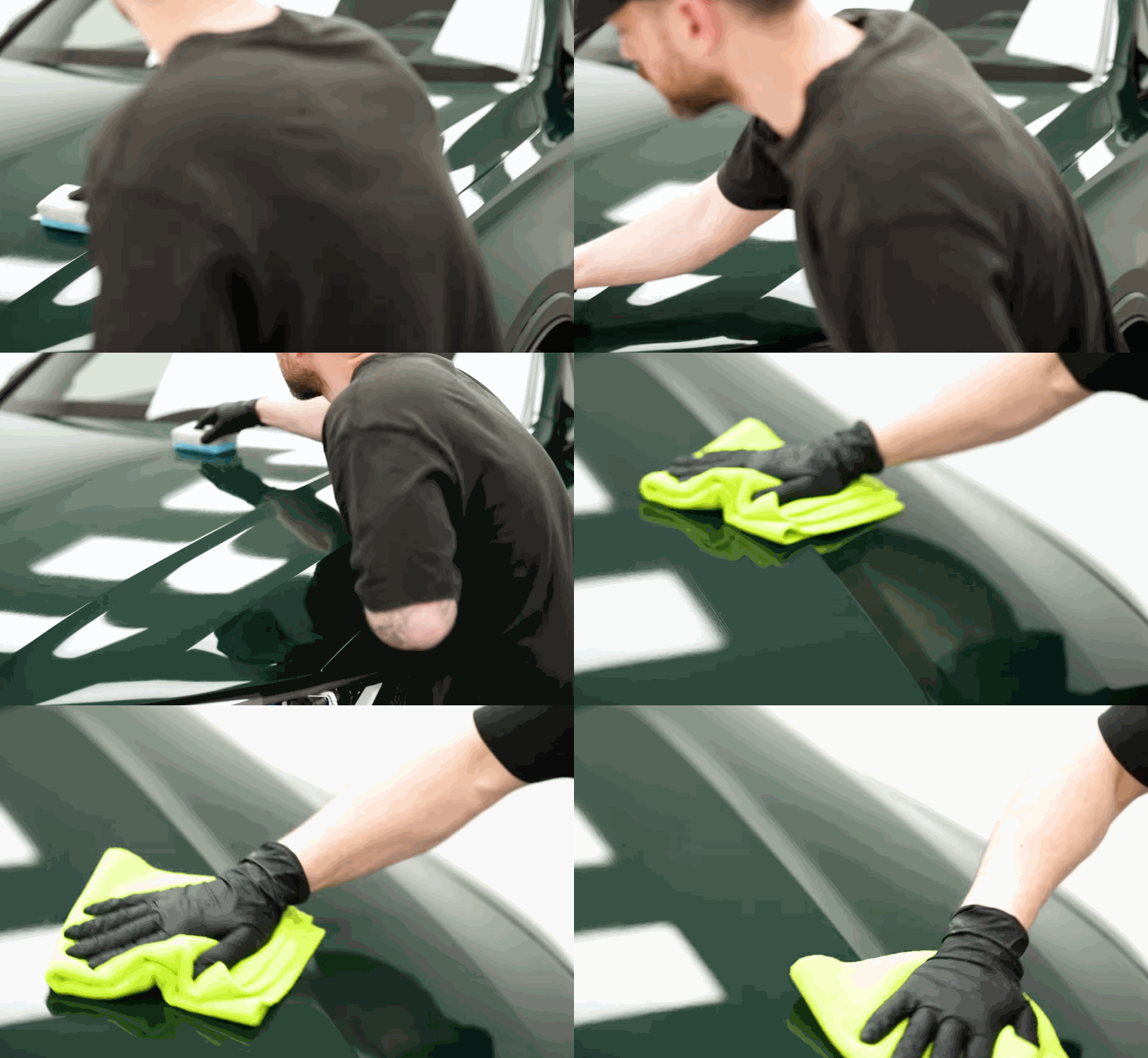
PPF does not necessarily need wax, and a compatible ceramic coating can be a more practical option for owners who want longer-lasting hydrophobic behavior and easier maintenance. Neither treatment is mandatory, and the better choice depends on the film, the owner’s maintenance preferences, and the products being used.
Wax and ceramic coating serve similar roles here in one important respect: they’re being applied over an existing layer of PPF protection. The film is still doing the primary work of helping protect the paint from rock chips, scratches, and minor road impacts.
Wax can be useful for owners who prefer traditional detailing and don’t mind reapplying protection periodically. A compatible wax may enhance slickness, appearance, and water behavior without requiring a more involved treatment.
Ceramic coating over PPF takes a different approach. When the coating and film are compatible, the ceramic layer can provide longer-lasting hydrophobic characteristics, making water, road grime, insects, and other contamination easier to manage. This combination can be appealing on daily-driven vehicles where simplified maintenance is a priority.
At XP Automotive Restyling, we don’t treat ceramic coating as an automatic upgrade every PPF owner needs. Modern films can already have excellent surface properties, and some owners are perfectly satisfied with careful washing alone. For others, creating more hydrophobic PPF can make routine ownership noticeably easier.
Whichever approach you choose, compatibility comes first. Adding another product only makes sense when it works with the specific film rather than interfering with the surface you’re trying to preserve.
When Should PPF Be Professionally Inspected Instead of Polished?
Paint protection film showing lifting edges, deep scratches, tears, significant staining, bubbling, or impact damage should be inspected rather than aggressively polished. Polishing can address only certain surface-level concerns. It cannot repair structural damage to the film.
The key is determining whether you’re looking at a cosmetic surface issue or actual damaged Paint Protection Film.
A light mark, minor surface contamination, or certain forms of residue may be correctable without replacing the film. A puncture from road debris is different. So is a section that has torn, separated from the panel, or developed an edge that continues to lift.
A PPF inspection becomes particularly useful when the cause isn’t obvious. What looks like dull film might be contamination on the surface, while apparent staining could involve the top coat itself. Attempting aggressive correction before identifying the problem can make a manageable issue worse.
Physical damage may require replacing the film on the affected panel rather than trying to disguise it with polishing. One advantage of PPF is that individual sections can often be addressed without removing protection from the entire vehicle.
Professional PPF maintenance is as much about knowing when to leave the film alone as it is about correcting it. A proper inspection can determine whether cleaning, light correction, additional protection, or replacement is the appropriate next step.
Conclusion: Maintain the Film Without Compromising Its Protection
Paint Protection Film can often be treated with compatible waxes, sealants, or other protective products, but polishing should be approached cautiously and only when appropriate for the specific film. The goal of maintenance should always be to preserve the film rather than unnecessarily alter its protective surface.
Good PPF maintenance comes down to safe washing, compatible products, sensible techniques, and realistic expectations. You don’t need to polish every small mark or continually layer detailing products over the film. In many cases, simple and consistent care is the better approach.
Manufacturer recommendations should also remain part of the decision. Film formulations, top coats, self-healing properties, and approved maintenance products can differ, so the safest procedure for one PPF product isn’t necessarily identical for another.
At XP Automotive Restyling, we can help Southampton drivers determine what their existing film actually needs. Whether you’re dealing with stubborn contamination, questionable staining, surface marks, lifting edges, or simply aren’t sure which products are safe, contact our team for PPF maintenance, inspection, or Paint Protection Film services in Southampton, PA.
When you’re unsure whether your PPF should be cleaned, treated, corrected, or replaced, schedule an inspection with our team before experimenting with aggressive products or polishing techniques.
XP Automotive Restyling - PPF, Window Tinting, Ceramic Coatings