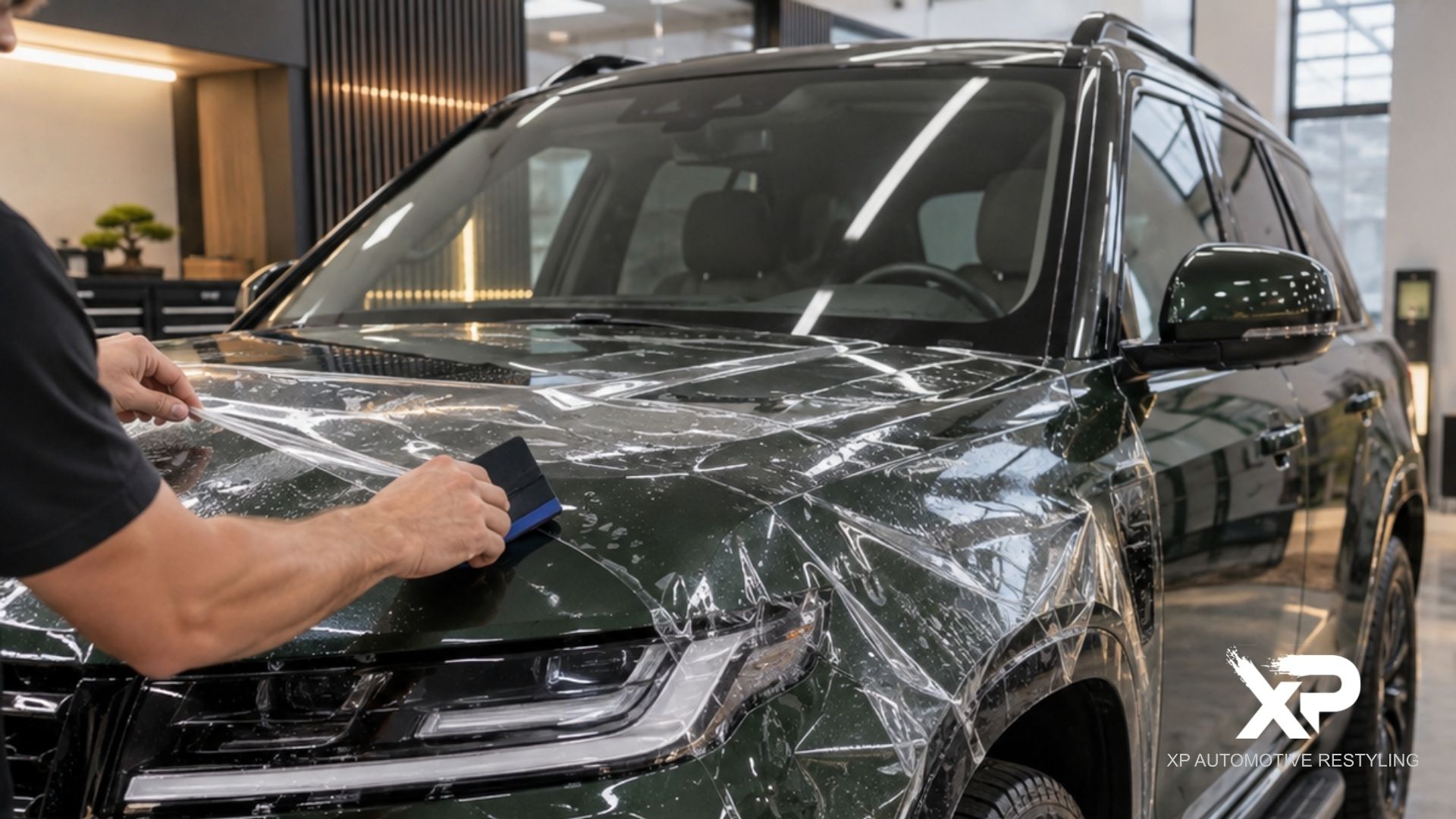
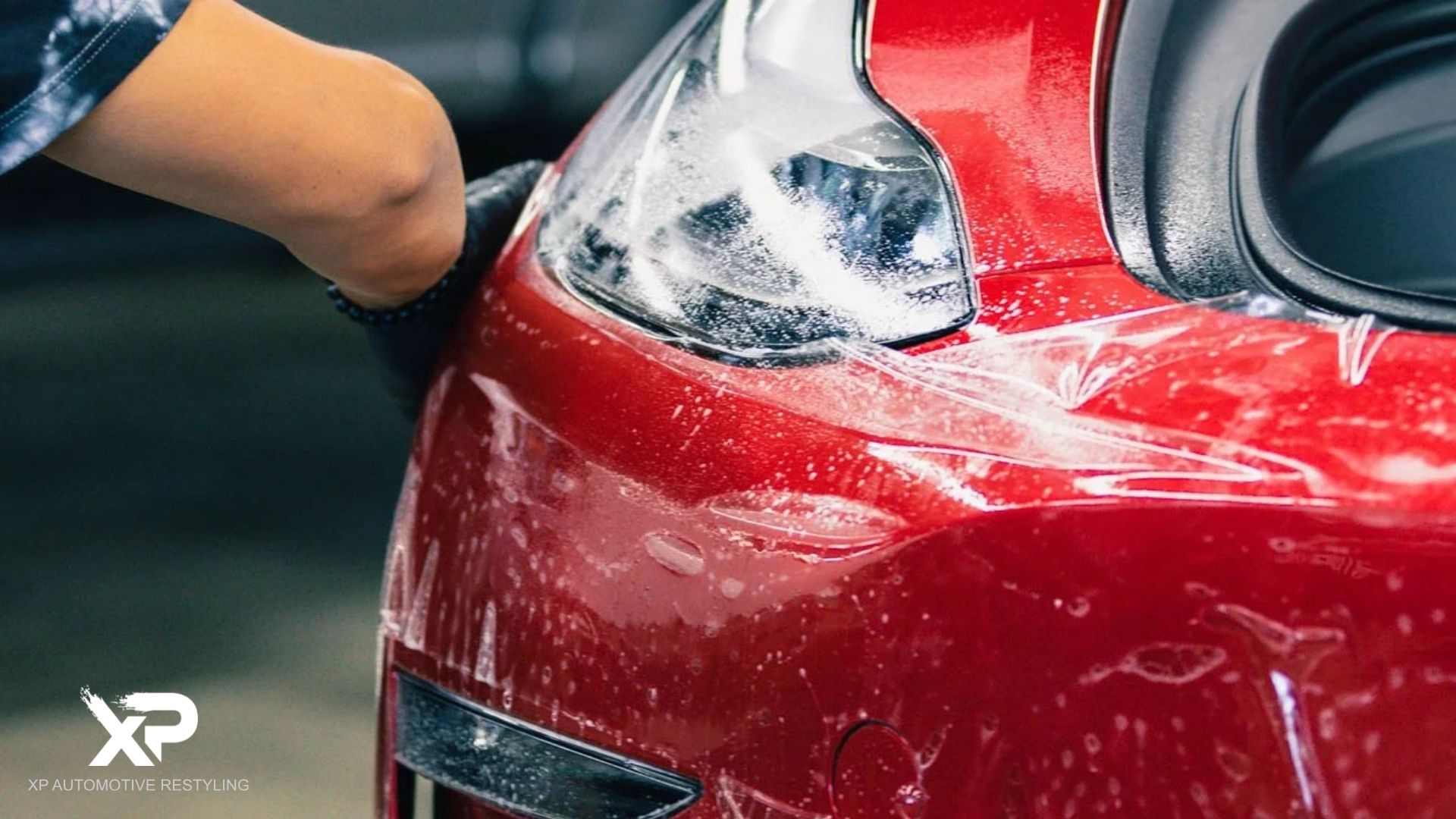
Driving through winter in Southampton and the surrounding Bucks County area brings a very specific set of challenges for your vehicle. From early morning commutes to errands along local roads, winter conditions here are not extreme all at once, but they are persistent. That consistency is what slowly takes a toll on your car’s exterior.
Road crews throughout the region rely heavily on salt, grit, and chemical treatments to keep roads passable. Add in slush, wet pavement, and frequent freeze-thaw cycles, and you end up with a mix that is tough on automotive paint. Moisture settles into seams, salt residue sticks to lower panels, and fine debris gets kicked up day after day.
From our own experience owning and driving vehicles year-round in this area, this is exactly where Paint Protection Film becomes a practical ownership decision rather than a luxury upgrade. It is not about making a car look flashy, it is about managing long-term wear in an environment that quietly accelerates paint damage.
Throughout this article, we will break down how winter conditions affect your vehicle, how Paint Protection Film works in real-world use, and why proper PPF installation plays such a critical role in cold-weather performance. Everything here is based on hands-on experience, not marketing language or theoretical claims.
How Winter Road Salt and Grit Affect Vehicle Paint Over Time
Winter road treatments in Pennsylvania are effective for safety, but they are aggressive on vehicle finishes. Salt is hygroscopic, meaning it attracts and holds moisture. When it sits on painted surfaces, especially in seams and lower panels, it accelerates oxidation and clear coat breakdown.
At the same time, grit and fine debris spread on roads become abrasive at speed. Whether you are driving on main routes through Southampton or moving with commuter traffic during peak hours, those particles are constantly being thrown against your vehicle’s front end and lower body sections.
What makes this type of damage tricky is that it does not usually show up right away. Instead, it builds gradually:
- Microscopic chips form in high-impact areas.
- Salt and moisture settle into those openings.
- Clear coat slowly degrades, even if the paint still looks acceptable at first glance.
Because winter exposure happens every year, the damage is cumulative. One season may not seem significant, but several winters of untreated exposure can noticeably dull paint, stain lower panels, and increase the likelihood of corrosion over time. Understanding this slow progression is key to making informed protection decisions.
What Paint Protection Film Does Differently Than Other Protective Options
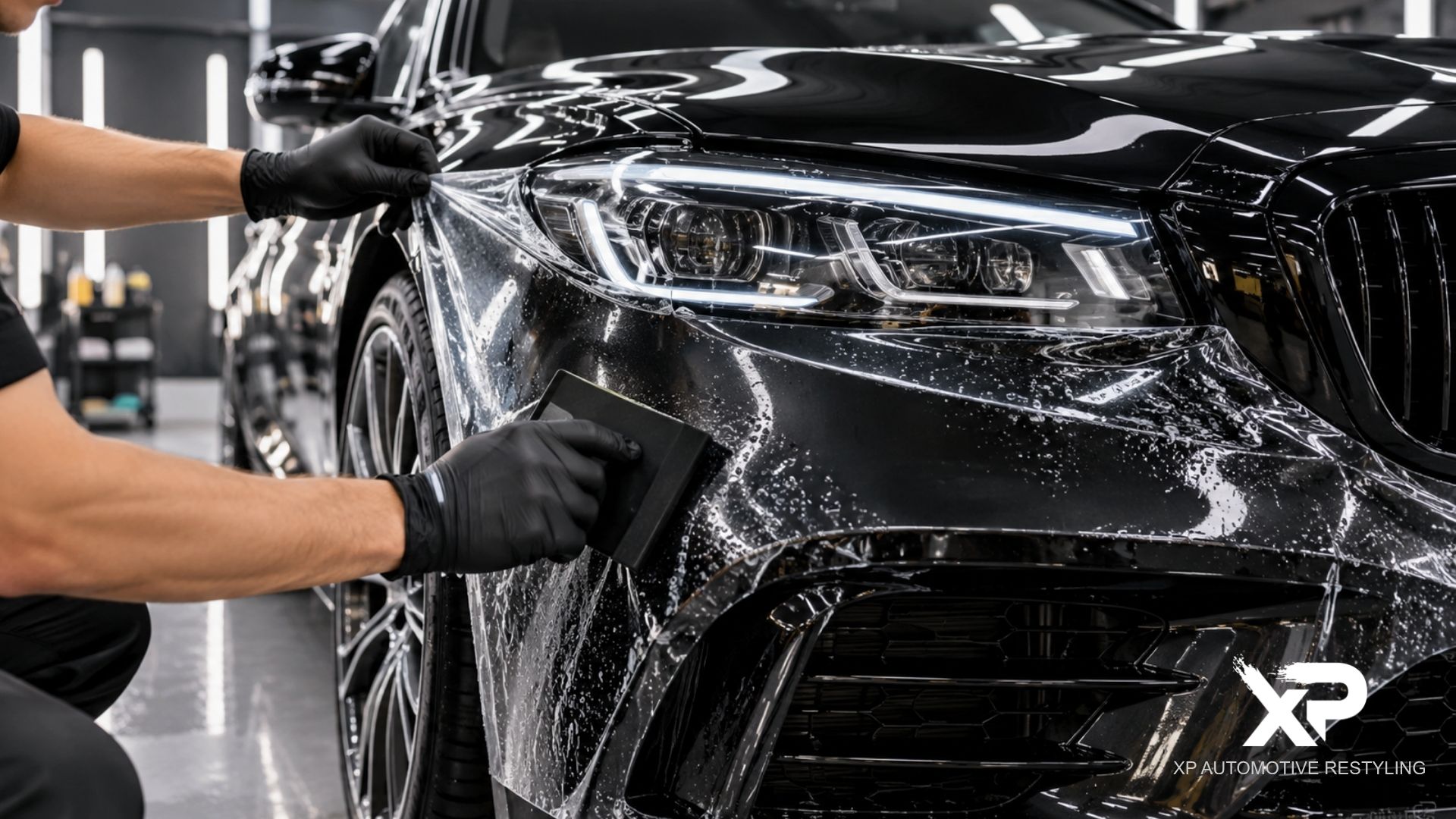
Paint Protection Film is designed to act as a physical barrier between your vehicle’s paint and the environment it is driven through. Unlike surface treatments that sit on top of the paint, PPF creates a durable layer that absorbs impact from salt, grit, and fine debris before it reaches the clear coat.
In practical terms, this means:
- Road grit hits the film instead of the paint.
- Minor impacts are dispersed across the film’s surface.
- Contaminants are easier to wash off without aggressive cleaning.
Waxes and sealants still have their place in paint care, especially for gloss and ease of cleaning, but they are not engineered to stop physical abrasion. Paint Protection Film is. That difference becomes especially noticeable during winter months when mechanical damage from debris is constant.
It is also important to note that real-world results depend heavily on PPF installation. Film quality matters, but how the material is installed, how edges are sealed, and how surfaces are prepared all directly affect winter durability. The goal is not perfection, it is realistic, long-term protection based on how the car is actually used.
High-Impact Areas Most Vulnerable During Southampton Winters
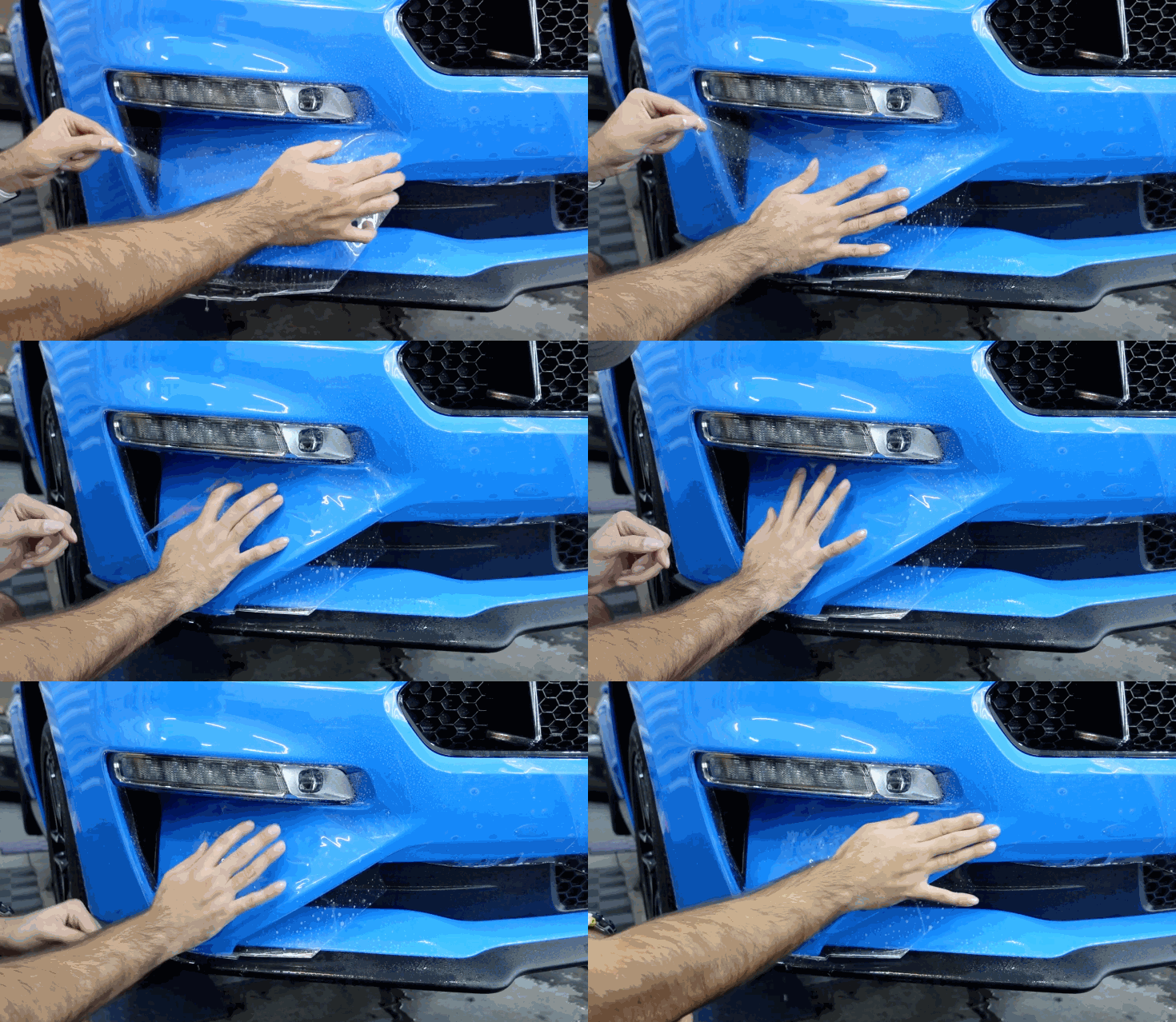
Not every panel on a vehicle faces the same level of winter exposure. In Southampton’s suburban driving environment, certain areas consistently take the most abuse from salt and grit.
Common high-impact zones include:
- Front bumper and grille areas exposed to direct debris impact
- Hood and front fenders where grit is thrown upward at speed
- Rocker panels and lower doors that collect slush and salt spray
- Lower rear panels affected by road splash in wet conditions
Daily driving patterns play a big role here. Short trips, parking lots, stop-and-go traffic, and regular commuting all contribute to repeated exposure in these zones. That is why protection decisions should be based on usage rather than the type or value of the vehicle itself.
Strategic coverage focuses on the areas that see the most winter wear, allowing Paint Protection Film to do its job where it matters most without overcomplicating the approach.
Local Experience and Winter-Ready PPF Installation in Southampton, PA
Working with Paint Protection Film in a place like Southampton requires more than general installation knowledge. At XP Automotive Restyling, we install and maintain PPF on vehicles that are driven through the same roads, parking lots, and winter conditions we deal with ourselves. That local familiarity shapes how we approach every installation.
Southampton and the surrounding Bucks County area see a steady mix of suburban driving, winter road treatments, and temperature swings. Those conditions directly influence how Paint Protection Film behaves over time. Knowing when and where salt accumulates, how slush travels along lower panels, and how freeze-thaw cycles affect adhesion helps us make better installation decisions from the start.
Our experience with Pennsylvania winters informs details such as surface preparation standards, edge finishing, and inspection steps before a vehicle leaves our shop. Transparency is part of that process. We inspect coverage areas carefully, explain what the film will and will not do, and make sure expectations are realistic before winter exposure ever begins. That approach builds trust because it is grounded in process and experience, not assumptions.
See more about other products: check our complete guide on ceramic coating for PA car owners.
Long-Term Ownership Value of Paint Protection Film in Bucks County
Paint Protection Film is not about solving a single winter problem. Its real value shows up over years of ownership. By shielding paint from repeated salt and grit exposure, the film helps maintain a cleaner, more consistent finish season after season.
From an ownership standpoint, preserved paint translates directly into satisfaction. Vehicles that avoid constant cosmetic wear are easier to maintain, easier to clean, and simply feel better to own long term. Without protection, winter damage compounds quietly. Minor chips turn into larger blemishes, staining becomes harder to remove, and clear coat degradation accelerates.
PPF shifts that equation. Instead of chasing repairs or touch-ups after the damage has already occurred, Paint Protection Film allows owners to manage wear proactively. At XP Automotive Restyling, we regularly see how this approach benefits drivers throughout Bucks County who want their vehicles to age more gracefully under real-world conditions.
Common Misconceptions About Paint Protection Film in Winter
Paint Protection Film is often misunderstood, especially when winter driving conditions are part of the equation. Clarifying what PPF does and does not do helps set realistic expectations and leads to better long-term results.
“PPF will change how my paint looks”
This is one of the most common concerns we hear. Modern Paint Protection Film is engineered to be optically clear, meaning it is designed to preserve the original appearance of the paint rather than alter it. When applied correctly, the film blends into the surface and does not create haze, cloudiness, or visual distortion.
“Thicker film means nothing can damage it”
While Paint Protection Film is built to be resilient, it is not meant to make a vehicle invincible. Its role is to absorb and disperse impacts from road salt, grit, and fine debris that would otherwise chip or wear down the paint. Understanding that PPF manages damage, rather than eliminating all risk, is an important part of using it effectively.
“All PPF performs the same in winter”
The material itself has evolved significantly over the years. Today’s Paint Protection Film is far more flexible, stable, and resistant to environmental stress than earlier versions. From our own experience maintaining PPF through multiple Pennsylvania winters, these improvements translate into better adhesion, fewer issues during freeze-thaw cycles, and more consistent protection when paired with proper installation.
When Paint Protection Film Makes Sense for Southampton Drivers
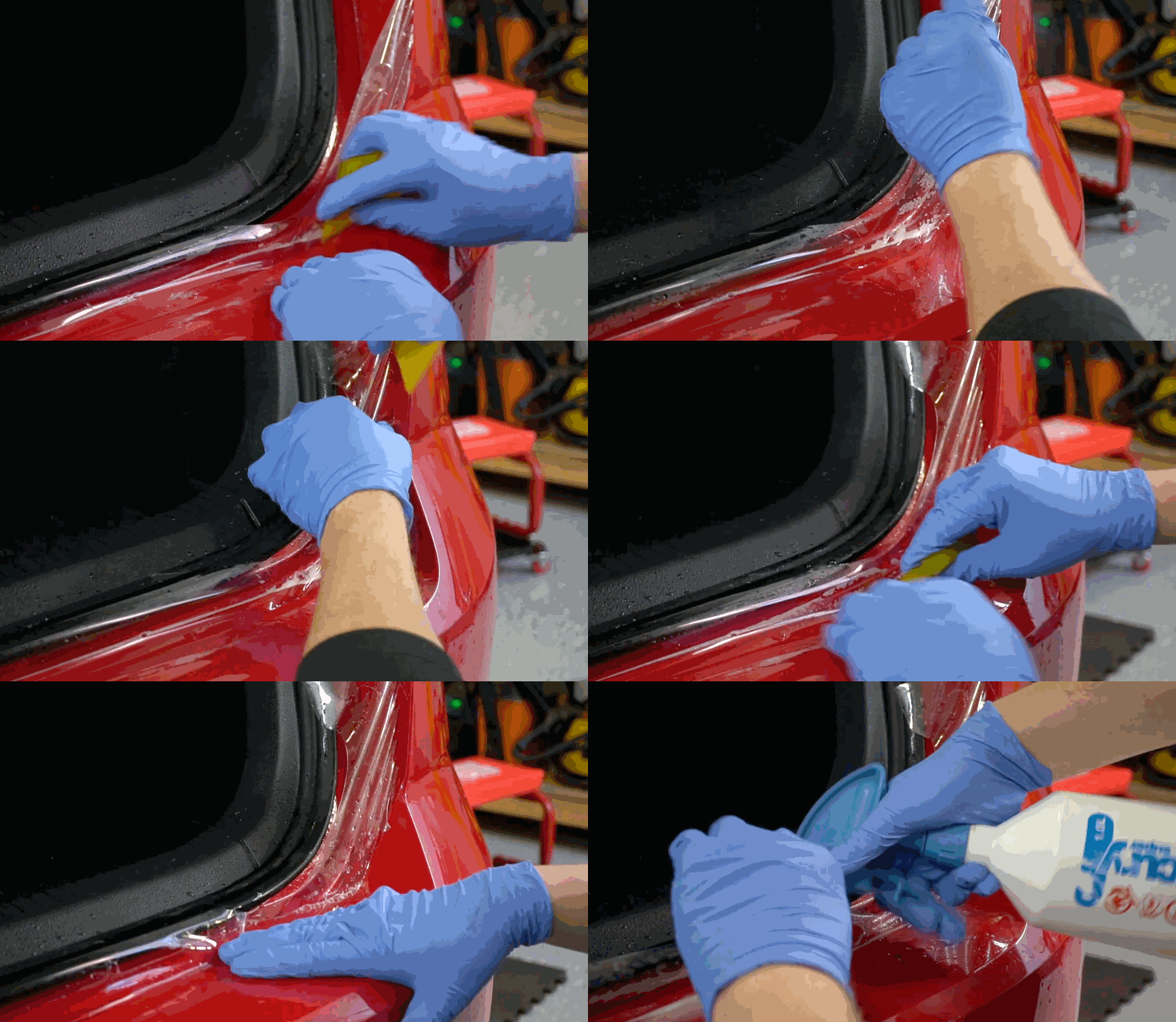
Southampton drivers tend to share a few common habits that influence protection needs. Daily commuting, regular highway driving, and extended winter parking all increase exposure to salt, grit, and moisture. Vehicles parked outdoors overnight or driven frequently during winter storms are especially vulnerable.
Rather than following trends or assuming PPF is only for certain types of cars, it makes more sense to evaluate how and where a vehicle is used. A modest daily commute through treated roads may justify protection just as much as longer highway drives.
Informed decision-making is key. Paint Protection Film is most effective when it aligns with real driving patterns and ownership goals. For drivers unsure about what level of protection fits their situation, XP Automotive Restyling serves as a local resource, offering guidance based on experience rather than one-size-fits-all recommendations.
Conclusion: Protecting Your Vehicle Through Southampton Winters
Winter road salt, grit, and moisture are part of everyday driving in Southampton, PA. While the effects on vehicle paint are often gradual, they are persistent and cumulative year after year. Left unaddressed, that exposure leads to increased cosmetic wear and long-term surface damage.
When properly installed, Paint Protection Film provides a reliable, physical barrier that helps manage those risks. Combined with professional PPF installation practices tailored for Pennsylvania winters, it becomes a smart ownership decision focused on preservation rather than appearance alone.
If you are considering how to protect your vehicle through future winters, the team at XP Automotive Restyling is here to help. Contact us to discuss your driving habits, exposure concerns, and protection goals, and let us help you make a confident, informed decision backed by real-world experience.
XP Automotive Restyling - PPF, Window Tinting, Ceramic Coatings