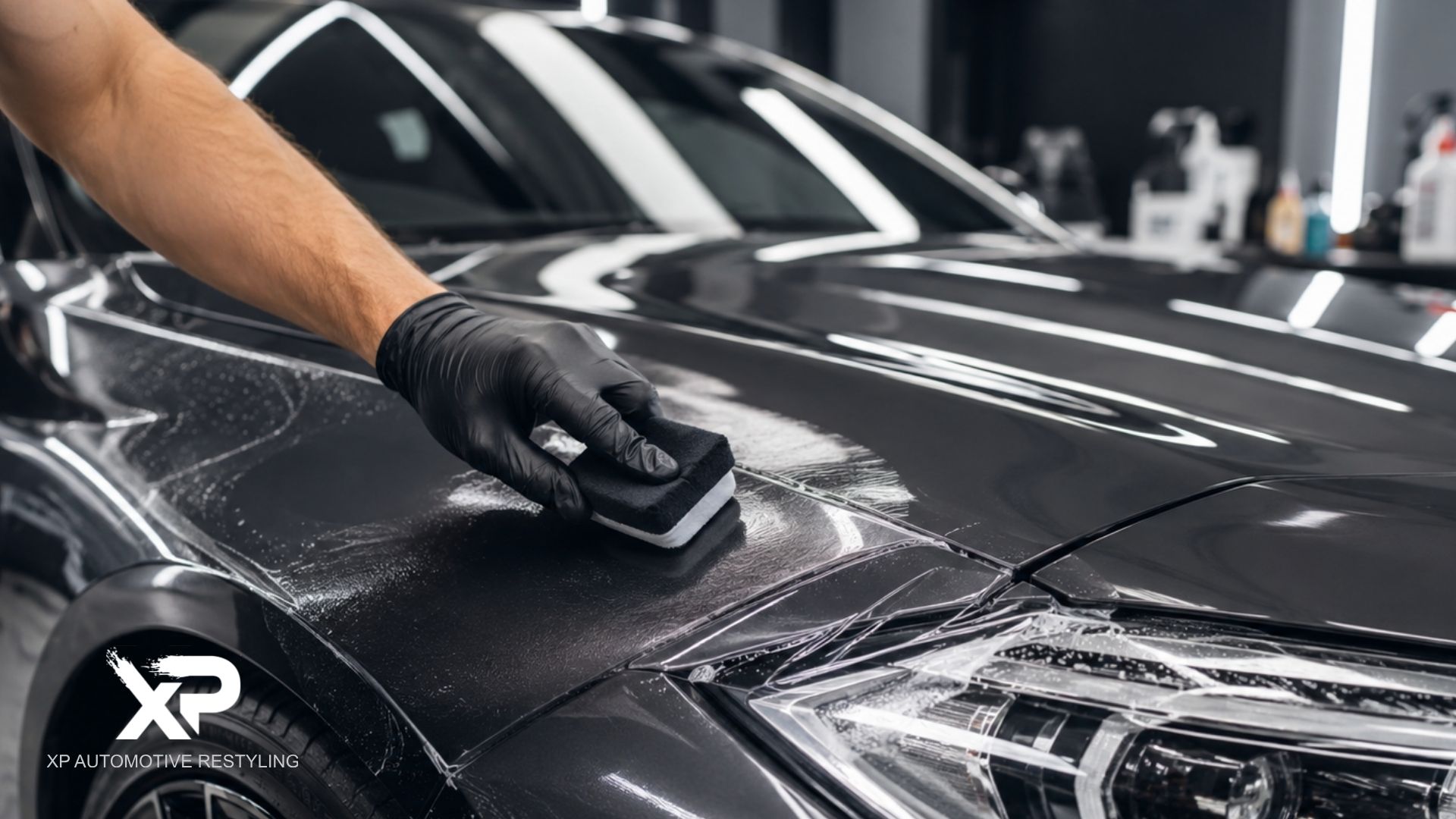
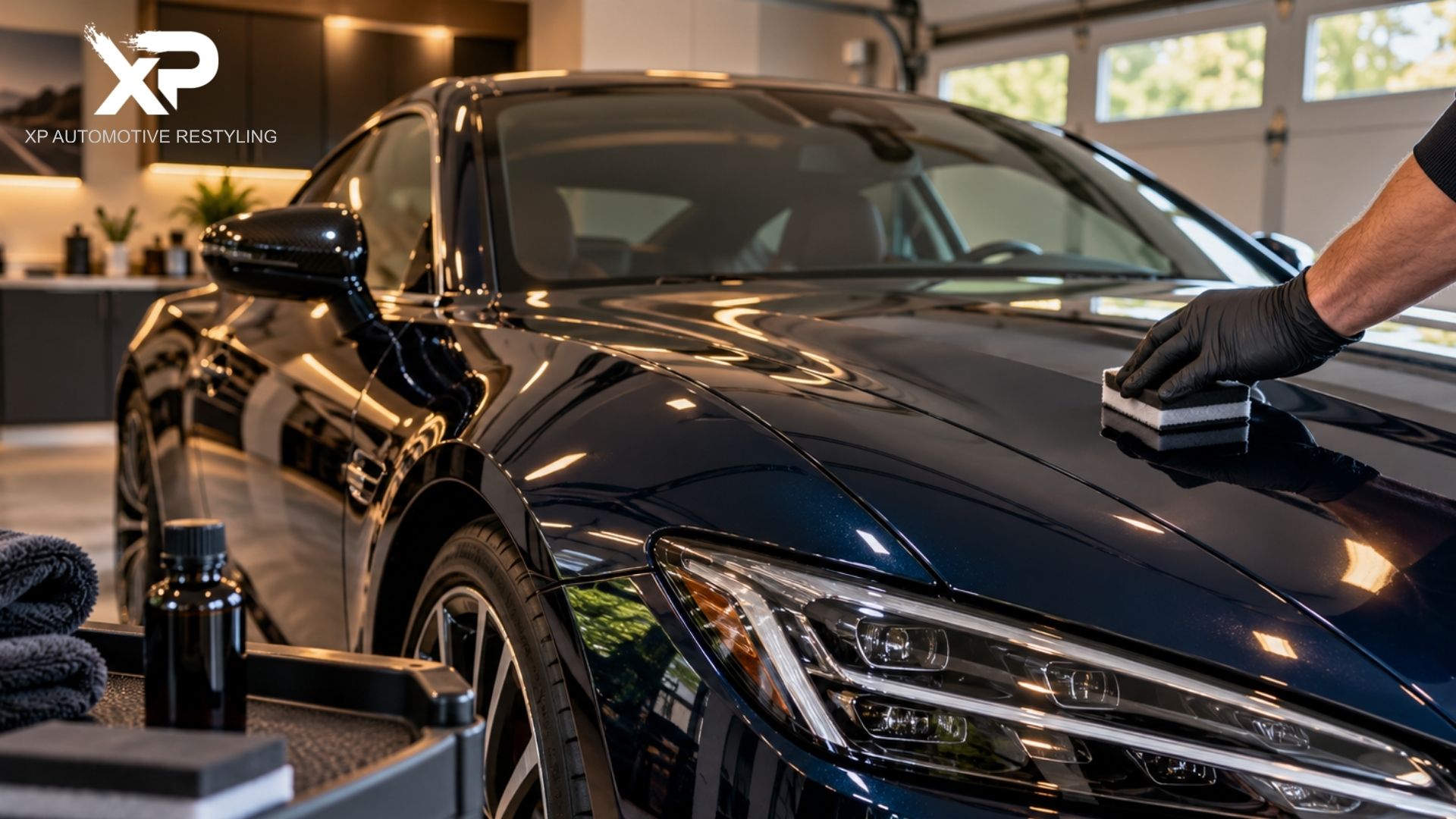
Garage-kept luxury cars can still benefit from ceramic coating, but they don’t automatically need it simply because they are valuable vehicles. A professional ceramic coating application can add hydrophobic protection, simplify cleaning, and help preserve the finish between drives, but its value depends on mileage, washing habits, outdoor exposure, and the owner’s expectations.
Does a Garage-Kept Luxury Car Really Need Ceramic Coating?
A garage already protects a luxury car from many environmental hazards, so ceramic coating isn’t essential for every garage-kept vehicle. The better question is whether the additional surface protection and easier maintenance are valuable enough for the way the owner cares for and uses the car.
Indoor storage reduces prolonged exposure to sunlight, rain, bird droppings, tree sap, pollen, and other contaminants. That is a significant advantage compared with a vehicle parked outside every day. It does not, however, keep the paint completely isolated from contamination or maintenance-related wear.
Once the garage door opens and the car returns to the road, the finish encounters many of the same conditions as any other vehicle. Even occasional drives around New Hope and Bucks County can introduce dust, insects, road film, water spots, and seasonal contamination.
At XP Automotive Restyling, we therefore don’t treat indoor storage as an automatic reason for or against coating. Instead, we consider questions such as:
- How frequently is the vehicle driven?
- How long does it remain outside when it is used?
- Is it hand washed or professionally detailed?
- How particular is the owner about gloss and cleanliness?
- Is preserving the original finish a long-term priority?
For some owners, careful garage storage already provides enough protection for their expectations. For others, professional ceramic coating adds another useful layer to an already deliberate paint-care routine.
What Does Ceramic Coating Add When a Car Already Lives Indoors?
Ceramic coating adds a durable hydrophobic surface that makes contamination less likely to bond strongly to the paint and can make routine cleaning easier. A garage reduces exposure, while a coating changes how the painted surface behaves when exposure does occur.
Those two forms of protection shouldn’t be confused. The garage protects the car primarily while it is parked. A ceramic coating application remains on the paint when the vehicle leaves that controlled environment.
Easier Cleanup After a Drive
An occasional weekend drive can still leave insects, dust, light road grime, and other residue behind. A coated surface is generally easier to clean because contaminants have more difficulty adhering strongly to it.
Hydrophobic Behavior
Water tends to bead and evacuate more readily from properly coated paint. That can simplify washing and drying, although it does not mean water should simply be allowed to dry on the vehicle without attention.
Consistent Finish Maintenance
Luxury-car owners who value a clean, glossy finish may appreciate how coating supports routine upkeep. The benefit isn’t that the vehicle suddenly becomes maintenance-free. It is that keeping the finish at the owner’s preferred standard can require less effort.
For a garage-kept vehicle, these ceramic coating benefits may be less about surviving constant environmental exposure and more about making careful ownership easier.
Can a Garage-Kept Car Still Develop Paint Contamination?
Yes. Garage storage substantially reduces exposure, but it does not prevent dust, pollen, road film, insects, mineral deposits, or other contamination from reaching the paint. Every trip outside introduces another opportunity for material to settle on or bond to the finish.
New Hope’s environment changes considerably throughout the year. Spring pollen can settle quickly on a freshly cleaned vehicle, while warmer-weather drives bring insects and road dust. Wet conditions can leave dirty moisture across lower panels, and Pennsylvania winters introduce their own mixture of road grime.
The garage can stop additional contamination from accumulating once the vehicle is parked, but whatever reached the paint during the drive comes inside with it.
There is another source owners sometimes overlook: washing itself. Cleaning an unprotected vehicle incorrectly can introduce fine marks over time. Ceramic coating does not make paint scratch-proof, but its slick surface and easier cleaning characteristics can reduce how aggressively certain contamination needs to be removed.
For luxury vehicles that are maintained frequently, the goal is often not correcting severe damage later. It is keeping minor contamination and routine maintenance from gradually changing a finish that started in excellent condition.
Does Ceramic Coating Make Sense for a Weekend or Seasonal Luxury Car?
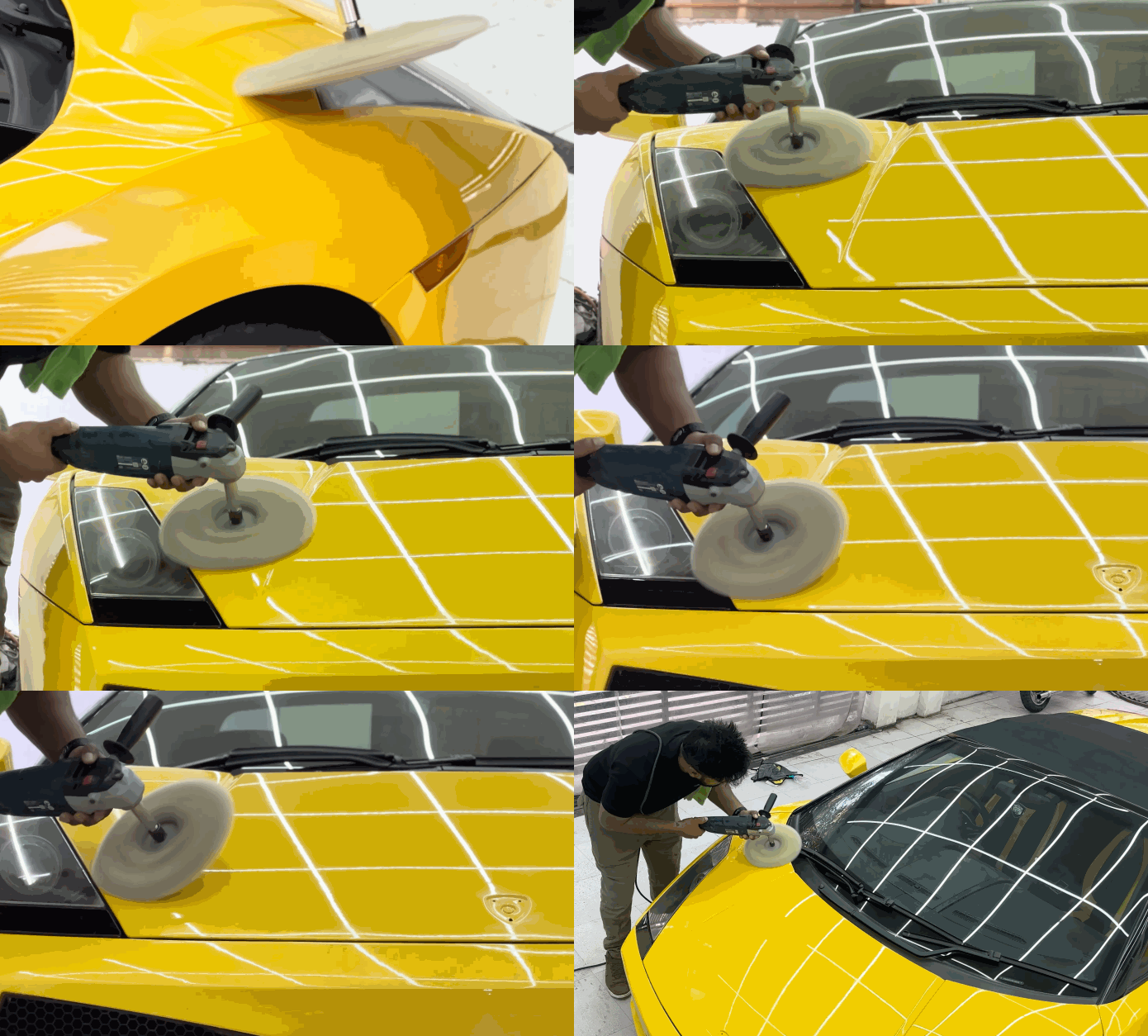
Ceramic coating can make sense for a weekend or seasonal luxury car when the owner values paint preservation, easier cleaning, and maintaining a consistently polished appearance, even with relatively low annual mileage. Low mileage reduces exposure, but it doesn’t eliminate the reasons someone might want a coated surface.
Consider two cars that each spend most of their lives indoors. One is driven only a few times each month and its owner is comfortable performing regular paint maintenance. The other is carefully detailed, taken on weekend drives throughout Bucks County, and expected to remain exceptionally clean with minimal maintenance between outings.
The second owner may place much more value on long-term paint protection, despite both cars having similar storage conditions.
At XP Automotive Restyling, mileage is therefore only one part of the conversation. For a specialty or luxury vehicle, we also consider how the owner defines an acceptable finish and how much maintenance they want to perform themselves.
A coating shouldn’t be justified simply because a car is expensive. It becomes worthwhile when its actual benefits align with the owner’s expectations for the vehicle.
Will Ceramic Coating Protect a Luxury Car From Scratches and Rock Chips?
Ceramic coating is not designed to provide meaningful protection against rock chips, dents, or deeper scratches. Its strengths are surface protection, hydrophobic behavior, chemical resistance, and easier maintenance rather than absorbing physical road impacts.
This distinction is particularly important with luxury and enthusiast vehicles because several different products are commonly described as forms of “paint protection.”
Ceramic coating is useful for:
- Making routine contamination easier to remove
- Providing hydrophobic surface properties
- Helping the finish resist certain environmental and chemical contamination
- Supporting easier washing and maintenance
- Maintaining a glossy, well-kept appearance
It should not be expected to stop a stone traveling at highway speed from damaging the paint. Drivers who want physical rock chip protection should consider paint protection film for vulnerable areas such as the bumper, hood, fenders, and mirror caps.
For some New Hope luxury-car owners, combining PPF on high-impact areas with ceramic coating elsewhere can address two different goals. For others, coating alone may be enough because road-impact protection isn’t a major priority.
Understanding that distinction prevents ceramic coating from being judged against a job it was never intended to perform.
Does Ceramic Coating Help Preserve a Luxury Car's Appearance Long Term?
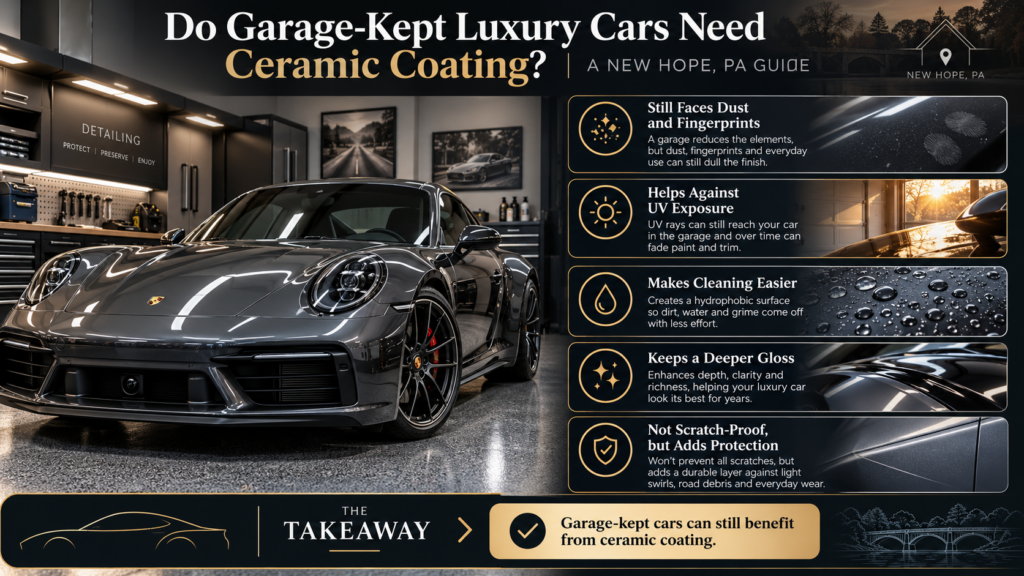
Ceramic coating can help preserve a luxury car’s appearance by creating a durable surface that is easier to keep clean and less vulnerable to certain environmental contaminants. It does not freeze the paint in perfect condition, but it can make long-term maintenance more manageable.
For a garage-kept vehicle, preservation often comes down to limiting small changes that accumulate over years of ownership. Each wash, weekend trip, unexpected rain shower, or afternoon parked outside introduces some degree of exposure. None may seem particularly significant on its own, but maintaining a high-quality finish is largely about managing that cumulative effect.
A professional ceramic coating can support that goal by making dirt and contamination easier to remove. Less stubborn contamination generally means less aggressive cleaning is necessary, which is valuable when the objective is maintaining an already excellent finish.
The owner’s washing technique remains important. Coated paint can still develop scratches, water spots, and other imperfections when neglected or washed improperly. Ceramic coating maintenance should therefore be viewed as part of a good paint-care routine rather than a replacement for one.
This can be especially relevant when a luxury or enthusiast vehicle will remain in the owner’s collection for many years. The benefit is not simply how the paint looks immediately after coating. It is having a surface that is easier to maintain through repeated cycles of driving, cleaning, and storage.
Should Paint Correction Be Done Before Ceramic Coating?
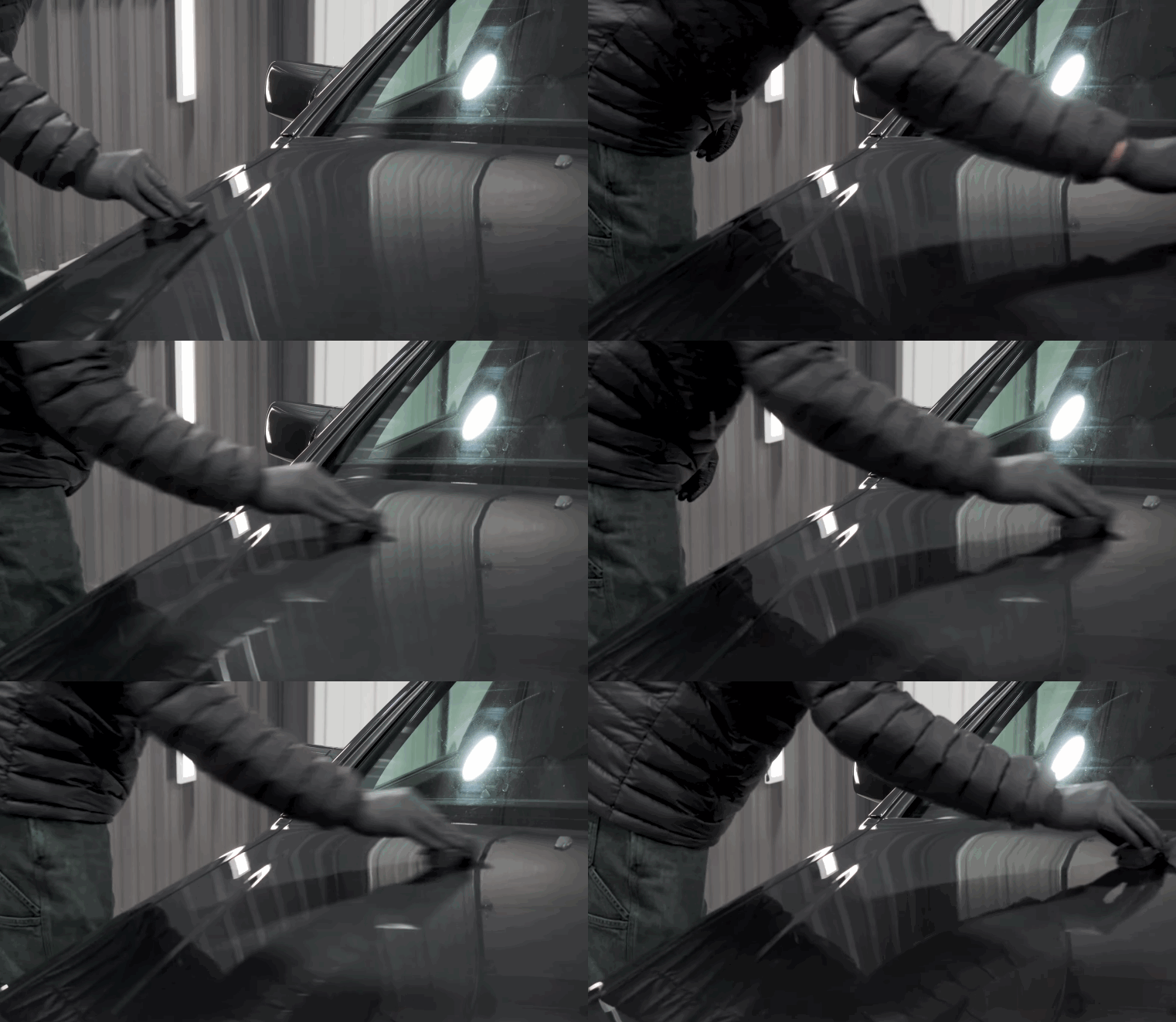
Paint correction may be appropriate before ceramic coating when the vehicle has visible swirl marks, light scratches, oxidation, or other correctable imperfections. Because a coating is transparent, applying it does not hide defects already present in the finish.
Even a garage-kept luxury car isn’t automatically free of paint imperfections. Washing technique, dealership preparation, previous detailing, transportation, and years of ownership can all leave subtle marks.
Before a ceramic coating application, the condition of the paint should be evaluated rather than assuming every vehicle needs the same preparation. A nearly new car with an excellent finish may require considerably less corrective work than a vehicle with visible swirls under direct lighting.
At XP Automotive Restyling, preparation is treated as part of the coating process because the condition underneath influences the finished appearance. Depending on the vehicle, that preparation can involve:
- Thorough washing to remove loose contamination.
- Decontamination to address material bonded to the surface.
- Paint inspection to identify swirls, scratches, and other imperfections.
- Paint correction when appropriate for the owner’s goals and the condition of the finish.
- Final surface preparation before the coating is applied.
More correction isn’t automatically better. The appropriate level depends on the paint and what the owner wants to achieve. A well-preserved garage-kept car shouldn’t undergo unnecessary corrective work simply because ceramic coating is being installed.
The goal is to establish the right surface for the coating while preserving as much of the original finish as possible.
How Much Maintenance Does a Coated Garage-Kept Car Need?
A coated garage-kept car still needs regular washing and appropriate maintenance, although the hydrophobic surface can make that upkeep considerably easier. Ceramic coating reduces maintenance effort rather than eliminating maintenance altogether.
How frequently the vehicle needs attention depends largely on use. A car driven several times per week around New Hope will accumulate contamination faster than a seasonal vehicle that leaves its garage a few times each month.
After driving, owners should pay particular attention to contaminants that shouldn’t remain on the finish unnecessarily, including insect residue and bird droppings. Even with hydrophobic ceramic coating, leaving aggressive contamination on the surface for extended periods isn’t good maintenance practice.
Routine care is relatively straightforward. Use suitable automotive washing products, clean wash media, and gentle drying methods. Avoid assuming that a coated surface can tolerate careless automatic washing or unnecessarily aggressive chemicals simply because it has additional protection.
A garage provides a major advantage here. Once the car is clean and returned indoors, it isn’t immediately collecting another layer of outdoor contamination. That can make maintaining a coated weekend or luxury vehicle considerably different from maintaining a coated daily driver parked outside.
Conclusion: Garage Storage and Ceramic Coating Solve Different Problems
A garage-kept luxury car does not automatically need ceramic coating, but indoor storage doesn’t make coating unnecessary either. The garage reduces environmental exposure while the vehicle is parked. Ceramic coating provides surface protection and easier maintenance whenever the car is driven, washed, or exposed outdoors.
For luxury and enthusiast vehicles around New Hope, the decision should come down to ownership priorities. A carefully maintained seasonal car may already receive enough protection for its owner’s expectations. Another owner may value easier cleaning, hydrophobic performance, and a durable protective surface precisely because preserving an excellent finish matters so much.
The key is choosing protection based on how the vehicle is actually used rather than its price tag alone.
At XP Automotive Restyling, we can evaluate your vehicle’s paint, driving habits, storage conditions, and maintenance goals before recommending a ceramic coating application. Contact our team to schedule a consultation and determine whether ceramic coating is the right addition to your luxury car’s paint-care routine in New Hope, PA.
XP Automotive Restyling - PPF, Window Tinting, Ceramic Coatings