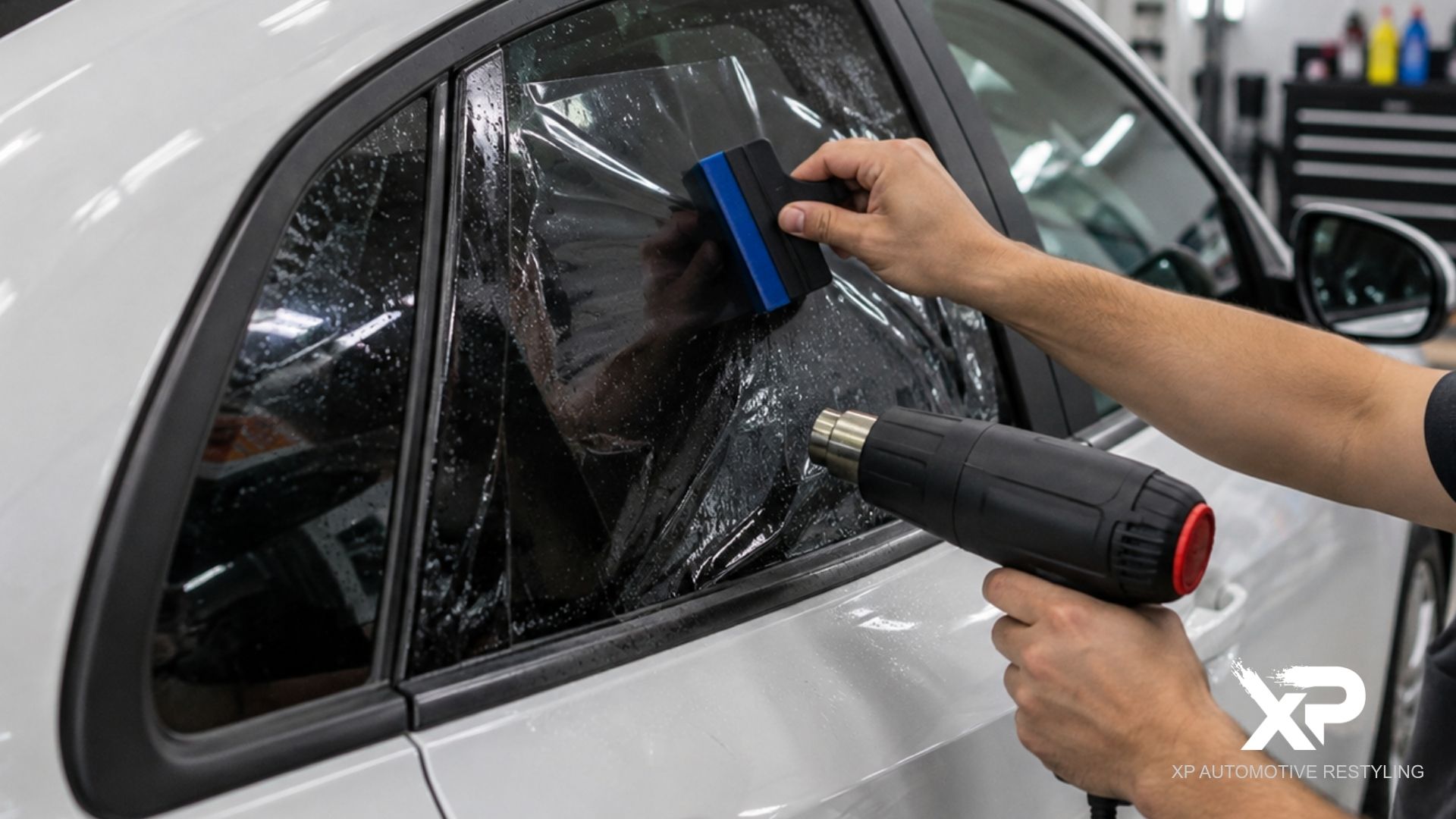
The right window tint for a Richboro vehicle depends on heat rejection, UV protection, glare control, visibility, vehicle use, budget, and Pennsylvania tint regulations. Film darkness alone does not determine performance, so comparing automotive window film specifications and professional window tinting services is more useful than choosing car window tint by appearance alone.
What Should You Consider Before Choosing Window Tint?
Before choosing window tint, decide what you actually want the film to accomplish. Appearance matters, but comfort, glare reduction, UV protection, privacy, and visibility can be much more important once you start using the vehicle every day.
We see this difference clearly with drivers around Richboro. Someone commuting throughout Bucks County and leaving a vehicle outdoors for most of the workday may place heat rejection and UV protection near the top of the list. A driver who spends significant time behind the wheel after dark may be more concerned about maintaining comfortable nighttime visibility.
Privacy and aesthetics can influence the decision as well. Car window tint changes the exterior appearance of a vehicle, but choosing a darker look without considering how the glass will feel from the driver’s seat can lead to a result that doesn’t match how the car is actually used.
At XP Automotive Restyling, we prefer to start with a driver’s priorities before discussing specific film options. Some of the most useful questions involve where the vehicle is parked, how much daytime driving it sees, whether glare is a frequent problem, and what level of privacy the owner prefers.
The best automotive window tint is ultimately the film that balances those priorities rather than maximizing one specification at the expense of everything else. Understanding the window tint benefits you care about most makes the rest of the selection process considerably easier.
Does Darker Window Tint Provide Better Heat Rejection?
Darker window tint does not automatically provide better heat rejection because film technology plays a major role in thermal performance. A lighter high-performance film can sometimes manage solar energy more effectively than a darker film built primarily around appearance.
The easiest way to understand the difference is to separate darkness from performance.
Visible light transmission (VLT) describes how much visible light passes through the tinted glass. A lower VLT generally creates a darker appearance. Heat rejection, however, relates to how the film handles solar energy rather than simply how dark it looks.
That means drivers should compare actual film characteristics instead of assuming that darker equals cooler. When evaluating heat rejection window tint, consider:
- Visible light transmission and how dark the finished glass will appear
- Solar heat rejection characteristics
- UV protection
- Optical clarity from inside the vehicle
- Film construction and technology
This distinction becomes particularly useful during warm Pennsylvania weather. A vehicle parked outside for hours can accumulate substantial cabin heat, so choosing an automotive window film based solely on darkness may overlook the performance characteristic the owner cares about most.
Your preferred window tint percentage should still account for appearance and visibility, but darkness is only one part of the decision. The film itself determines much of what the tint can actually do.
Which Type of Window Tint Is Best for Your Vehicle?
The best window tint type depends on your expectations for performance, budget, appearance, and how you use the vehicle. There isn’t one film construction that every Richboro driver automatically needs.
Dyed Window Film
Dyed films are often selected when appearance and affordability are the main priorities. They can create the darker, more uniform look many drivers want, but their heat-management characteristics may be more limited compared with higher-performance technologies.
Carbon Window Film
Carbon window tint can provide a step up in performance while maintaining an attractive appearance. Depending on the specific product, it can offer improved heat rejection and durability without requiring the investment associated with some premium ceramic films.
Ceramic Window Film
Ceramic window tint is commonly chosen when heat rejection, UV protection, optical clarity, and overall performance are higher priorities. Its construction allows the film to deliver strong solar-control characteristics without relying simply on a very dark shade.
Premium doesn’t automatically mean necessary, though. A vehicle that spends most of its time garaged and travels relatively short distances may not have the same requirements as a daily commuter that sits outdoors throughout the day.
When comparing car tint options, the better question isn’t simply, “What is the best window tint?” It’s which technology gives your particular vehicle the performance you will actually notice and use.
How Much UV and Glare Protection Can Window Tint Provide?
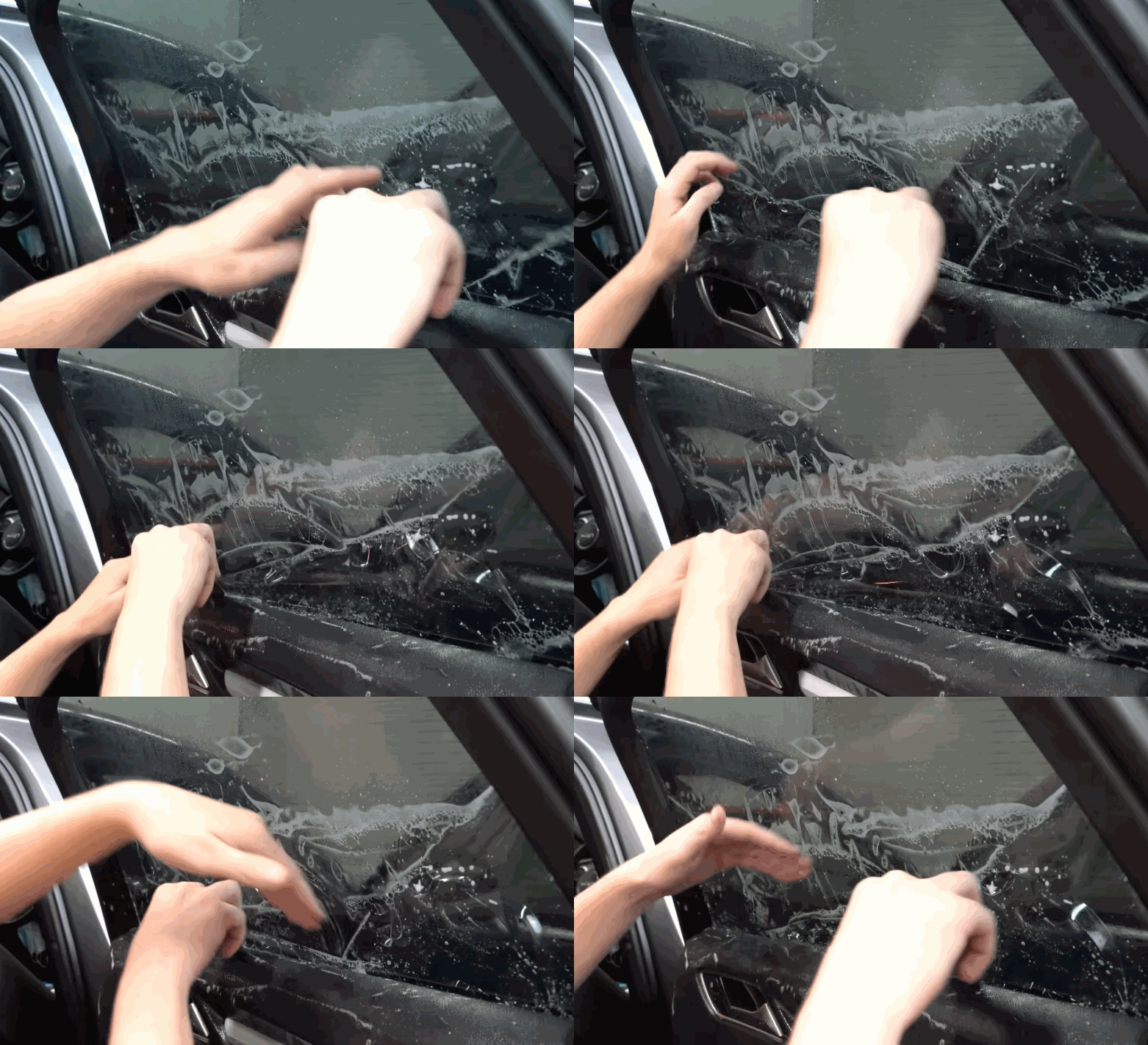
Quality automotive tint can significantly reduce UV exposure and help control uncomfortable glare, although the exact performance depends on the film selected. These benefits can be valuable even when a driver doesn’t want particularly dark windows.
UV protection window tint helps limit ultraviolet energy entering through treated glass. For passengers, that reduces prolonged exposure while spending time inside the vehicle. It can also help limit the cumulative UV exposure experienced by interior materials, including upholstery and trim.
Glare reduction addresses a different problem. Bright sunlight, reflections from surrounding vehicles, and light bouncing from the roadway can create visual discomfort during daytime driving around Richboro and elsewhere in Bucks County.
At XP Automotive Restyling, we consider those needs separately because two drivers may want completely
What Window Tint Percentage Should You Choose?
The right window tint percentage balances appearance and privacy with daytime comfort, nighttime visibility, and Pennsylvania requirements. There is no single percentage that makes sense for every vehicle or every driver.
Tint percentages refer to visible light transmission, or VLT. In simple terms, VLT window tint indicates how much visible light passes through the glass and film combination. Lower percentages generally produce darker glass, while higher percentages allow more visible light through.
That gives drivers several practical directions to consider:
- Lighter tint preserves more natural visibility while still allowing drivers to choose films with useful heat and UV performance.
- Moderate tint may appeal to owners looking for a more noticeable change in appearance and privacy while retaining more visibility than very dark film.
- Darker tint creates greater tint darkness and privacy, but visibility and legal requirements become increasingly important considerations.
Factory glass also matters. Some vehicles, particularly SUVs and crossovers, already have privacy glass on rear windows. Adding car window tint over existing tinted glass changes the final VLT, so the film percentage cannot always be treated as the finished percentage of the window.
For that reason, choosing a shade should involve the existing glass as well as the film being installed. The best result is one that looks right from outside while remaining practical from the driver’s seat.
What Are Pennsylvania's Window Tint Rules?
Pennsylvania drivers need to account for state window tint regulations before deciding how dark their windows should be or where film will be installed. Current PennDOT guidance establishes minimum total light-transmittance requirements that vary according to vehicle type and window location.
For 1998 and newer passenger cars, PennDOT’s current fact sheet lists a 70% minimum total light transmittance for the windshield, front side windows, rear side windows, and rear window. For trucks and qualifying multipurpose passenger vehicles, it lists 70% for the windshield and front side windows, with no light-transmittance requirement for the rear side windows or rear window. PennDOT regulations also permit a transparent strip along the top of the windshield that does not extend into the AS-1 area and is no more than three inches from the top.
PennDOT also notes that tint exceeding its light-transmittance requirements can result in a driver being stopped and cited, even though window tint is not required to be checked during Pennsylvania’s vehicle safety inspection under the current guidance.
Legal compliance doesn’t mean sacrificing every performance benefit. High-performance films can provide meaningful UV and solar-energy management without relying exclusively on extreme darkness. When evaluating legal window tint PA options, film technology matters alongside VLT.
How Do Richboro Driving Conditions Affect Your Tint Choice?
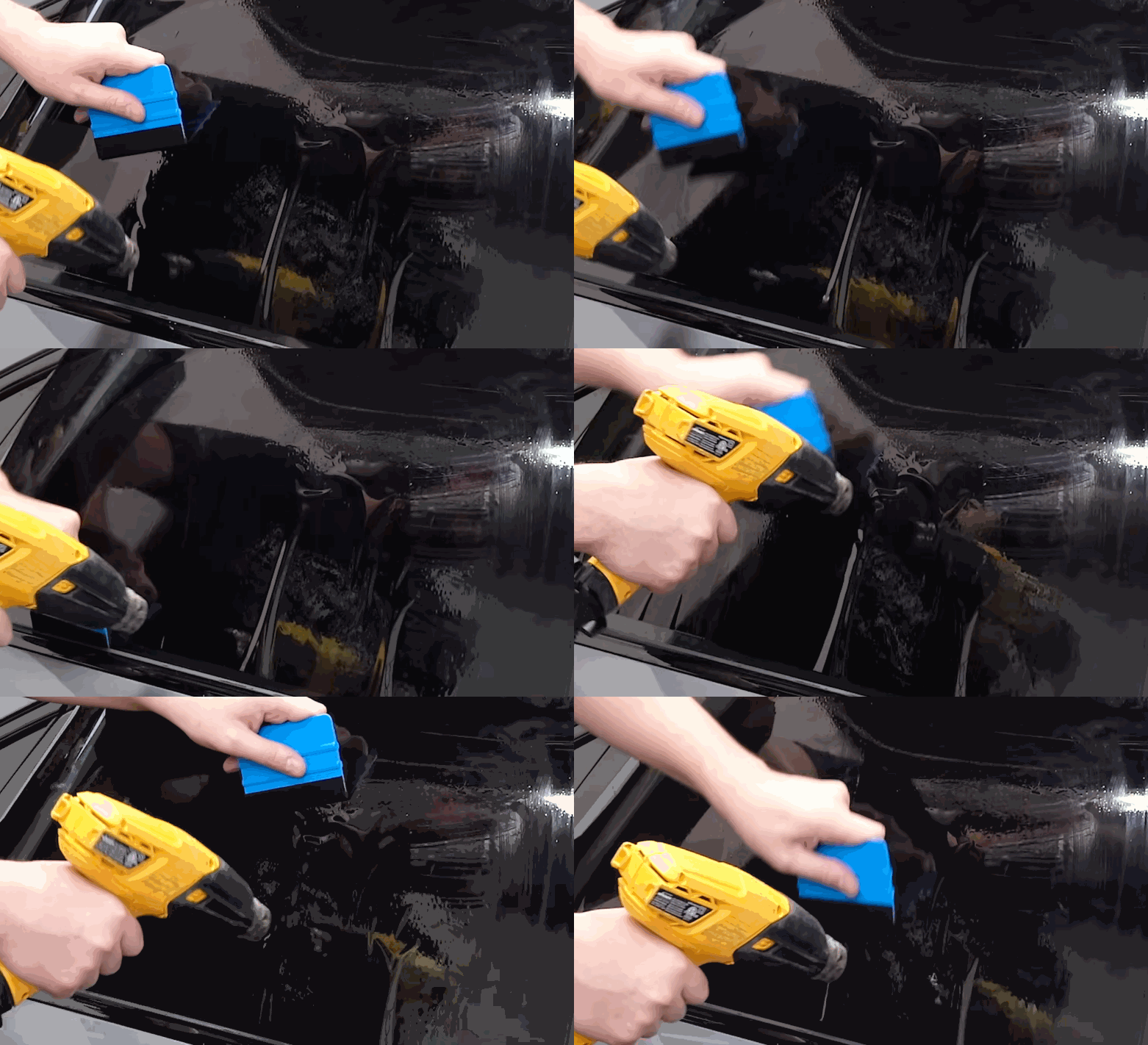
Richboro drivers should consider seasonal sunlight, commuting patterns, parking habits, and visibility needs when selecting window tint. The same film isn’t necessarily the best fit for a vehicle parked outside throughout the workweek and one that spends most of its time in a garage.
Travel along Route 232 (Second Street Pike), Route 332, and other roads throughout Bucks County can mean substantial time behind the wheel. For a frequently used vehicle, heat rejection and glare control may carry more weight than they would for an occasional-use car.
Pennsylvania’s seasonal variation also makes balance important. Summer brings longer periods of strong sunlight and hot parked interiors, while winter introduces shorter daylight hours and more driving after sunset. That makes nighttime visibility worth considering alongside warm-weather comfort.
Outdoor parking can shift priorities toward UV and heat management because the vehicle receives more prolonged solar exposure. A garage-kept car may allow its owner to put greater emphasis on appearance or another performance characteristic.
Choosing window tint Richboro PA drivers can comfortably live with throughout the year is ultimately more useful than selecting film around one season. Good daily driver window tint should complement the way the vehicle is actually used across Bucks County.
Why Does Professional Window Tint Installation Matter?
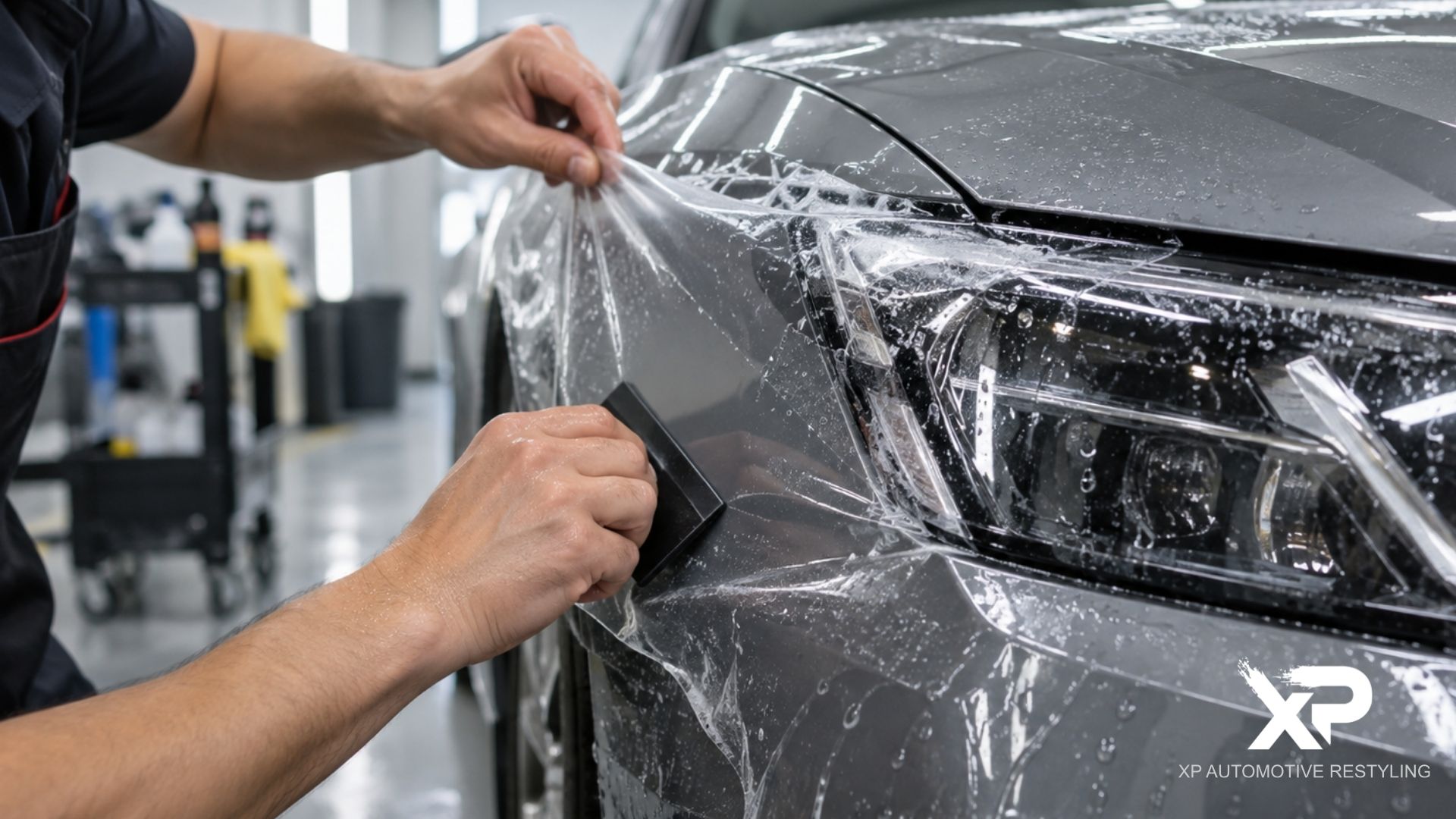
Professional installation directly affects film fitment, optical clarity, edge quality, appearance, and long-term performance. Even high-quality film can produce a disappointing result when glass preparation or installation technique is poor.
A professional window tint installation involves several stages:
- Glass preparation: The glass needs to be thoroughly cleaned before film placement.
- Contamination control: Dust, fibers, and debris have to be minimized so they don’t become trapped beneath the film.
- Accurate film preparation: The film must be shaped and fitted correctly for the specific window.
- Positioning: Careful placement prevents unnecessary creases and alignment problems.
- Moisture removal: Installation solution is methodically evacuated from beneath the film.
- Edge finishing: Clean edges contribute to both appearance and proper fitment.
- Curing: The newly installed film needs time to dry and settle completely.
At XP Automotive Restyling, we pay close attention to those details because window tinting services involve more than choosing a shade and applying film. Preparation and installation technique determine much of what the customer sees every time they look through the glass.
Some moisture pockets or slight haze can temporarily appear while newly installed film cures. Those normal curing characteristics shouldn’t automatically be confused with permanent bubbles, contamination, lifting edges, or creases caused by poor workmanship.
A capable window tint installer should also explain what to expect after installation, including appropriate curing and initial care.
Conclusion: Choose Window Tint Around How You Actually Drive
The right window tint should match your comfort goals, visibility preferences, vehicle use, budget, and Pennsylvania requirements rather than simply being the darkest film available.
For a Richboro daily driver, that means considering the complete picture. Film technology determines much of the heat and UV performance, VLT affects visible light and appearance, existing factory glass influences the finished result, and professional installation affects how well everything comes together.
The goal is to choose something you’ll appreciate during everyday Bucks County driving, not just something that looks good immediately after installation.
At XP Automotive Restyling, we help Richboro drivers compare film options according to how their vehicles are actually used. Contact our team for professional window tinting services and schedule a consultation to choose the right film, shade, and performance level for your vehicle.
XP Automotive Restyling - PPF, Window Tinting, Ceramic Coatings